
How to Clean Your Straightener
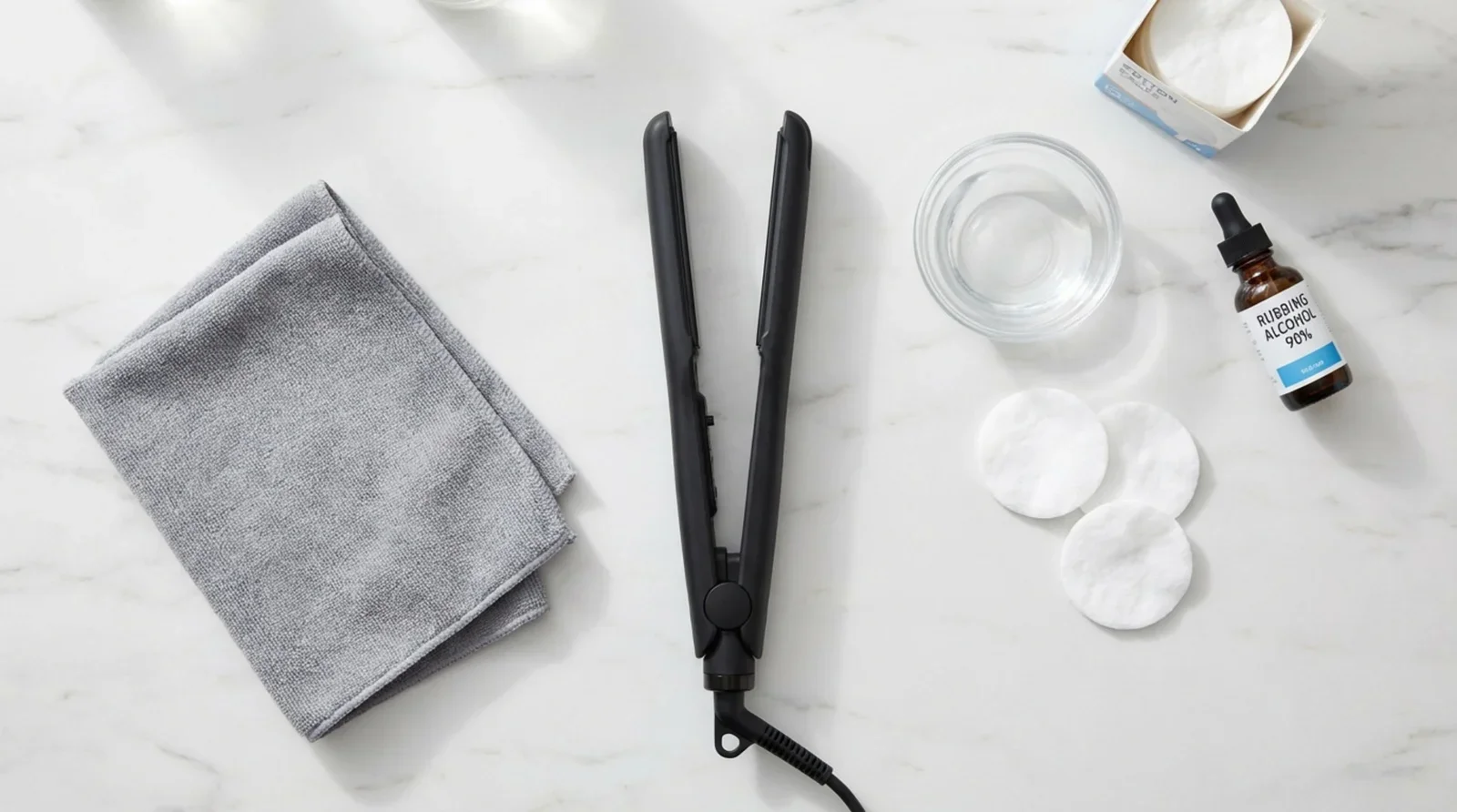
To clean your straightener properly, start by unplugging it and letting it cool down fully. For a simple clean, wipe the plates and outer casing with a slightly damp microfibre cloth to remove light oils and dust. For heavier product build-up, dampen a cotton pad with a little isopropyl alcohol or a mix of water and white vinegar, rub the dirty areas gently in small circles, then leave the straightener to air-dry for several hours before using it again.
Keeping your hair straightener clean is just as important as washing your hair brushes or makeup sponges. Over time, the smooth plates collect layers of residue that can harm your hair and reduce how well the tool works. A regular cleaning routine helps your straightener keep giving you a salon-style finish, while lowering the chance of bacteria transfer and excess heat damage.
Why Cleaning Your Straightener Matters
Prevents damage to your hair
When old product and oils build up on the plates, the surface becomes uneven. This roughness makes the plates catch and pull on your hair instead of gliding smoothly, which can cause breakage and split ends over time. Instead of straightening in one smooth pass, you end up dragging the iron through your hair, which is the opposite of what you want for a sleek style.
A dirty straightener can also make clean hair dirty again. If you use it on freshly washed hair while the plates are coated in old hairspray and oil, you're pressing that grime back into your strands. This can leave your hair looking flat, greasy, and dull, undoing all the effort you put into washing and styling it.
Reduces bacteria and product build-up
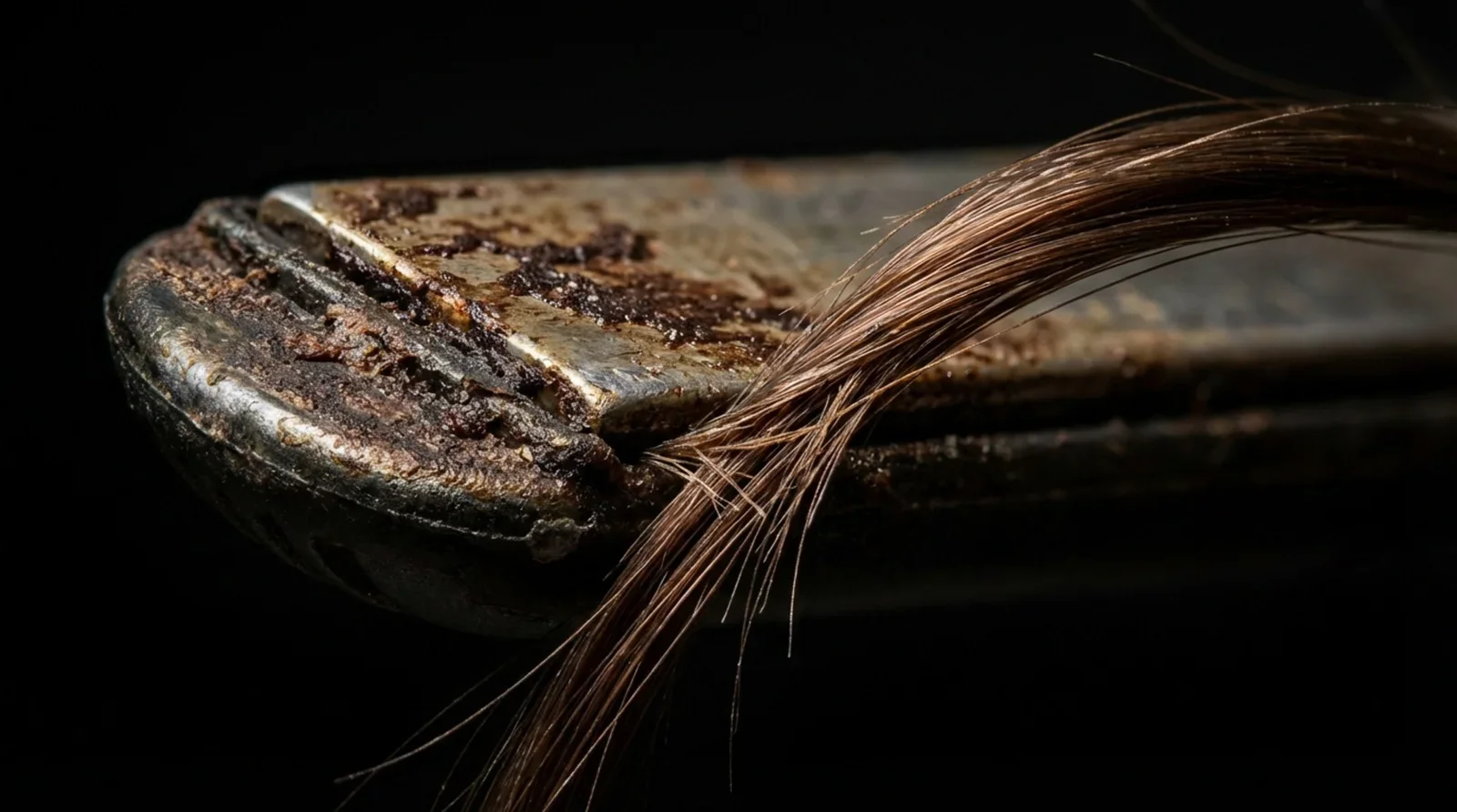
Your styling tools can easily become a home for bacteria. Natural scalp oils, shed skin cells, and styling products mix together to form a sticky film that bacteria can grow on. If you never clean your straightener, these germs can move back onto your hair and scalp, which may lead to irritation, redness, dandruff, or extra oil production.
Regularly sanitising the plates helps stop these germs from spreading. If you often style your hair between washes, the amount of residue that transfers from your hair to a hot tool can be quite high. A quick clean every few weeks keeps things more hygienic and kinder to your scalp.
Keeps styling performance high
A straightener works best when it can spread heat evenly across the plates. When burnt-on product covers the surface, it acts like a barrier and stops heat from passing through properly. This can make the tool less effective, so you end up turning the temperature up or going over the same section again and again, which raises the risk of heat damage.
Clean plates allow features like Spring-Flex™ technology or ionising functions to work properly. When there’s no build-up, the plates stay at a steady temperature and slide through the hair more easily, giving a smooth, shiny result. You’ll probably find styling is faster and easier when your straightener is cleaned regularly and in good condition.
Makes your hair straightener last longer
Good straighteners, such as those from ghd or Cloud Nine, can be expensive. Many styling products contain chemicals that become harsher each time they’re heated. Over time, these can wear away ceramic or Sericite coatings on the plates and cause damage that you can’t simply wipe off.
By cleaning off residues before they burn on completely, you help protect the plates and add years to your straightener’s life. A looked-after tool is less likely to have electrical problems or worn plates, so you get better use from your investment over time.
What Causes Build-Up on Hair Straighteners?
Residue from styling products
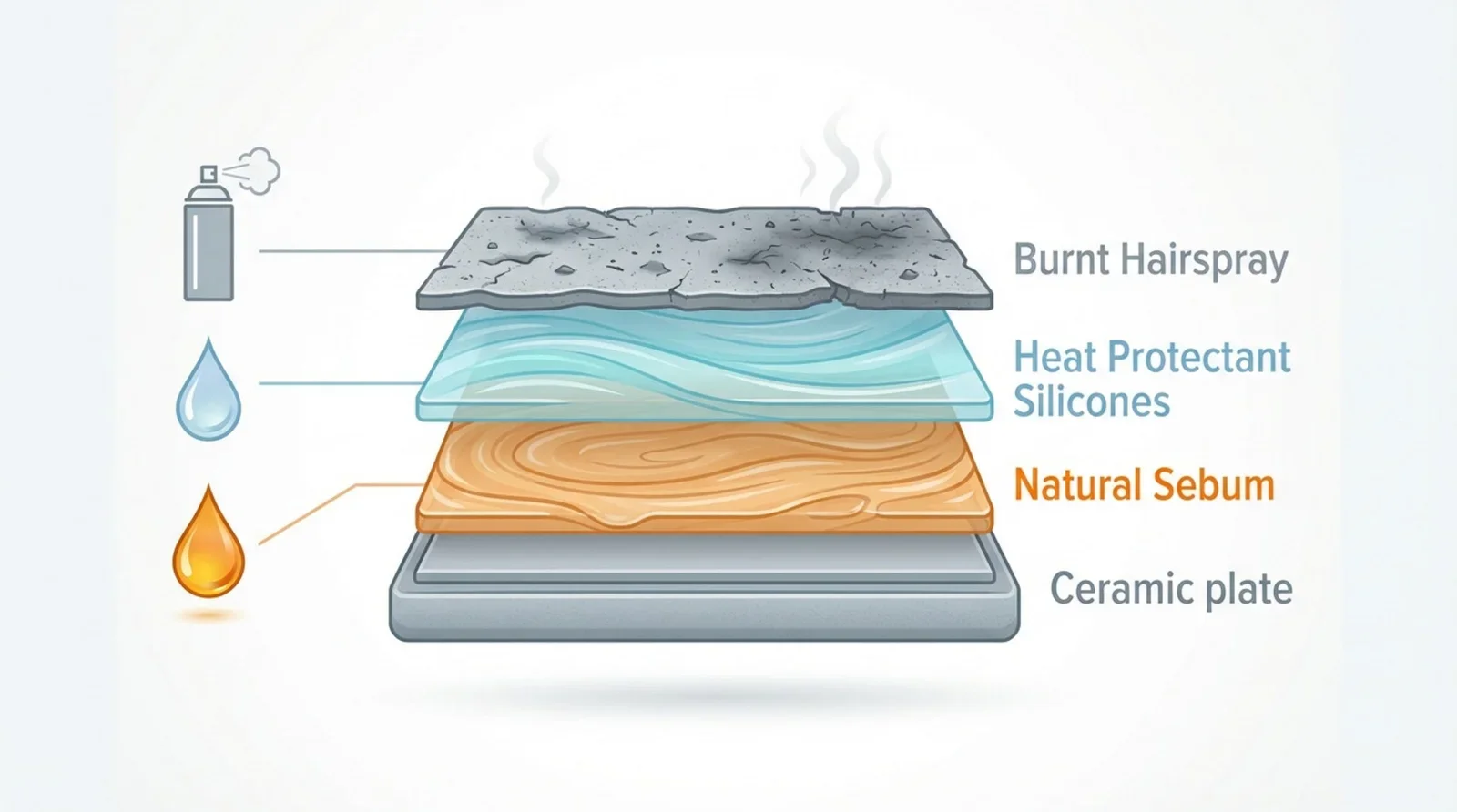
The main cause of a sticky straightener is leftover styling product. Heat protect sprays, though good for your hair, often contain silicones and oils that can leave a thin layer on the plates. Hairsprays and mousses are even worse, as they contain resins that harden and cook onto the hot surface.
Each time you pass the iron over product-covered hair, a little of that product sticks to the plates. Over days and weeks, these tiny layers build up and turn into a visible brown or yellow crust that becomes harder to remove the longer it sits. This is why many stylists recommend using products lightly and letting them dry a little before using heat tools.
Burnt hair and natural oils
Even if you hardly use products, your hair and scalp still produce natural oils (sebum). These oils, along with small flakes of skin from your scalp, easily transfer onto your straightener, especially if you straighten from the roots. When heated to 180°C or more, these oils can smoke and eventually burn onto the plates, creating a stubborn film.
Small broken hairs can also get stuck between the plates or around the edges. These burnt hair bits add to that burnt smell that sometimes comes from a hot straightener. Regular cleaning removes these traces before they build up and affect both smell and performance.
Environmental dust and dirt
If your straightener lives on your bathroom counter or dressing table, it is constantly exposed to dust and lint. Fibres from towels, dust in the air, and tiny particles from sprays like perfume or deodorant can settle on the plates. When you turn the iron on, this layer heats up and can fuse with any product already on the surface.
This kind of dirt easily settles into gaps around hinges and buttons. While it may look harmless, too much dust can interfere with moving parts or even create a small fire risk if it collects near internal heating elements.
How Often Should You Clean Your Straightener?
Occasional, regular, and salon use differences
How often you clean your straightener should match how often you use it. If you straighten your hair most days, a quick wipe once a week helps prevent heavy build-up. If you only use it for events or a few times a month, a full clean about every three months is usually enough.
In salons, hygiene standards need to be much higher because tools are used on many people. Stylists should disinfect their tools between clients or at least give them a deep clean at the end of each working day. This helps avoid spreading oils or possible scalp issues from one person to another.
Signs your hair straightener needs cleaning
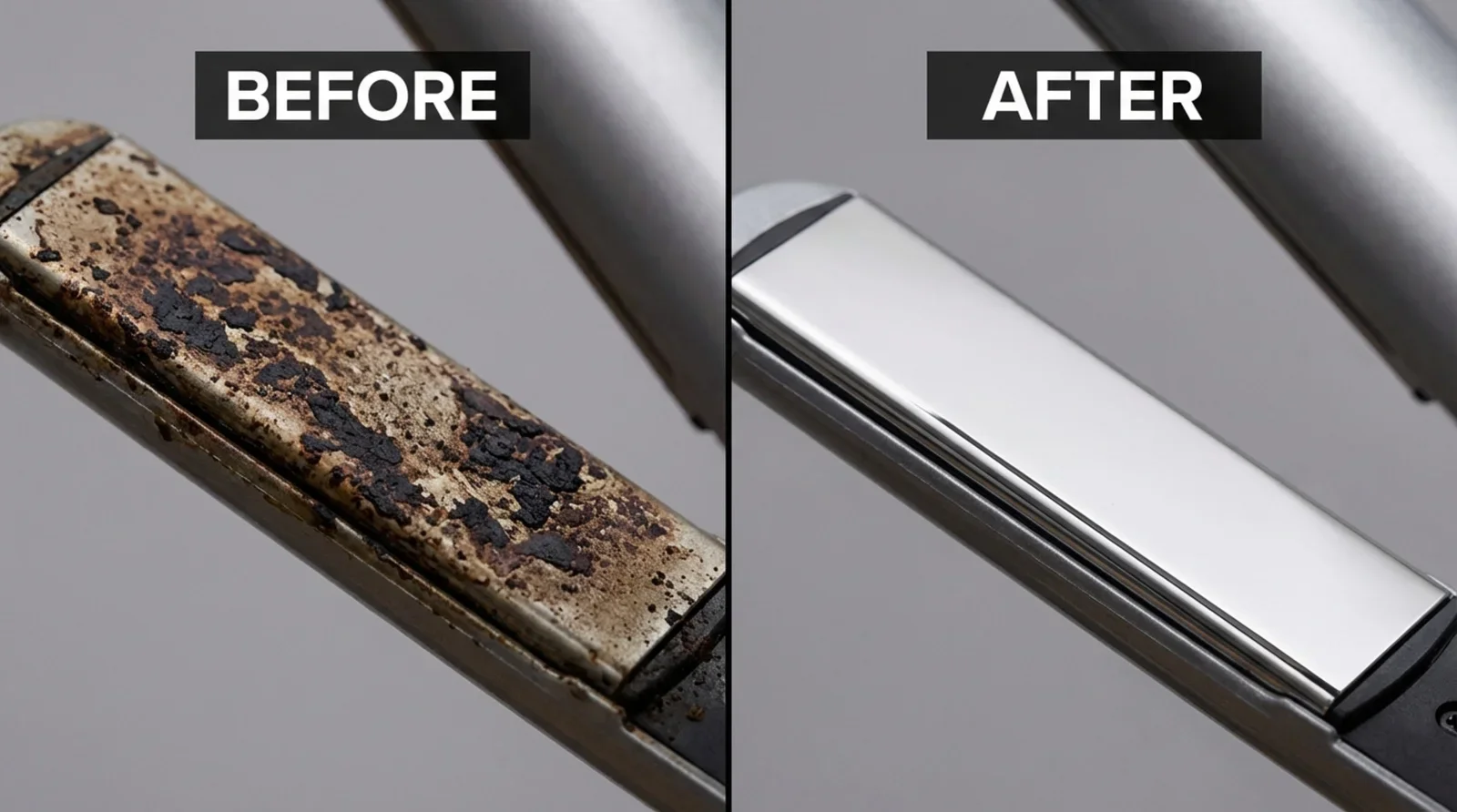
Your straightener will usually show clear signs when it needs attention. A strong burnt or acrid smell when it heats up almost always means old product or hair is burning on the plates. You might also see brown or black patches, or feel the plates dragging or snagging as you pull them through your hair.
A drop in performance is another clue. If your hair is no longer straight after one pass, or if it looks dull and dry instead of shiny, check the plates. Under a bright light you may see a thin film of grime that’s hard to spot at first glance but has a big effect on how well the tool works.
How To Clean Your Straightener Step-by-Step
Unplug and completely cool down the straightener
Safety comes first with any electrical item. Before cleaning, unplug the straightener from the socket. Do not clean it while it’s still plugged in, especially if you’re using a damp cloth, as this can lead to electric shock.
Some people suggest cleaning the plates while they’re slightly warm to soften the grime, but this also increases the risk of burns. It’s safer to let the tool cool down completely. If the build-up is very stubborn, you can briefly warm the plates for about 30 seconds, then unplug and let them cool until just slightly warm before you start cleaning.
Wipe plates with a damp microfibre cloth
For regular upkeep, a microfibre cloth is ideal. It’s soft enough not to scratch the plates but textured enough to grab oils and dust. Lightly dampen the cloth with plain water (it should not be dripping) and wipe along the length of each plate.
Use gentle, even pressure. Skip paper towels or rough rags, as they can leave lint behind, which may burn next time you use the straightener. In most cases, a simple wipe with a damp microfibre cloth is enough for everyday dirt.
Use mild cleaning solutions for stubborn residue
If water alone doesn’t remove the residue, you can use a mild cleaner. Isopropyl alcohol (rubbing alcohol) works well for dissolving oils and hairspray, and it dries quickly. A 50/50 mix of water and white vinegar is another good option that cuts through grease and has some antibacterial effects.
Apply the solution to a cloth or cotton pad, not directly to the straightener. Gently rub any stubborn spots in small circles until they loosen. For very hard, baked-on patches, place a damp (not soaking) cloth on the plates for a few minutes to soften the residue before wiping it away.
Clean edges, joins and handles
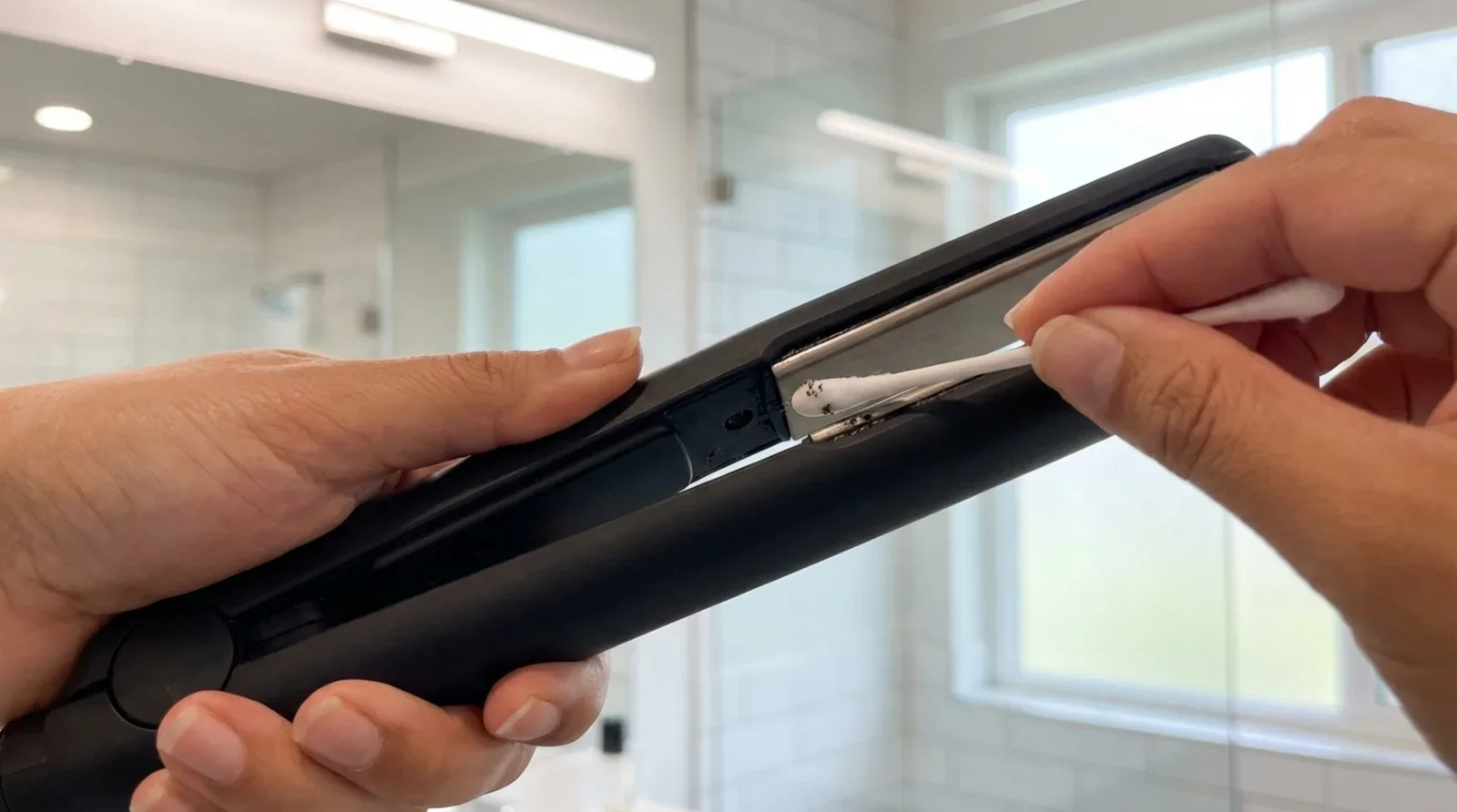
The edges and gaps around the plates often collect thicker layers of product. To reach these areas, use a cotton bud dipped lightly in your cleaning solution. This lets you clean tight spots without getting liquid into the inner parts of the tool.
Remember to wipe the handles and power buttons too. Our hands often carry oils, serums, or makeup while we style, which end up on the outer casing. Use a damp cloth or an antibacterial wipe to clean the body of the straightener so it feels clean and has a good grip for next time.
Dry and safely store after cleaning
After cleaning, let your straightener dry fully. Water and electricity are a risky mix, so make sure there’s no moisture left in any gaps or around the plates. Leave the tool open on a heat-resistant mat or clean towel for at least two to three hours before plugging it in again.
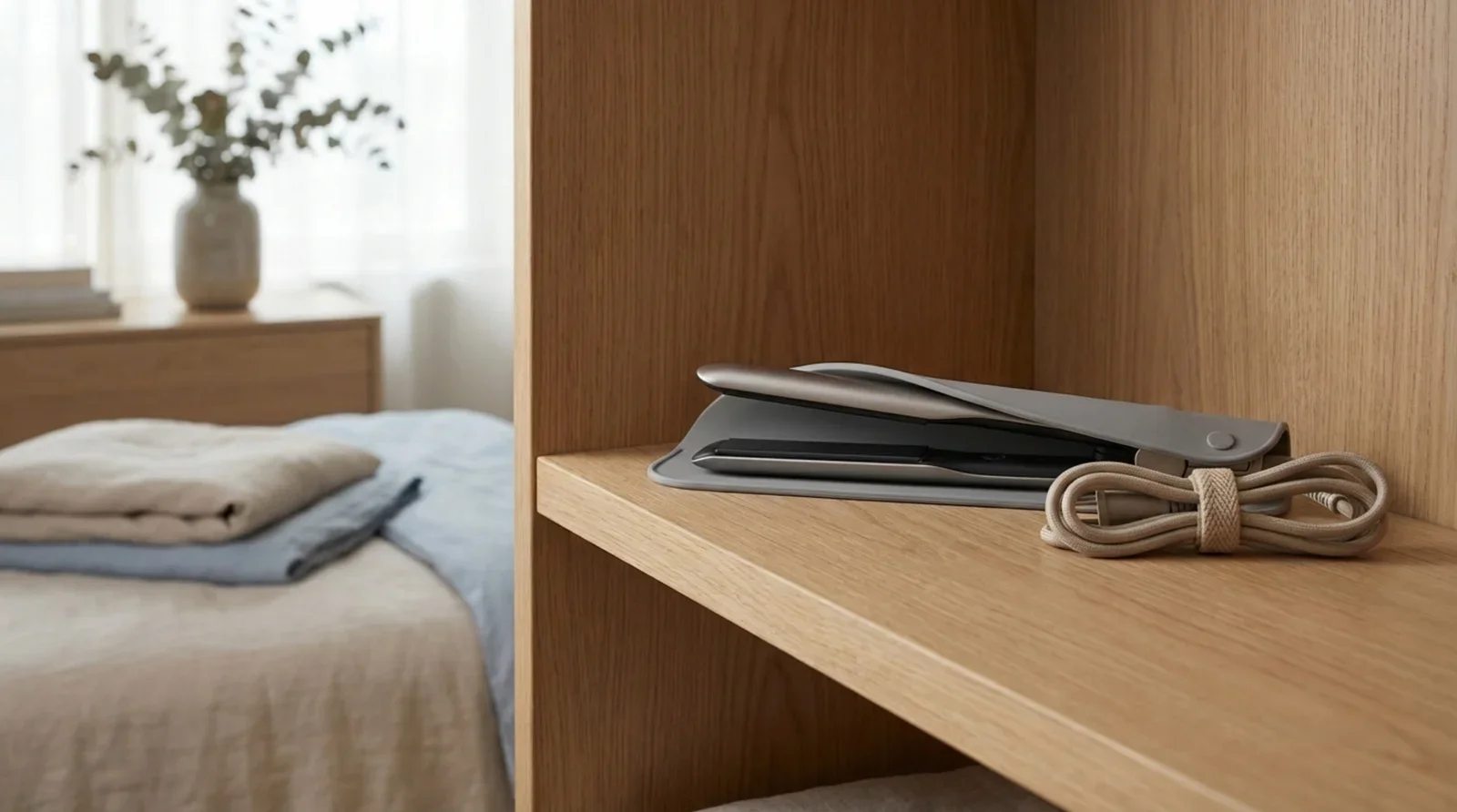
Once it’s completely dry, store it in a cool, dry place. If it came with a heat guard or pouch, use it to keep dust off the plates and protect them from scratches from other items, such as clips or the plug.
Can You Use Household Products to Clean Your Straightener?
Isopropyl alcohol and nail polish remover
Isopropyl alcohol is widely used in salons and is generally safe for most straighteners. It breaks down hairspray and oil-based residues and evaporates quickly, which reduces the risk of leftover moisture on the plates.
Nail polish remover (acetone) is more powerful but also harsher. It can remove very stubborn, burnt-on marks, but it may damage some plastics or plate coatings if used too often. If you do use acetone, apply it sparingly, only to the plates, and wipe the area afterwards with a cloth dampened with water to clear any leftover chemical traces.
Lemon juice for natural cleaning
If you prefer gentle, more natural cleaners, lemon juice can help. Its citric acid breaks down oils and light product build-up. You can soak a cloth in lemon juice, wrap it around the cool plates for 15-20 minutes, then gently scrub with a soft toothbrush.
Lemon juice also has mild antibacterial effects and leaves a fresh smell. However, because it contains natural sugars, always finish with a wipe using a plain damp cloth so no sticky residue remains, as this could burn or caramelise when the plates heat up.
Tools to avoid when cleaning
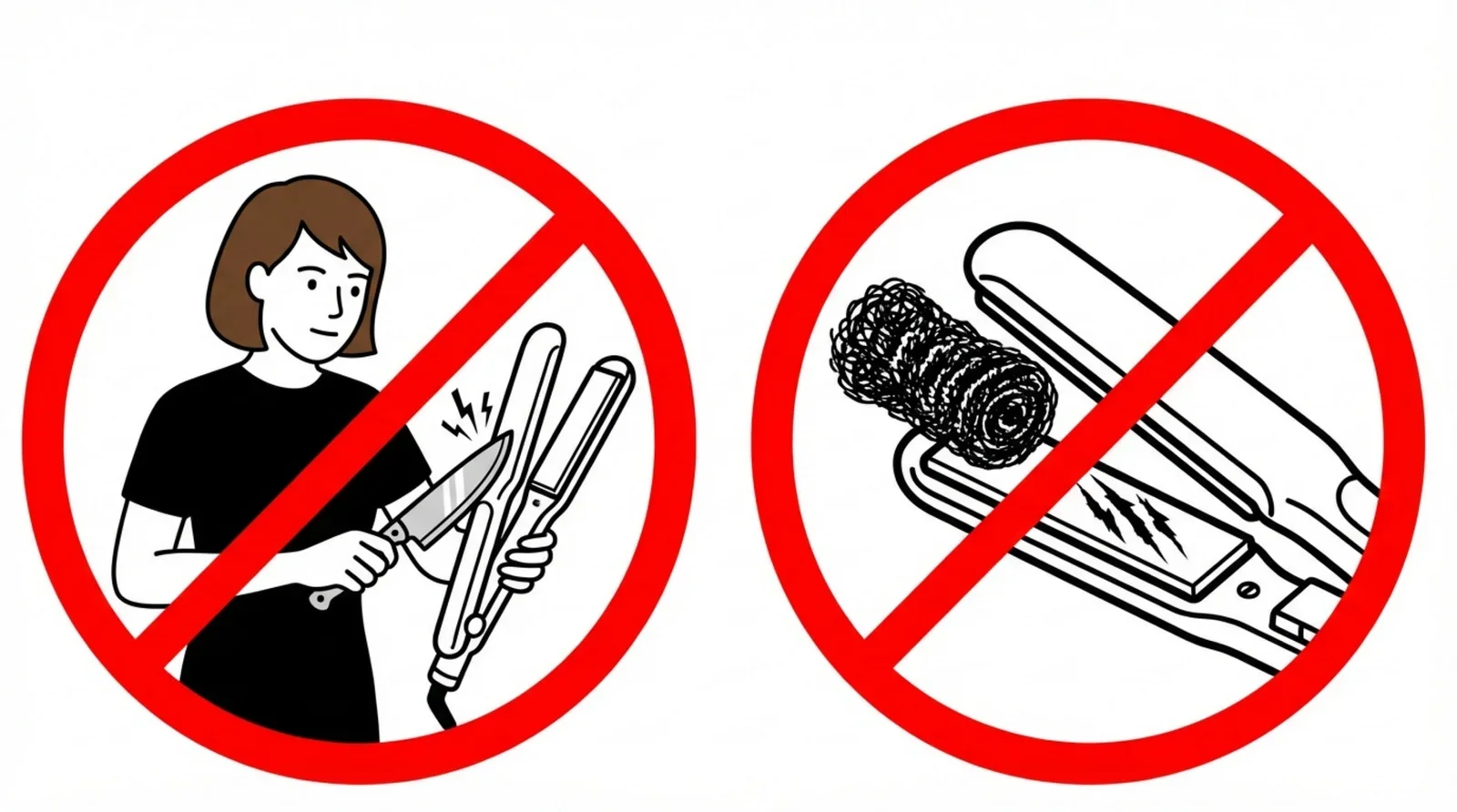
Avoid scraping the plates with knives, metal tools, or even your nails to remove burnt bits. Scratches, even tiny ones, ruin the smoothness of the plates and make them more likely to snag your hair. Once scratched, plates are very hard to fix and often mean the straightener will need replacing sooner.
Do not use abrasive sponges, steel wool, or scouring powders either. They are too rough for ceramic or titanium coatings. Never soak your straightener in water or hold it under a running tap. Water can get inside the casing and damage the internal parts or cause a short circuit.
Dos and Don’ts for Cleaning Hair Styling Tools
Dos: Correct cleaning techniques
Handle your straightener gently while cleaning. Treat it like a delicate electronic gadget, not like a cooking pan. Use soft materials such as microfibre cloths or cotton pads, and always put cleaning liquids on the cloth, not straight onto the tool. A little extra care now can save you from damaging the plates.
Get into the habit of checking your straightener regularly. A quick look after each use can help you spot small smudges before they turn into thick, burnt layers. If you see a mark of hairspray or product, wiping it off while the tool is cooling (using a thick, slightly damp cloth to protect your hands) can prevent build-up.
Don’ts: Mistakes that damage your straightener
Never use the straightener while it is still damp from cleaning. Any remaining water can turn to steam instantly and may burn your hair or cause an electrical issue. Give it more drying time than you think it needs to be safe.
Avoid using oily cleaners or polishes. They might seem like they add extra slip, but they only add more residue. These oils can smoke when heated and also make the handles slippery. Stick to quick-drying cleaners like alcohol or simple water and vinegar solutions.
Caring for Your Hair Straightener After Cleaning
Safe cooling and storage tips
After cleaning or using your straightener, let it cool down on a heat-resistant mat or stand, away from items that can burn. A silicone mat or the protective guard that came with the tool helps protect both your surfaces and the straightener.
When storing it, don’t wrap the cord tightly around the body. This pulls on the point where the cord meets the handle and can cause the wires to weaken or break over time. Instead, loosely coil the cord, secure it with a soft tie, and keep the straightener in a drawer, cupboard, or pouch where the plates won’t be scratched.
Checking the power cord and plates
Cleaning time is also a good time to check for safety issues. Run your fingers along the power cord to feel for bumps, cuts, or bare wires. If you find any damage, stop using the tool and get it repaired or replace it, as damaged cords can cause shocks or fires.
Look closely at the plates too. If you see pitting, cracks, or peeling coating, the metal underneath may be exposed. This can create hot spots that burn your hair. Regular checks help you use a straightener that is not just clean, but also safe and effective.
Answers to Common Straightener Cleaning Questions
Why does my straightener smell when hot?
A bad smell from your straightener usually comes from layers of burnt product and natural oils on the plates. Each time you heat the tool, these layers cook again, which can release a strong burnt or chemical smell. Bacteria in the build-up can also add to the odour when heated.
To get rid of the smell, you’ll need a thorough clean. Use isopropyl alcohol and cotton buds to reach cracks and edges around the plates, where residue often hides. If a burning smell remains even after careful cleaning, the problem might be inside the tool, such as a melting component, and you should stop using it right away.
How can I remove burnt-on residue?
For black, burnt-on marks, patience and the right method help. Mix baking soda with a little water to make a paste. Spread it on the cold plates, leave it for about 10 minutes, then gently wipe away with a damp cloth. Baking soda is mildly abrasive, so it helps lift the burnt layer without scratching most plate surfaces.
For chemical build-up from hairsprays and similar products, a “heat and soak” method can work well. Lightly warm the plates, unplug the tool, then place a cloth soaked in a vinegar and water mix over them. The slight warmth helps the solution soften the build-up, which you can then wipe away once everything has cooled down.
Can I clean wet hair straighteners?
No. Never use a straightener on wet hair unless it is clearly marked as a “wet-to-dry” model, and never clean it while it is wet or use it immediately after wiping it with a damp cloth. Water conducts electricity, and moisture getting into the internal parts can cause a short circuit, blown fuse, or a risk of electric shock.
Always wait until the straightener is completely dry before plugging it back in. If you’re in a hurry, you can speed up drying of the outer casing with a hairdryer on a cool setting, but leaving it in a dry place for a few hours is still the safest option.
When should I replace my straightener?
Good cleaning habits extend a straightener’s life, but all tools wear out eventually. Think about replacing yours if the plates are badly scratched, cracked, or if the coating is coming off. These problems can cause uneven heat and damage your hair.
Other warning signs include slow heating, flickering indicator lights, plates that no longer close together evenly, buzzing sounds, or a smell of burning plastic rather than burnt product. These point to internal faults. Many high-end brands offer a two- or three-year warranty, so check any receipts or warranty cards if your straightener fails within that time.
To keep both your hair and tools in good shape, think about where you store and use them. Humid bathrooms can cause metal parts inside the straightener to corrode faster. If you can, keep your tools in a dry bedroom drawer or linen cupboard, away from steam. Also, clean your hairbrushes regularly by removing hair and washing the bristles in warm, soapy water. This stops old oils and product from going back onto your hair and then onto your straightener plates. Treat your brushes, combs, and tools as one full kit, and you’ll find they all work better and your hair stays healthier between salon visits.
Do you live in Sydney?
Get the perfect look at our salon – schedule your appointment now!
Our Services
Check Out Our Instagram



Check out our instagram
Check out our instagram and see our latest posts!
Check out our facebook
Check out our facebook and see our latest
posts!