
How to Grow Long Hair, Fast
To grow long hair as fast as your body allows, you need two things: feed your hair from the inside and protect the hair you already have from damage. Human hair usually grows at a steady rate of about 1.25 centimetres (half an inch) a month. The real “secret” is a healthy scalp and strong ends that don’t snap off. With a protein-rich diet, regular scalp stimulation, and gentle, low-handling hairstyles, you can help your hair reach its full length without losing inches to breakage.
Patience is one of your most important tools, but it’s not the only one. Growing very long hair means changing how you think about your strands: you aren’t just growing hair; you’re protecting a delicate fibre that can’t repair itself once it leaves the follicle. Everything you do-from how you sleep to the vitamins you take-affects whether your hair flourishes or just hangs on.
What determines how fast your hair grows?
Hair growth speed is not random. It’s a built-in biological process controlled by both internal and external factors. While many people search for “miracle” products, real hair growth activity happens below the scalp, where blood delivers oxygen and nutrients to the hair root.
On top of internal factors, the environment matters. Strong sun, dry air, or freezing winds can dry out your hair and make it brittle. This doesn’t always slow growth at the root, but it can make it seem like your hair is stuck at one length because the ends are breaking as quickly as new hair grows out.
What is the average hair growth rate?
Most people’s hair grows around 1.25 centimetres per month, adding up to about 15 centimetres (6 inches) a year. This is only an average-some people grow hair a bit faster, others a bit slower, depending on their biology. It’s also normal to lose 50-100 hairs per day as part of the natural shedding cycle, so seeing some hairs in your brush or shower is expected.
Your current length affects how you notice growth. Shorter cuts like bobs or fringes seem to grow faster because the change is easy to see relative to your jawline or eyebrows. If your hair is already long, another centimetre is harder to spot, even though the growth rate is the same.
Influence of genetics on hair growth speed
Your genes set the basic rules for your hair. They decide your “terminal length,” which is the longest a hair strand can grow before it sheds. This explains why some people can grow hair down to their thighs while others find their hair stops around shoulder or mid-back length. Ethnic background can also affect growth patterns; some studies suggest Asian hair may grow a bit faster on average, but personal variation matters most.
You are born with all the hair follicles you’ll ever have-usually about 80,000 to 120,000 on your scalp. You can’t create more follicles, but you can help the ones you have work well. If your parents struggled to grow very long hair, you may have a shorter growth (anagen) phase, so you’ll need to be extra careful about protecting length and avoiding damage.
Role of age and hormones in hair length
Hair tends to grow more slowly with age, and follicles can get smaller, producing finer strands. Hormones also play a big role. High levels of cortisol, the stress hormone, can inflame the follicles and push them into a resting phase too soon. This leads to increased shedding and slower visible progress.
Major hormonal changes such as pregnancy or menopause can also change hair growth and thickness. During pregnancy, higher oestrogen levels often keep hair in the growth phase longer, so hair looks thicker. When those hormone levels drop, some people experience “telogen effluvium,” a short period of heavy shedding. Managing stress with exercise, relaxation techniques, or therapy supports both your mental health and your hair.
Factors that slow or prevent long hair growth
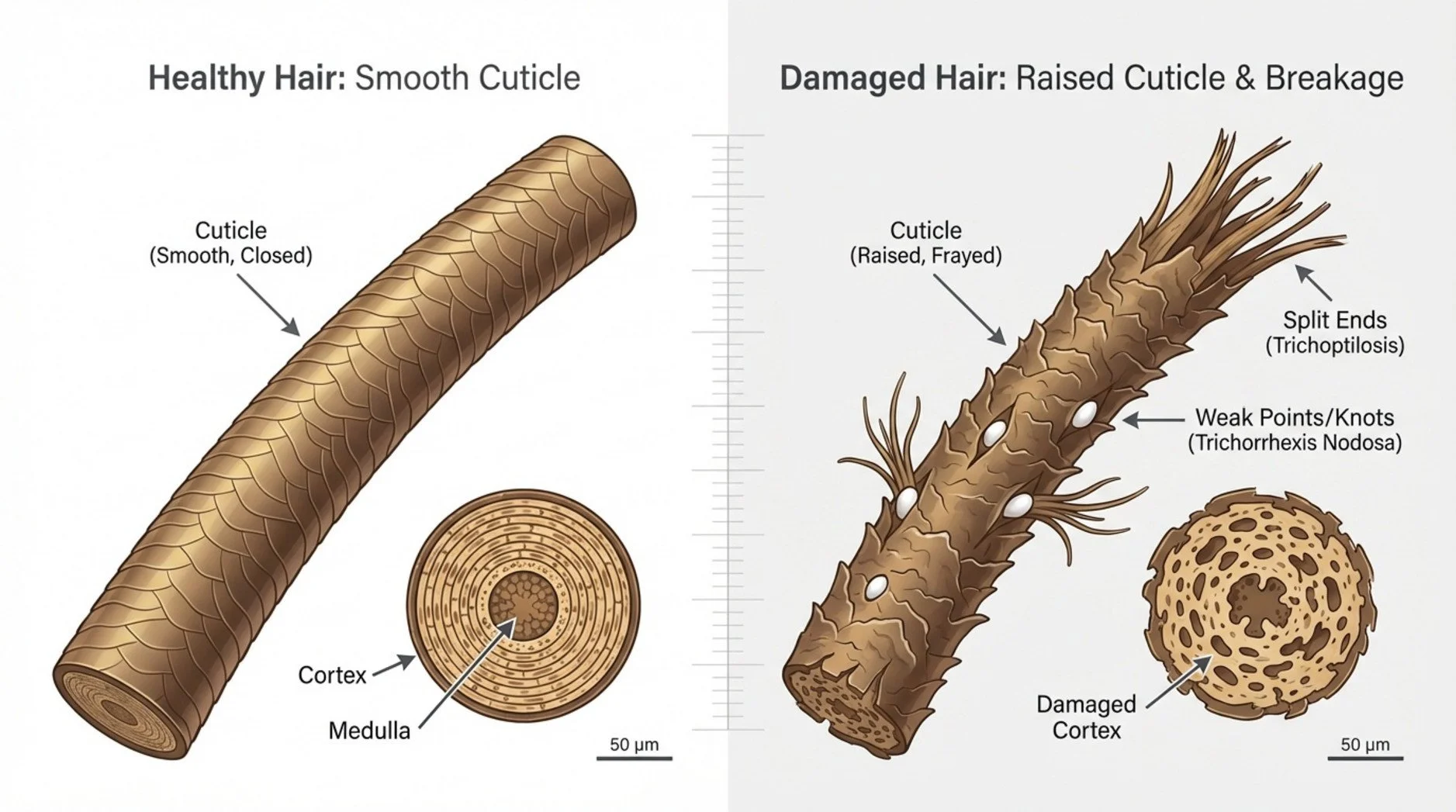
Most people who say their hair has “stopped growing” are dealing with breakage, not a total stop in growth. Hair often breaks at the ends due to physical damage from styling and daily habits. When the hair fibre is worn down, the cuticle (outer layer) lifts and the inner core becomes weak and easy to snap.
Your overall health is also a big factor. Crash diets, low-calorie plans, or sudden weight loss can make your body redirect nutrients away from hair growth to keep key organs going. When your body is in “survival mode,” hair growth is put on the back burner, and the hair may look dull, dry, and stubbornly short.
Common causes of hair breakage
Breakage is the main enemy of long hair. It often comes from small everyday habits, such as drying with rough cotton towels or wearing metal-snag hair elastics. Hair is weakest when wet and stretches more easily, so harsh brushing or towel-rubbing can cause a lot of snapping. Rubbing against synthetic fabrics or heavy bag straps day after day can also wear hair down.
“Tension alopecia” is another frequent problem. This happens when hair is pulled back very tightly into ponytails, buns, or braids for long periods. The constant pull can harm the follicles and lead to permanent hair loss around the edges. To avoid this, change your hairstyles often and use gentle accessories like silk scrunchies, soft bands, or claw clips.
Impact of heat styling and chemical treatments
High heat from straighteners, curling wands, and blow-dryers can overheat the water inside the hair shaft, forming tiny bubbles that weaken the hair and make it easy to snap. Chemical treatments such as bleaching, perming, or permanent dyeing work by opening the cuticle and changing the inner structure of the hair, which makes it weaker overall. Bleached hair is especially prone to splitting and breaking before it can reach great length.
If you use heat, spray on a heat protectant first and keep tools as cool as possible-under about 150°C for fine hair. If you’re serious about gaining length, switching to no-heat styling (like overnight robe curls, flexi rods, or simple air-drying) can make a huge difference to your hair’s strength over time.
How diet and health conditions affect hair growth
Your hair often shows how healthy you are inside. Low levels of iron, zinc, or B vitamins can slow growth and lead to thinning. Iron deficiency (anaemia) is a common cause of hair loss because it reduces how much oxygen reaches the follicles. Some health conditions and medicines, such as certain blood pressure drugs, list hair loss as a side effect.
Very low-calorie or unbalanced diets are another major problem. If you don’t eat enough protein or overall energy, your body lowers hair production. This is why many people see heavier shedding a few months after starting a strict or crash diet. A balanced, nutrient-rich diet gives your follicles the raw materials they need to grow strong hair.
Nutrition for fast and healthy hair growth
Healthy hair starts with what you eat and drink. Each hair strand is mostly made of a tough protein called keratin, which is also in your nails and the outer layer of your skin. Your diet must supply enough amino acids (protein building blocks) to keep making keratin. If you don’t eat enough protein, your body will use what little you have for key organs first, and hair will suffer.
Hydration matters too. Like a plant, your hair needs water to stay flexible and shiny. Not drinking enough fluids can lead to a dry scalp and rough, tangled hair that breaks more easily. Aim for meals full of whole, colourful foods to cover many different hair-supporting nutrients.
Protein-rich foods to support hair
Try to eat at least around 50 grams of protein per day, more if your body size or activity level calls for it. Good sources include:
Eggs - contain protein and biotin, a B vitamin that supports hair.
Oily fish (like salmon, mackerel, sardines) - give you protein and omega-3 fats.
Lean meats (such as chicken and turkey) - provide protein and iron.
Plant sources - beans, lentils, chickpeas, nuts, seeds, tofu, and whole grains.
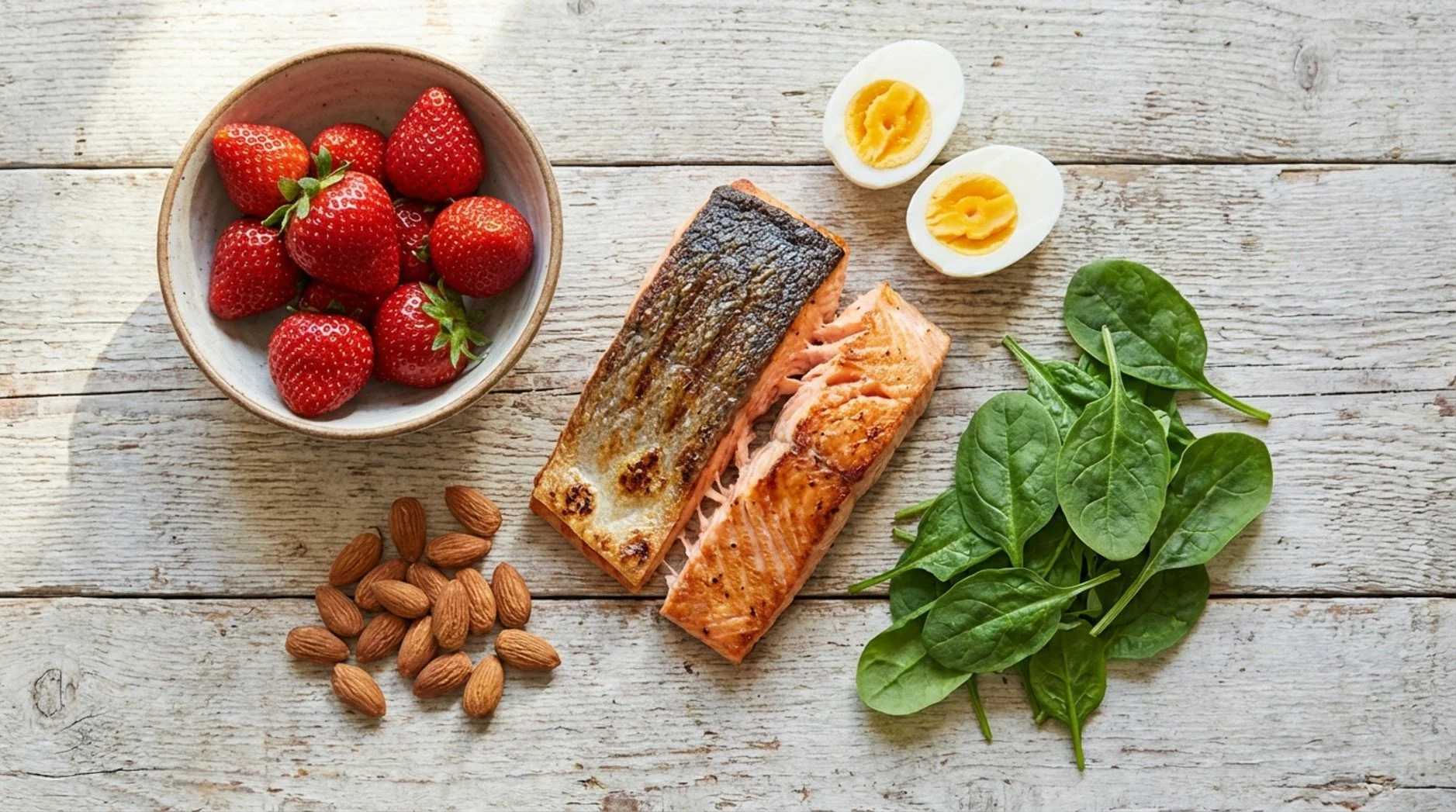
If you find it hard to reach your protein target with food alone, a good-quality protein powder added to smoothies or oats can help. A steady flow of amino acids helps your body keep hair in the growth phase for longer.
Essential vitamins and minerals for hair length
Alongside protein, some vitamins and minerals play a key role in hair growth and strength:
| Nutrient | Role in Hair | Food Sources |
|---|---|---|
| Vitamin A | Helps glands make sebum, which moisturises the scalp. | Carrots, sweet potatoes, spinach, kale. |
| Vitamin C | Supports collagen production and helps absorb iron. | Citrus fruits, berries, peppers, broccoli. |
| Vitamin E | Acts as an antioxidant, protecting the scalp. | Nuts, seeds, vegetable oils, avocado. |
| Zinc | Helps with hair tissue growth and repair. | Meat, shellfish, pumpkin seeds, lentils. |
| Iron | Delivers oxygen to follicles; low iron can cause shedding. | Red meat, liver, beans, spinach, fortified cereals. |
| Omega-3 fats | Support scalp health and shine, reduce dryness. | Walnuts, flaxseeds, chia seeds, oily fish. |
Lacking any of these for a long time can slow progress and lead to more shedding or breakage.
Should you take hair supplements?
The market is full of “hair gummies” and vitamin mixes. These usually help only if you’re low in a specific nutrient. If your diet already covers your needs, your body will get rid of the extra vitamins. Many hair supplements are also poorly regulated, so labels can oversell their benefits.
If you think you might have a deficiency, talk to your doctor and ask for blood tests. Targeted supplements like iron, vitamin D, or biotin under medical guidance can help in those cases. Avoid very high doses of biotin, as they can interfere with some lab tests and may trigger breakouts in some people. Some people experiment with food-grade Diatomaceous Earth or molasses for minerals, but these should always be discussed with a professional first.
Hair care habits that speed up length retention
To see real length gains, you need to keep the hair you grow. Think of your hair as delicate lace. How you wash, dry, and brush it will decide how much of each month’s growth you actually keep. Small routine changes can add up to clear progress over 6-12 months.
Consistency matters most. You can’t treat your hair gently one day and then rough it up the next. A low-handling routine-where you touch and restyle your hair as little as possible-is one of the fastest ways to see it grow longer over time.
How often should you trim your hair?
There’s a long-standing myth that cutting your hair makes it grow faster. This isn’t how hair works; growth happens at the scalp, not the ends. Still, trims are very useful for keeping the length you gain. If you ignore split ends, they can travel up the strand and damage more of the hair, leading to breakage higher up.
If you’re growing your hair out, a small trim of about 6 millimetres every 10-12 weeks usually works well. Some people like the “Search and Destroy” (S+D) method: sit under bright light with sharp hair scissors and snip only the obvious splits and knots you see, without cutting across all the ends. This helps keep your hemline healthy without losing much length.
Pre-wash and post-wash tips for preventing damage
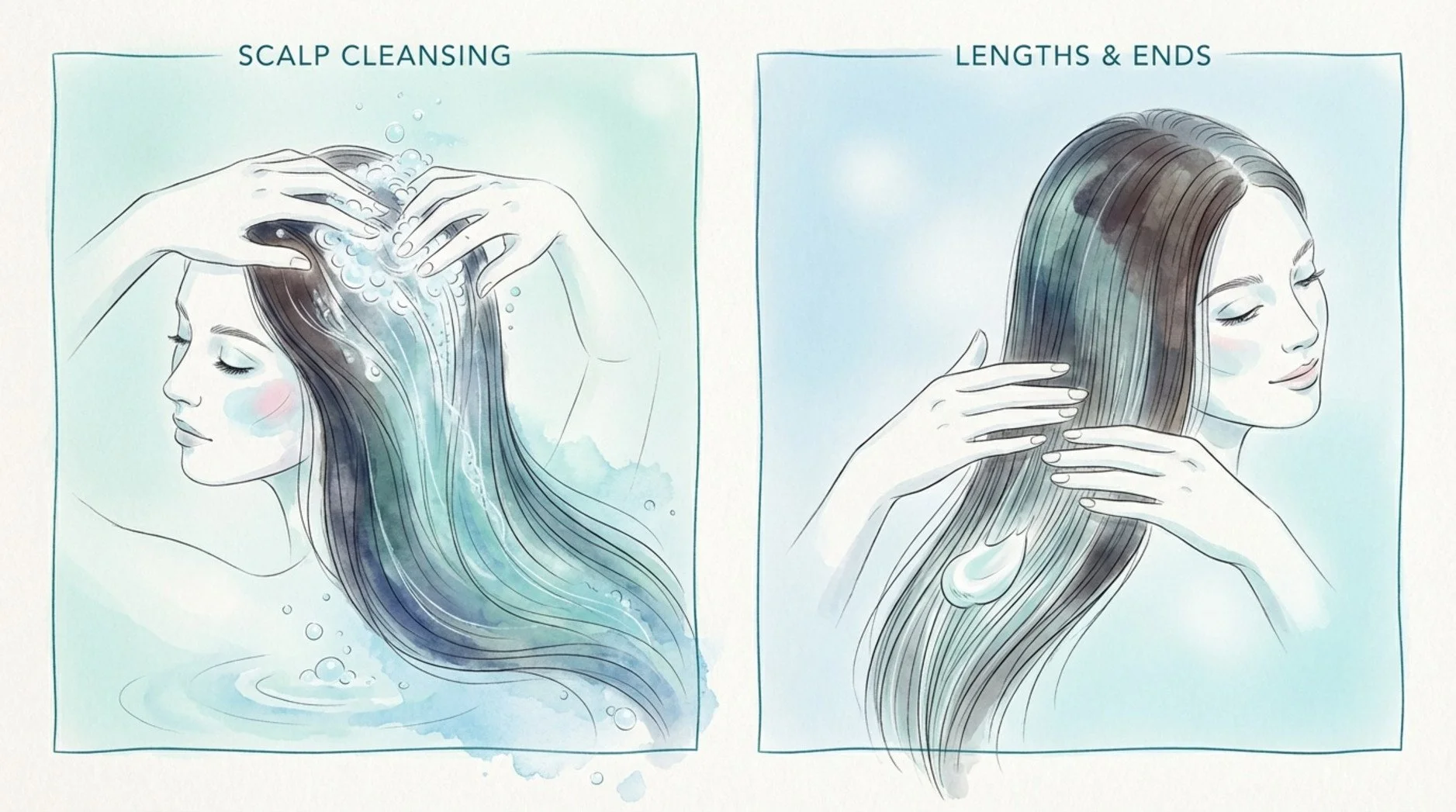
Your wash routine should start before you turn on the shower. Applying a pre-shampoo (pre-poo) oil or conditioner to your lengths can reduce how drying your shampoo feels. When you wash, focus shampoo on the scalp only, where oil and sweat collect. Let the lather slide down the lengths instead of scrubbing them, which can cause tangling and roughen the cuticle.
After washing, always use conditioner on your lengths and ends to smooth the cuticle and add slip. A final rinse with cool water can help the cuticle lie flatter, which can lead to smoother, shinier hair with less frizz. If your hair is dry, follow with a leave-in conditioner or a few drops of oil on damp ends to protect them while they dry.
Brushing and detangling without breakage
Never rip a brush from roots to ends in one go. This forces knots together and almost guarantees snapping. Instead, work in sections, starting at the very ends and slowly moving upward as you clear tangles. Take your time, and use your fingers to gently loosen tough knots before using a tool.
Choosing the right tools makes a big difference:
Wide-toothed comb - best for detangling, especially on damp or curly hair.
Paddle brush or wooden-bristle brush - good for distributing natural oils on dry hair.
Avoid brushes with sharp seams or broken bristles, as they can snag and tear hair.
Best hair drying techniques for less breakage
Rubbing hair with a standard terry-cloth towel can cause a lot of frizz and damage because the rough loops catch the hair. Instead, use a soft cotton T-shirt or a microfibre hair towel to gently squeeze and blot out water. These fabrics are smoother and soak up water without as much friction.
For blow-drying, a handy rule is the “80% rule”: let your hair air-dry until it is about 80% dry, then use a blow-dryer on a cool or low heat setting to finish. This reduces how long your hair is exposed to direct heat. If you have time, letting hair air-dry fully is the gentlest choice.
Styling and protection techniques for long hair
Once you have length, your main job is to protect it. Long hair is old hair-the ends of hip-length hair may be several years old and have gone through countless washes and brushings. Protective styling means keeping those ends tucked away and safe from weather, friction, and daily wear.
Think of your hairstyle as a shield. The less your hair rubs on clothing, seatbelts, and bag straps, the less it will split and thin at the bottom. Paying attention to how your hair moves through the day can stop a lot of invisible damage.
Why protective hairstyles matter
A protective style is any style that keeps your ends tucked in and doesn’t need much daily restyling. Good protective styles include:
Straight or wavy hair: loose buns, French braids, Dutch braids, low ponytails with soft bands.
Coily or type 4 hair: jumbo box braids, faux twists, flat twists, bantu knots, simple updos.
The aim is to reduce physical wear. Hair worn down is more exposed to wind, tangles, and rubbing on fabrics. Keeping it up and lightly secured helps it stay moisturised and intact. Keep these styles soft-if your scalp feels sore or tight, the style is too harsh.
Benefits of satin pillowcases and sleep caps
We spend many hours with our head on a pillow, and rough pillowcases can cause more damage than you’d think. Cotton soaks up moisture and grips the hair, which can lead to frizz, dryness, and tangles after a night of tossing and turning. Satin or silk pillowcases let hair glide smoothly, reducing friction and moisture loss.
A satin bonnet or sleep cap adds extra protection by keeping your hair gathered and contained. This stops hair from getting trapped under your shoulders or twisted while you sleep. Many people with long hair also put it into a loose bun or braid on top of the head (“pineapple”) before putting on a cap to wake up with smoother, more manageable hair.

Minimising friction and mechanical damage
Friction quietly chips away at your length. Watch how your hair interacts with your surroundings. On windy days, loosely tie or braid your hair so it doesn’t whip around and tangle. When wearing backpacks or shoulder bags, move your hair over the opposite shoulder or tuck it into your coat. Check that your hair isn’t trapped between your back and the car seat while driving.
Choose gentle accessories:
Avoid elastics with metal pieces or tight rubber bands.
Use seamless hair ties, satin scrunchies, or spiral ties (like Invisibobbles).
If something tugs or hurts when you remove it, it’s likely damaging your hair.
Using heat protection products
If you use hot tools, a heat protectant is a must. These products coat the hair shaft with a thin layer that helps spread heat more evenly and reduces how quickly the hair dries out. Many contain proteins or silicones that temporarily fill tiny gaps in the cuticle, helping hair feel smoother.
Apply heat protectant to damp hair before blow-drying, and to dry hair before straightening or curling. Remember, even with protection, heat still stresses the hair-it just lessens the impact. Think of it like sunscreen: helpful, but not a free pass to overdo it.
Treatments and products that may help hair grow faster
No product can change your genetic growth rate, but some treatments can create a healthier scalp and stronger strands. This can make your hair seem to grow faster because you’re losing less to shedding and breakage. Options range from science-based serums to traditional plant oils.
Set realistic expectations: most topical treatments take 3-4 months of steady use before you notice visible changes. Hair grows slowly, and you need to wait for new hair to come through and grow long enough to see.
Are hair growth serums and tonics effective?
Some serums have research behind them. For example, PROfiller+ Hair Growth Scalp Serum has been reported to boost visible growth by around 30% in four weeks and cut hair loss by 50% over twelve weeks in their own studies. Many such products work by increasing blood flow to the scalp or feeding nutrients directly to the follicles. Caffeine-based serums are popular because caffeine may help counter DHT, a hormone linked to thinning.
Rosemary oil is another favourite. A 2015 study comparing rosemary oil with 2% minoxidil found similar improvements in hair count after six months, with less itching and scaling in the rosemary group. These tonics need regular, usually daily, application to the scalp to have a chance to work.
Deep conditioning and weekly masks
A weekly hair mask gives extra care beyond normal conditioner. Masks are thicker and more concentrated, and they stay on longer so they can sink deeper into the hair. There are two main types:
Moisture masks - for dry, rough, or tangled hair.
Protein masks - for weak, damaged, or over-processed hair.
One popular DIY is “SMT” (Snowymoon’s Moisture Treatment), which mixes conditioner with honey and aloe vera gel for extra hydration.
To get better results, apply the mask to damp hair and wrap it in a warm towel for 5-10 minutes. Mild heat helps lift the cuticle so the ingredients get in more easily. Regular deep conditioning keeps hair stretchy and flexible, which helps prevent breakage and splits.
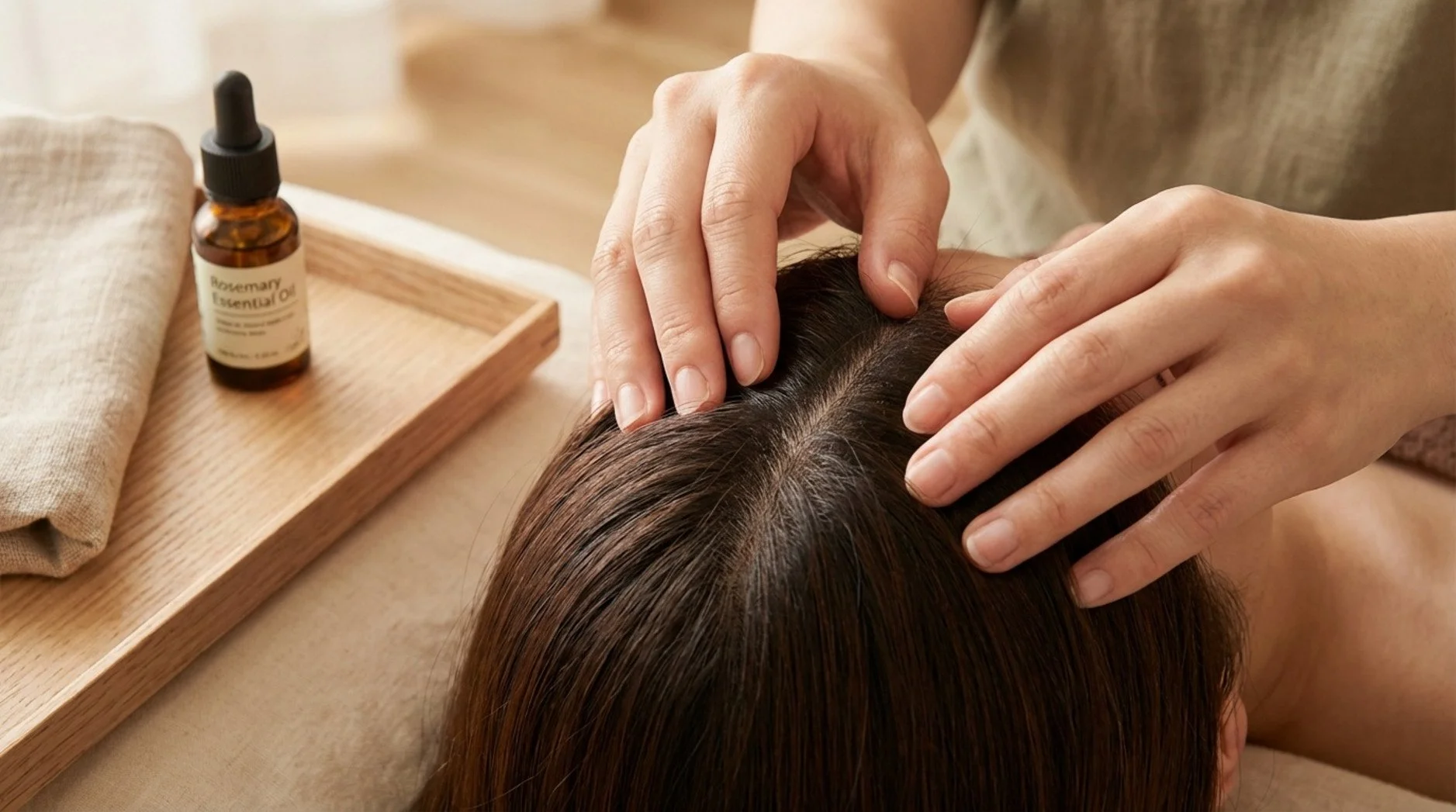
Scalp massages and essential oils
Scalp massages are simple, free, and helpful. By gently moving your fingertips over your scalp in small circles for a few minutes each day, you boost blood flow to the follicles so they receive more nutrients. Some people try the “Inversion Method,” massaging while the head is held upside down to increase blood flow even more, but this should be done carefully and briefly.
Adding oils can increase the benefits and comfort:
Peppermint oil - feels cool and may boost circulation.
Lavender oil - calming and soothing for the scalp.
Jojoba, coconut, or almond oil - good carrier oils to dilute essential oils.
Always mix a few drops of essential oil into a carrier oil before applying, to avoid irritation. These massages can support hair health and double as a relaxing self-care habit.
Emerging treatments: PRP, microneedling, and minoxidil
If you have clear thinning or patchy loss, medical treatments may help. Some options include:
PRP (Platelet-Rich Plasma) - your blood is drawn, spun to concentrate platelets, then injected into the scalp to encourage follicle activity.
Microneedling - a roller or pen with tiny needles makes micro-injuries in the scalp, triggering repair and helping other products absorb better.
Minoxidil - a well-known over-the-counter liquid or foam that can keep hair in the growth phase longer and increase blood flow.
These treatments usually require ongoing use. If you stop minoxidil, for example, hairs gained from it typically shed over time. Always speak to a dermatologist before starting stronger treatments to find out what’s suitable for you.
Rice water, onion juice, and natural remedies
Many cultures use simple kitchen remedies for hair. Rice water-the cloudy water from soaking or cooking rice-is used in parts of Asia as a rinse to strengthen and smooth hair. It contains amino acids and some vitamins that may support elasticity. Onion juice is another popular choice online; it’s rich in sulphur, which supports protein structure in hair, though the smell can be very strong.
Smaller studies and personal stories suggest these may help some people, but evidence is not as strong as it is for medical treatments. Still, they are low-cost options you can try if you enjoy DIY care. Always do a patch test on your skin first to check for irritation and be prepared to experiment a little to see what suits your hair.
Common myths about growing long hair quickly
Hair care advice is full of myths that can waste your time and money. A very common one is that a single “magic” product can double how fast your hair grows. Hair growth is a slow biological process with built-in limits. Products promising instant inches usually rely on heavy silicones that coat the hair and make it feel smoother and thicker, without changing growth at the root.
The key is to understand the difference between growth (what happens at the scalp) and retention (keeping what grows). Once you accept that your hair is always growing, you can stop trying to force growth and instead focus on protecting what you already have.
Does frequent trimming make hair grow faster?
No-cutting your ends doesn’t speed up your follicles. This myth sticks around because a fresh trim removes thin, frayed ends, which makes hair look fuller and healthier. This can create the impression of faster growth. Trims are useful, but they help by stopping splits from moving up the hair, not by stimulating growth.
If you want longer hair, trimming too often (such as every six weeks) can mean you cut off most or all of your new growth. Instead, pay attention to how your ends feel and look. If they are rough, tangled, or full of splits, get a small trim. If not, leave them alone and focus on gentle care.
Can any shampoo or supplement double your growth rate?
No shampoo can double your growth rate. Shampoo is on your scalp for only a short time before being rinsed away. While a good formula can keep your scalp clean and balanced, it won’t change your genetics. Supplements work in a similar way: they support growth only if you were missing a nutrient to begin with. Extra vitamins do not keep speeding things up if your levels are already normal.
Be cautious with products labelled “growth-boosting” or “accelerator.” Real hair progress comes from steady habits like a good diet, gentle handling, and regular hydration. Fancy labels cannot replace the basics.
When to seek professional advice for slow hair growth
If you’ve improved your diet, reduced heat, been gentle, and still see little or no progress-or if you notice clear thinning or sudden heavy shedding-it might be time to talk to a professional. Rapid hair loss can sometimes signal a health problem that needs medical care.
A dermatologist or trichologist (hair and scalp specialist) can help you understand what’s going on and offer treatments that you can’t buy off the shelf. Getting help early often leads to better results.
Signs of underlying health issues
Watch for warning signs such as:
Sudden, heavy shedding without an obvious reason (like recent illness or childbirth).
Itchy, sore, or burning scalp.
Patchy bald spots or widening part line.
Hair loss along with fatigue, weight changes, or skin problems.
These may point to thyroid issues, autoimmune conditions (like alopecia areata), or serious nutrient shortages. Ongoing dandruff, thick scaling, or redness can also interfere with growth by causing irritation around follicles. If your scalp feels uncomfortable or looks unusual, don’t ignore it-your scalp is the “soil,” and unhealthy soil can’t grow strong hair.
What to expect from a dermatologist or trichologist
During your visit, the specialist will usually:
Ask about your diet, lifestyle, stress, health history, and hair care habits.
Examine your scalp and hair, sometimes using a magnifying tool (dermatoscope).
Possibly perform a “pull test” to see how easily hair comes out.
Order blood tests to check iron, vitamin D, thyroid function, hormones, and more.
Based on what they find, they may suggest treatments such as prescription medicines (for example, Spironolactone for hormone-linked shedding, or stronger Minoxidil), steroid injections for some conditions, or in-clinic options like professional microneedling. Working with a specialist can save you from guessing and give you a clear plan.
Key takeaways for growing long hair fast
Growing long hair quickly comes down to patience, gentle handling, and consistent care. Often, the best thing you can do is stop overworking your hair-constant restyling and checking length can cause more harm than good. Build a routine of good nutrition, kind treatment, and protective styling, then let time do its job.
Your hair often reflects your general health. Regular sleep, stress management, and physical activity support your hair just as much as expensive products. Celebrate small gains-an extra centimetre, fewer splits, a thicker ponytail-and keep going. Steady habits are the bridge between the hair you have now and the long, healthy hair you want. Stick with the routine, and length will follow.
Do you live in Sydney?
Get the perfect look at our salon – schedule your appointment now!
Our Services
Check Out Our Instagram



Check out our instagram
Check out our instagram and see our latest posts!
Check out our facebook
Check out our facebook and see our latest
posts!