
How to Properly Wash Your Hair
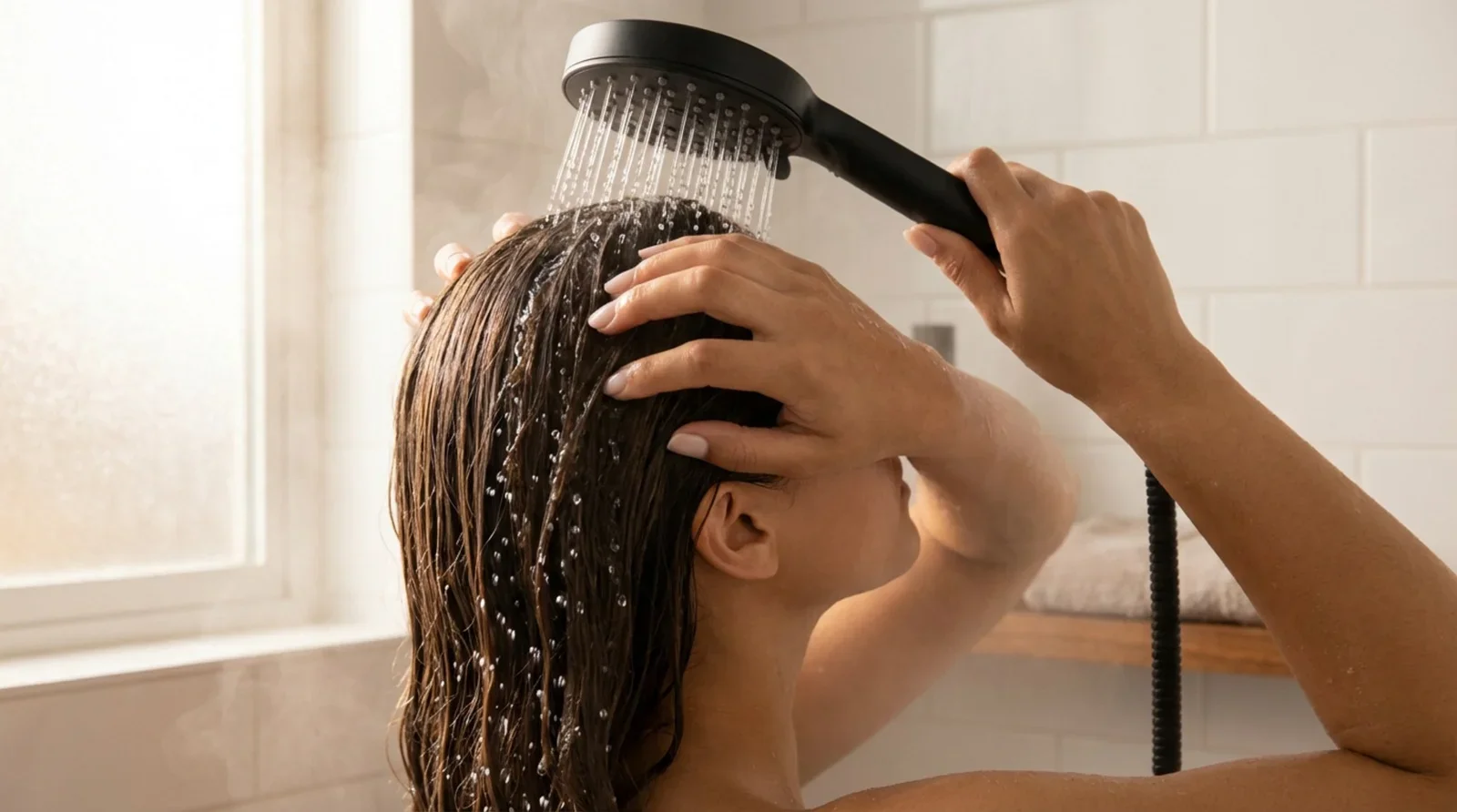
To wash your hair the right way, start by soaking your hair completely with lukewarm water. Then apply a suitable shampoo mainly to your scalp and roots, keeping it off the ends as much as possible. Gently massage your scalp with your fingertips-never your nails-to help blood flow and remove buildup, then rinse well. After that, apply conditioner from the mid-lengths to the ends only, let it sit for a few minutes, and finish with a cooler rinse to help smooth the cuticle. This routine cleans away oils and dirt without stripping your hair of the moisture it needs.
A good hair-washing routine is the base of healthy, attractive hair. It’s more than just rinsing away dirt; it’s about creating the right conditions for your hair to stay strong. Done correctly, this habit keeps your scalp’s natural oils in balance, protects your hair’s structure, and helps it look shiny, soft, and full day after day.
Why Proper Hair Washing Matters
What Are the Benefits of Proper Hair Washing?
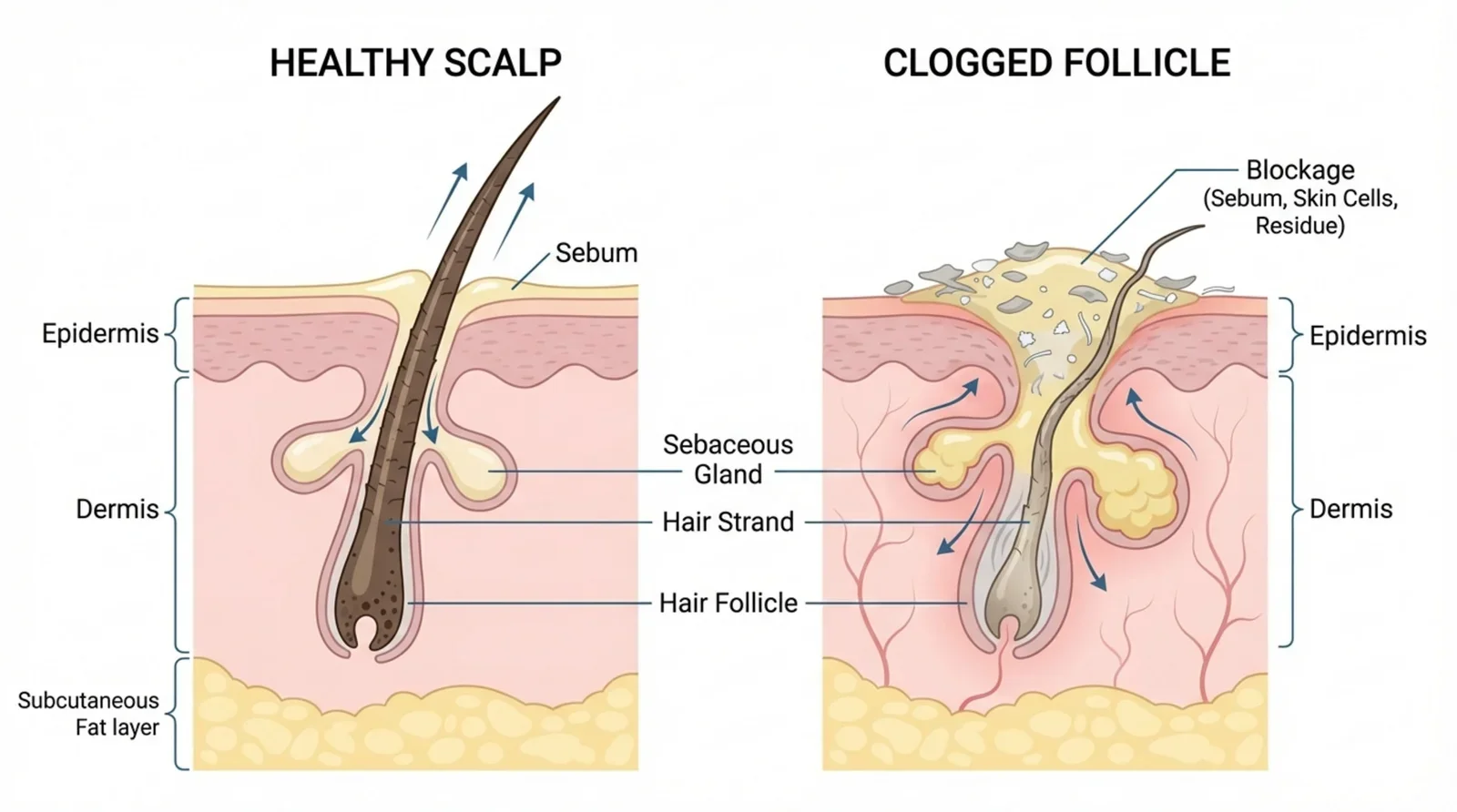
Washing your hair correctly does far more than keep it smelling clean. A well-cleansed scalp improves blood flow, which supports healthy hair growth. A clean scalp keeps hair follicles free from dead skin and excess oil, so new strands can grow strong and without blockage. A good routine also maintains your hair’s natural shine and helps prevent the dull, lifeless look that comes from pollution and leftover styling products.
With the right technique, you also protect your hair’s stretch and moisture levels. Using suitable products and methods prepares your hair to work better with styling products. Curls can have more bounce, straight styles can look smoother, and colour can stay bright for longer. This is what turns occasional “good hair days” into hair that looks great most of the year.
What Can Go Wrong If You Wash Your Hair Incorrectly?
Washing your hair the wrong way or using the wrong shampoo can cause a lot of problems. A big issue is buildup, which can dull your hair and slow down growth. If you scrub the ends instead of focusing on the scalp, your roots may stay oily while your ends become dry, weak, and break easily. This imbalance often leads to washing too often, which makes dryness and oiliness even worse over time.
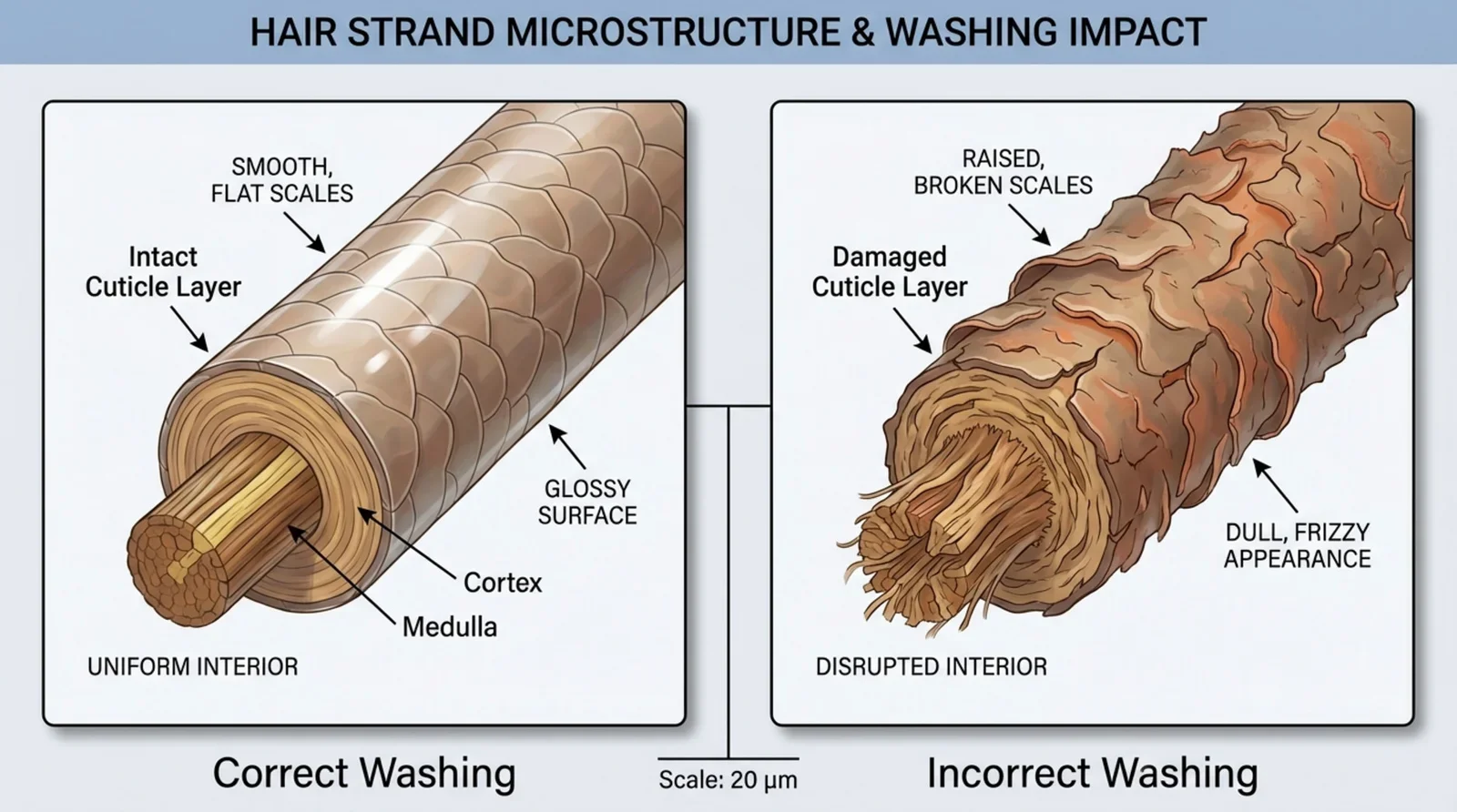
Poor technique can also irritate the scalp and lead to dandruff or even mild infections, especially if you scratch with sharp nails. Water that is too hot can strip away natural oils and lift the cuticle. This lets moisture escape, causing frizz and faster fading for coloured hair. Bad habits can quickly turn healthy hair into a constant source of stress.
How Hair Type Affects Your Washing Routine
Fine Hair
Fine hair means each individual strand has a small width. If you roll one hair between your fingers and barely feel it, you likely have fine hair. Because the hair shaft is smoother and less porous, natural oils often sit on the surface and are easier to see, so the hair looks greasy more quickly. Many people with fine hair need to wash more often, sometimes daily, using a gentle clarifying or volumising shampoo.
With fine hair, use only a small amount of conditioner. Avoid the scalp and apply it only on the very ends, or your hair can look flat and heavy. In some cases, a light spray detangler is a better choice than a regular rinse-out conditioner, as it keeps volume and movement without weighing hair down with heavy oils.
Thick or Coarse Hair
Thick or coarse hair benefits from a different method. It often does well with shampoos that add a lot of moisture. This hair type usually tolerates richer products that contain oils or butters, which help smooth the cuticle and control bulk. Because thick hair takes longer to look oily, you can usually wait three to four days between washes without looking unkempt.
The main challenge with thick hair is getting water and product all the way down to the scalp. It often helps to separate the hair into sections while washing so every area of the scalp gets clean and all the conditioner rinses out. Without this extra care, buildup can hide deep in the hair, causing itching and a dull look.
Curly or Wavy Hair
Curly and wavy hair is usually drier because natural oils from the scalp don’t travel easily down the bends of the hair shaft. These hair types also tangle and frizz more easily. To manage this, many people use “curly girl” friendly shampoos that are free from harsh sulfates, or they use co-washing (washing with a cleansing conditioner) to keep more moisture in the hair. Detangling should be done when the hair is wet and covered in conditioner to reduce breakage.
For very tight curls or coily hair, washing every 10 days to two weeks can be enough. A pre-shampoo treatment or a slippery detangler helps the strands slide past each other, making the wash process gentler on fragile curls. Encouraging your natural curl pattern with methods like “plopping” using a microfiber towel after washing can also help curls keep their shape.
Coloured and Chemically Treated Hair
If you’ve paid for professional colour or chemical treatments, your wash routine needs to focus on keeping that work from fading or breaking. Chemicals can make hair more porous and easier to damage. Use colour-safe, sulfate-free shampoos that won’t strip dye from the hair. Lukewarm or cool water is a must, because hot water opens the cuticle and lets colour wash out faster.
Bleached hair especially needs extra care to avoid brassy tones. An occasional clarifying shampoo can help remove minerals in tap water that can make blonde hair turn greenish or yellow. Regular deep-conditioning masks help fix some of the damage from bleaching and bring back softness and smoothness.

Step-by-Step Guide to Washing Your Hair Properly
1. Detangle and Prep Your Hair
Before getting in the shower, gently detangle your hair. Use a wide-tooth comb or a soft detangling brush. Start at the ends and slowly work up to the roots. This stops knots from tightening when they get wet and lowers the chance of breakage while washing. For curly or coily hair, a pre-shampoo detangler with slip (a slippery feel) can help strands separate more easily.
If you live in a hard-water area, you may want to use a pre-wash spray that targets minerals. These products help remove metals and minerals like calcium and magnesium that can make hair feel stiff or look dull. This simple step lets your shampoo clean your hair instead of fighting through a layer of mineral residue.
2. Wet Your Hair Thoroughly
Don’t rush straight to shampoo. Spend at least a full minute under the water so every part of your hair, including the nape and the hair underneath, is fully wet. This is especially important for thick or very dense hair. Properly soaking the hair helps lift dirt and lets products spread more easily later.
Water temperature matters. Aim for lukewarm water-around 38°C (100°F). This is warm enough to break down oil and grime without being so hot that it irritates the scalp or strips away its protective oil layer.
3. Choose a Suitable Shampoo
Pick your shampoo based on your scalp condition and hair texture. In most cases, it’s best to avoid shampoos with sulfates and heavy silicones. These can give a quick squeaky-clean feel, but over time they may dry out hair or cause irritation and excess oil production.
Shampoos for Different Hair Types
Hair Type / NeedRecommended Shampoo TypeFine hairLight clarifying or volumising formulas that rinse out easilyCurly hairSulfate-free cleansers that leave hair free of film and ready for stylingDry scalpMoisturising shampoos that hydrate while cleaningDandruff / flakingMedicated shampoo with ingredients like ketoconazole, used a couple of times a week
4. Apply Shampoo Correctly
Use a small amount of shampoo-about the size of a dollar coin for medium-length hair. Rub it between your palms with a bit of water before applying. This spreads the product more evenly and keeps one spot on your scalp from getting hit with a thick blob of shampoo. Start at the nape and work the lather up over the crown and sides of your head.
Should Shampoo Be Applied to the Scalp or Ends?
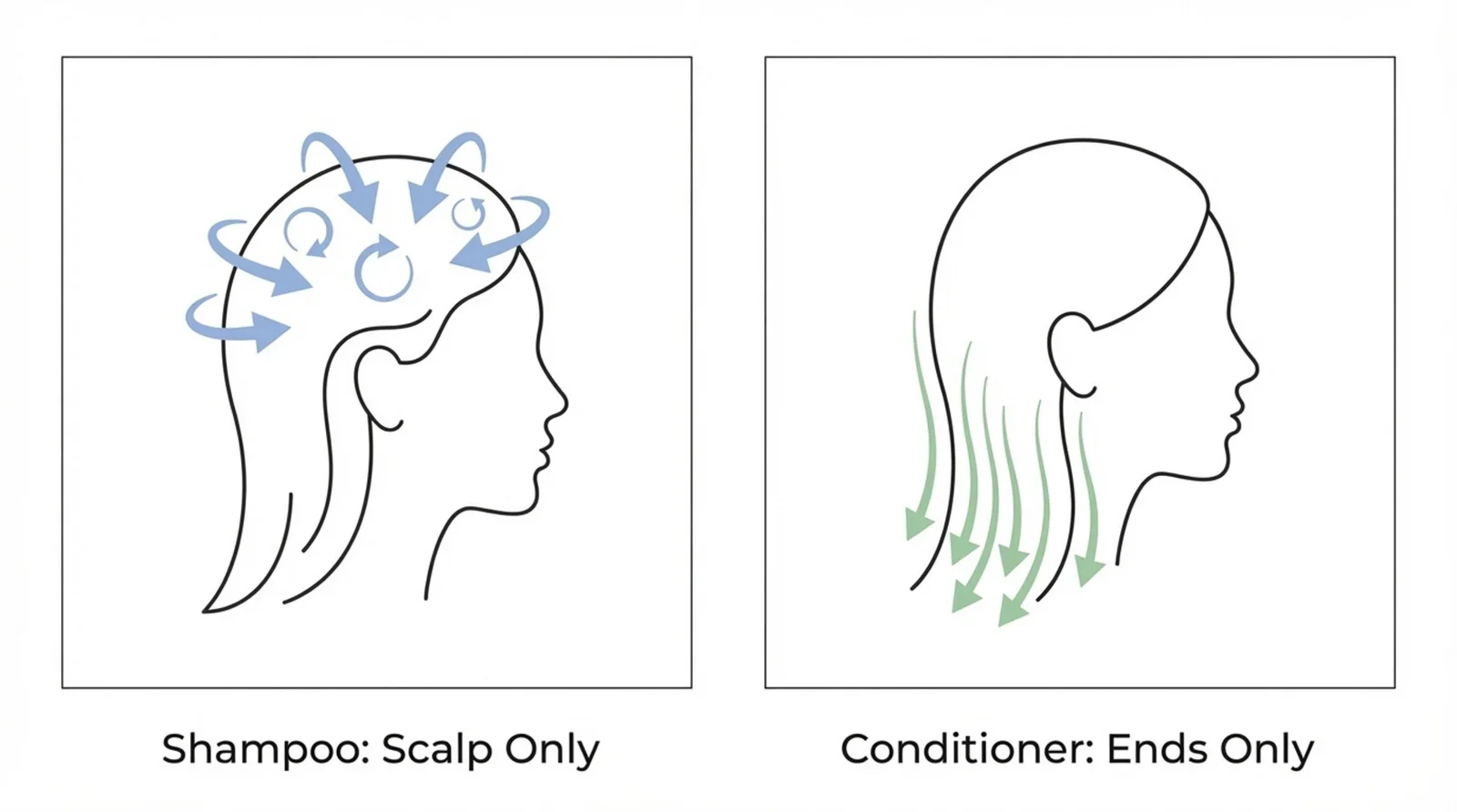
Shampoo is mainly for your scalp. That’s where oil, sweat, and product buildup collect. Focus your massage and lather on the roots and scalp area. Don’t scrub the lengths. As you rinse, the shampoo will flow down the rest of your hair and clean it gently, which is usually enough for the drier ends.
Is Shampooing Twice Necessary?
Whether you should wash twice depends on how often you wash and how much product you use. The first wash removes the top layer of oil and dirt. The second wash cleans the scalp more deeply. If you wash daily, one wash is usually fine. If you wash once or twice a week, a second shampoo often creates more foam, which usually means the buildup is finally gone.
5. Rinse Well
Rinsing thoroughly is one of the most overlooked steps. Spend one to two minutes rinsing until there are no traces of shampoo left. Leftover shampoo can make hair feel heavy, dull, and coated, and it can cause itching on the scalp. If you have long hair, lift sections and rinse underneath so nothing is trapped against your skin.
6. Apply Conditioner
Conditioner adds moisture and helps protect your hair. After rinsing the shampoo, gently squeeze out extra water so the conditioner doesn’t wash off too quickly. Apply it from the mid-lengths down to the ends, focusing on the oldest, driest parts.
How to Use Conditioner for Best Results
Keep conditioner off your scalp so your roots don’t become flat and greasy. Leave it on for the time stated on the bottle, usually two to seven minutes. This gives the ingredients time to soften and smooth the cuticle. You can use a wide-tooth comb to spread the conditioner evenly and remove any remaining knots while the hair is slippery.
7. Final Rinse: Is Cold Water Better?
Lukewarm water is best for washing, but a final cool or cold rinse can be helpful. Cooler water helps the cuticle lie flatter, which holds in more moisture from your conditioner and gives hair a smoother, shinier look. It can also help calm the scalp, which may benefit people whose roots get oily quickly.
8. Drying Your Hair Safely
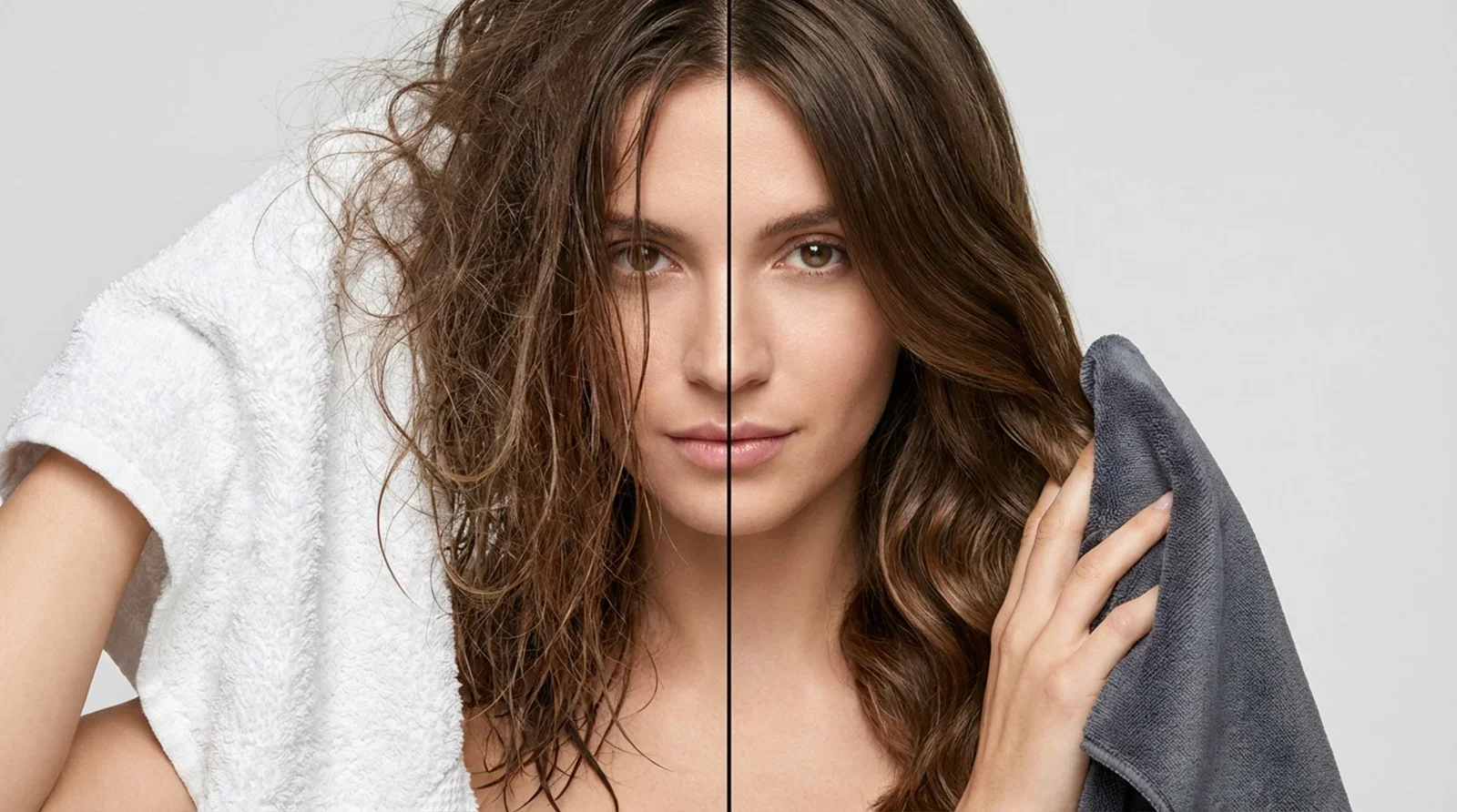
Hair is weakest when wet. Avoid rubbing it with a regular towel, as rough fibres can cause frizz and breakage. Instead, gently squeeze or blot out extra water. A microfiber towel or a soft cotton T-shirt is much kinder to your hair.
Towel-Drying vs Air-Drying vs Blow-Drying
Air-drying is usually the gentlest way to keep your natural pattern and cut down on heat damage. If you want more volume or need your hair to dry faster, blow-drying is fine as long as you use a heat protectant first. Use low to medium heat, keep the dryer moving, and don’t hold it too close to one spot. For curly hair, use a diffuser to keep curl definition and avoid big, frizzy “puff” hair.
Common Mistakes When Washing Hair
Over-washing or Under-washing
Finding the right wash schedule is a common challenge. Washing too often strips away helpful oils, and your scalp may respond by making even more oil, leaving you feeling greasy again quickly. Washing too rarely lets dirt, pollution, and leftover products build up and block hair follicles, which may irritate the scalp and slow down growth. For many people, washing two to three times per week works well.
Using the Wrong Products for Your Hair Type
It’s easy to choose products based on smell or packaging, but that can backfire. A rich, oil-heavy shampoo on fine, straight hair will usually cause flat, limp roots. A strong clarifying shampoo on dry, curly hair can leave it rough and stiff. Choose shampoos and conditioners based on your hair’s thickness, curl pattern, and how dry or oily your scalp is.
Applying Too Much Shampoo or Conditioner
In hair care, more product doesn’t always mean better results. Too much shampoo can dry out both hair and scalp. Too much conditioner-especially near the roots-leaves hair greasy and heavy, even right after washing. Stick to small, coin-sized amounts. If your shampoo doesn’t foam, try adding more water to your hair first instead of adding more shampoo.
Rough Towel Drying
Many people rub their hair hard with a towel, which creates friction strong enough to damage the cuticle layer. This can lead to split ends and constant frizz. Switching to gently patting and squeezing with a soft towel or T-shirt is an easy change that can quickly improve your hair’s condition.
Skipping Scalp Care
People often focus on the visible lengths of their hair and forget the scalp. But healthy hair starts at the scalp. If you don’t massage it properly or you leave product behind, follicles can get clogged. Think of your scalp like soil in a garden: if it’s packed and full of debris, new growth will struggle.
Expert Tips for Healthy Hair Wash Days
How Often Should You Wash Your Hair?
There is no single right answer for everyone, but many people do well washing every two to three days. Oily scalps may need washing every other day. Very dry or curly hair can often go a week or more between washes. Pay attention to how your hair looks and feels: if your scalp is itchy, your roots are clearly oily, or your hair looks flat and dull, it’s time to wash. Dry shampoo can help you wait an extra day or two between washes if you’re trying to cut back.
Does Water Temperature Matter?
Yes. Lukewarm water is best for cleaning. Water that is too hot can damage the scalp’s natural barrier and make hair dry and brittle. Water that is too cold at the start of washing won’t break down oils as well. Save the cold water for the final rinse to help smooth the cuticle.
Should You Use Clarifying or Pre-Shampoo Treatments?
Using a clarifying shampoo occasionally can reset your hair by removing stubborn silicones, heavy products, and mineral buildup that regular shampoo may miss. Pre-shampoo oils or treatments are helpful for dry or damaged ends, because they add a protective coat so shampoo doesn’t strip away too much moisture.
Can Conditioner Substitute Shampoo?
Usually, no. Shampoo contains cleansing agents that lift oil and dirt from the scalp and hair. While co-washing (using only conditioner to wash) can work for some very dry or curly hair types, most people will see buildup over time if they only use conditioner. Conditioner doesn’t have strong enough cleansers to remove oil and heavy styling products properly.
What About Co-washing and Natural Alternatives?
Co-washing can be very helpful for coarse, curly, or very dry hair, because it cleans gently while keeping more moisture. Some people like to add natural rinses like diluted apple cider vinegar to help balance scalp pH and add shine. These methods can support your normal routine, but most people still benefit from a well-formulated shampoo as their main cleanser.
Is a Scalp Massage Useful During Washing?
Yes, a scalp massage is very helpful. Using the pads of your fingers in slow, circular motions loosens dead skin and buildup and boosts blood flow to the follicles. Aim for about three minutes of massage time while your shampoo is on. It’s a small habit that can improve overall scalp and hair health.
Frequently Asked Questions About Hair Washing
Does Washing Your Hair Promote Growth?
Washing by itself doesn’t change how fast hair grows from the follicle, but a clean, well-cared-for scalp gives your hair the best chance to grow to its full length and thickness. Regular washing and gentle massage reduce buildup and irritation that might otherwise slow growth or lead to shedding.
What Happens If You Don’t Wash Your Hair Regularly?
If you skip washing for too long, oils, dead skin, and pollution build up on your scalp and hair. This can cause greasy roots, bad smells, and a heavy, dirty feeling. Over time, yeast on the scalp (such as malassezia) can grow too much, leading to dandruff, itching, and sometimes temporary thinning if follicles get clogged.
Can You Wash Your Hair with Only Water?
Water alone can remove some sweat and dust, but it can’t break down oils or many styling products. Because oil and water don’t mix, you need the cleansing agents in shampoo to attach to the oil and wash it away. Over time, washing with only water usually leaves hair waxy, coated, and heavy.
What Are the Signs You Should Change Your Washing Routine?
You might need a new routine if your hair still feels coated after washing, your scalp is always itchy, or your hair suddenly becomes very dry and brittle. Changes in seasons, hormones, or lifestyle can all affect your hair’s needs, so a routine that worked before may stop working. Stay open to adjusting how often you wash and which products you use as your hair changes.
Key Takeaways for Proper Hair Washing
Learning how to wash your hair properly is about more than basic cleanliness; it’s a part of caring for your body that protects your hair against daily wear and tear. Hair is a delicate fibre, so treat it gently-much like you would care for a fine fabric. Your habits outside the shower also matter: drinking enough water and eating a balanced diet gives your hair the nutrients it needs from the inside.
Consistency is the most important factor. Your scalp may need a couple of weeks to adjust to a new schedule or different products, but sticking with a smart routine pays off. Stronger, shinier, and easier-to-manage hair usually comes from steady, mindful care rather than luck or genetics alone. Treat wash day as a small self-care ritual instead of a rushed task, and over time your hair will reflect that effort.
Do you live in Sydney?
Get the perfect look at our salon – schedule your appointment now!
Our Services
Check Out Our Instagram




Check out our instagram
Check out our instagram and see our latest posts!
Check out our facebook
Check out our facebook and see our latest
posts!