
Oily Roots and Dry Ends? 3 Tips for Combination Hair
If your scalp looks greasy by lunchtime but your ends feel dry and rough, you’re dealing with combination hair. This mix of oily roots and dry, brittle ends is very common and needs a smart routine instead of one single solution. The short answer is yes, you can balance combination hair by treating your scalp and lengths as two separate areas. With a light balancing shampoo on the scalp, conditioner just on the mid-lengths and ends, and targeted scalp treatments, you can bring your hair back into balance.
Stop thinking of your hair as one uniform piece. It’s more like a garden: the soil (your scalp) needs different care than the flowers (your ends). When these two areas want opposite things, a standard wash routine can make everything worse-drying out your ends while pushing your scalp to pump out more oil. Let’s look at why this happens and how you can reset your routine.
How Can I Tell If I Have Combination Hair?
Common Signs of Oily Roots and Dry Ends
You can usually spot combination hair by watching how it behaves 24-48 hours after washing. If your roots are limp, flat, and greasy, but your ends feel crunchy, flyaway, or full of static, you likely have combination hair. The top half looks like it needs shampoo again, while the bottom half looks like it hasn’t seen moisture in weeks.
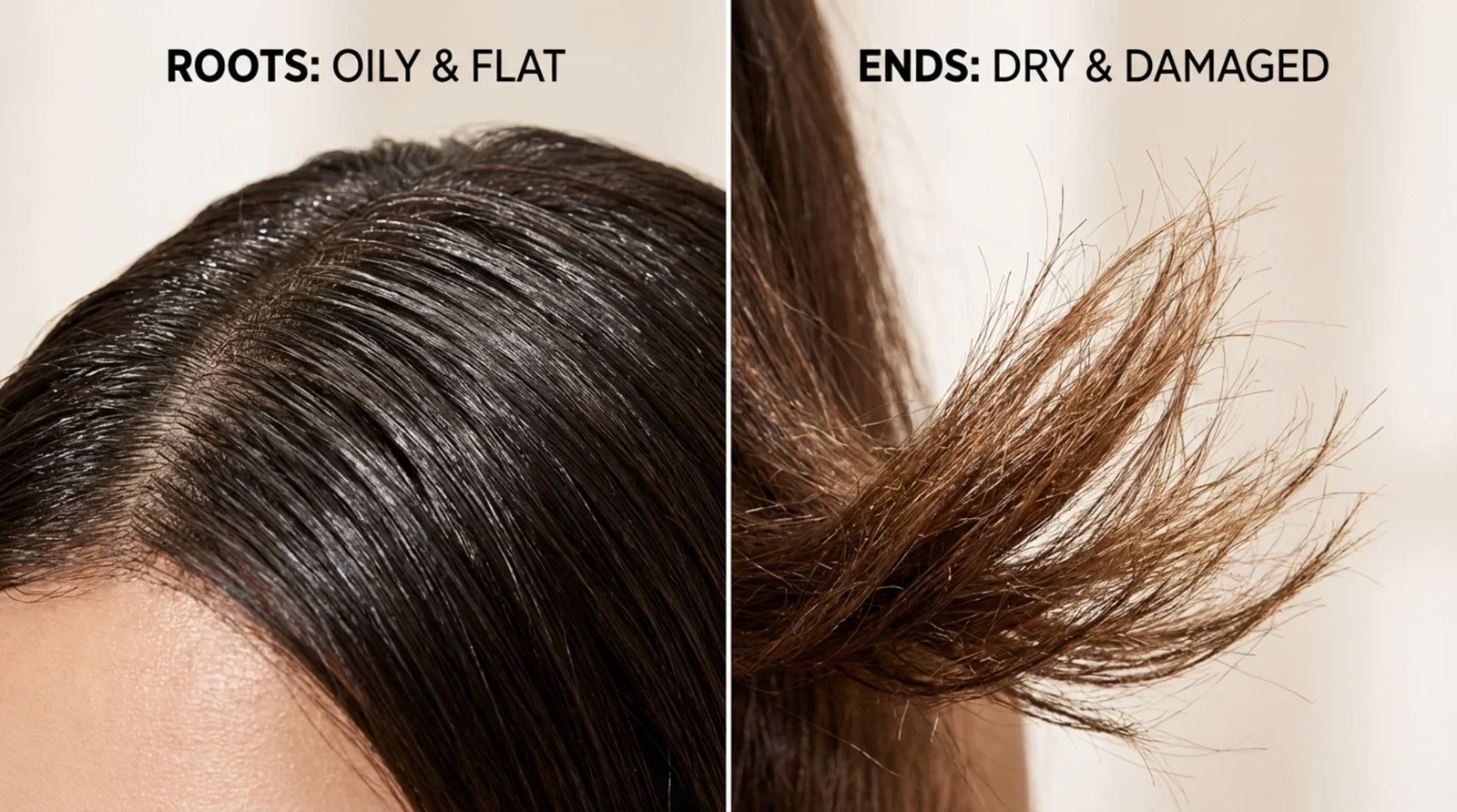
Other common signs are lots of split ends and breakage even though your scalp is oily. Your roots may sit flat to your head while your ends frizz, knot, or puff out. This happens because the natural oil (sebum) from your scalp doesn’t travel all the way down the hair shaft. The older parts of your hair-the ends-stay dry and unprotected.
What Causes Oily Roots and Dry Ends in Combination Hair?
Role of Sebum Production and Scalp Health
The main players here are your sebaceous glands. These small glands on your scalp make sebum, the natural oil that keeps hair soft and protects the skin’s surface. Genetics, hormones, stress, and diet can all push these glands to make extra oil. When that happens, it builds up at the roots and gives hair that slick, greasy look.
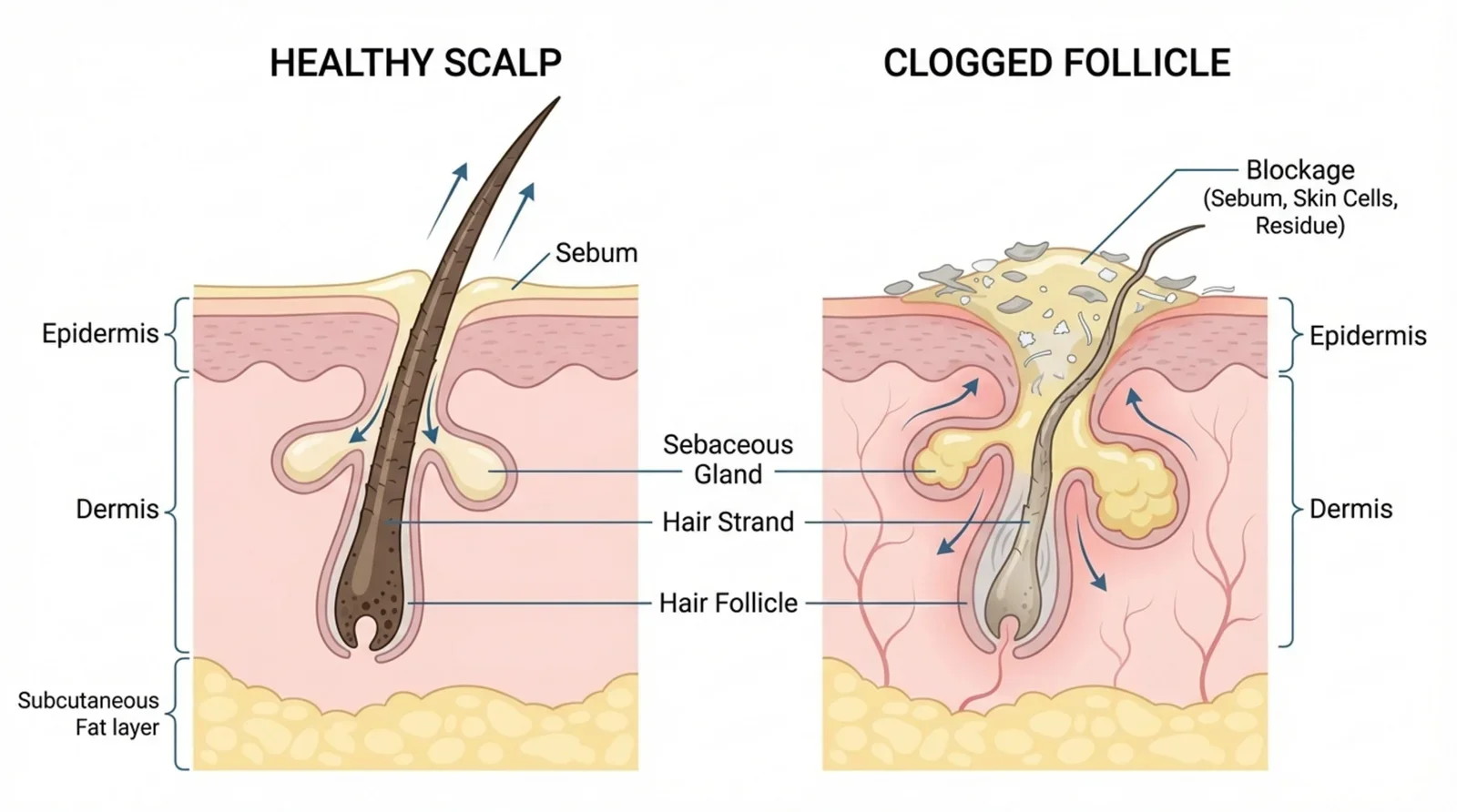
A healthy scalp is a busy little system. If it’s irritated, itchy, or flaky, it can start producing more oil to soothe itself. This “scalp stress” keeps the roots oily, but on long, curly, or coarse hair, the oil can get stuck near the scalp and never reach the ends. The result: greasy roots, thirsty lengths.
Hair Washing Habits and Product Buildup
Your washing habits may be making things worse. Washing your hair every day with strong, sulphate-heavy shampoos strips away natural oils and nutrients. Your scalp then reacts by making even more oil to make up for what’s been lost, while your ends get drier, rougher, and more fragile.
Heavy products can also be a problem. Thick creams, waxes, and some silicones can build up on the scalp and hair. This can block follicles, trap dirt and dead skin, and stop natural oils from moving down the hair shaft. You end up with sticky, clogged roots and ends that are still crying out for moisture.
Impact of Heat Styling and Environmental Factors
Heat tools and the environment play a big role too. Frequent blow-drying, straightening, or curling with high heat damages the outer layer of the hair and dries out the inner part of the strand. This leaves ends weak, rough, and more likely to snap.
Sun, pollution, and hard water can make things worse. In Australia, strong UV rays can fade colour and dry out the ends, while humidity can make the scalp sweat and produce more oil. Your hair gets hit from both ends-literally-so it needs protection.
Why Does Combination Hair Need a Special Routine?
Potential Risks of Using the Wrong Products
Using a shampoo made only for “oily hair” from roots to tips can be very drying for your ends. These formulas can leave the bottom half of your hair feeling rough, stiff, and easy to break. On the other hand, shampoos made for very dry hair can overload your roots, so they look greasy again just hours after washing.
Many standard products also contain harsh ingredients that upset your scalp’s natural pH and balance. If this balance is off for a long time, you may notice ongoing issues like thinning hair or stubborn flakes. You want products that clean the scalp gently while still feeding moisture to the ends.
Benefits of Customising Hair Care for Mixed Textures
Adjusting your routine lets you tackle each problem area on its own. Treating roots and ends differently helps reset your hair’s natural state. The scalp gets cleaned and refreshed, and the follicles get support, while the mid-lengths and ends receive the oils and proteins they need to stay strong and glossy.
With a routine made for combination hair, many people find they can go longer between washes. This saves time and reduces wear and tear from constant washing, towel-drying, and styling. You start working with your hair’s natural pattern instead of fighting it.
Best Tips to Manage Oily Roots and Dry Ends
1. Choose a Lightweight, Balancing Shampoo
Start by picking a shampoo that cleans without stripping. Look for “balancing” or gentle “clarifying” formulas with plant-based ingredients like Kakadu Plum, Tea Tree oil, or Aloe Vera. These can help support normal oil levels and freshen the scalp without harsh detergents.
When you wash, focus only on your scalp. Use your fingertips to massage the shampoo into the roots to lift away oil and product buildup. Don’t scrub your lengths and ends. As you rinse, the lather running down will be enough to clean the drier parts without making them even drier.
2. Apply Conditioner Only to the Mid-Lengths and Ends
This is one of the most important rules for combination hair: keep conditioner off your scalp. Your roots already have plenty of natural oil, and extra conditioner there will just make them flat and greasy. Start applying conditioner from about ear level down, concentrating on the very tips.

Choose conditioners with nourishing oils like Avocado or Argan oil, which can soak into the hair shaft and help repair damage. For better results, gently squeeze out excess water before applying. Less water means the product can grip the hair more easily. Leave the conditioner on for at least two minutes so it has time to work.
3. Treat the Scalp Separately to the Ends
Since the scalp and ends want different things, use separate treatments. Once a week, you may want to use a purifying clay mask or charcoal-based exfoliating shampoo on your scalp to clear out deeper buildup. This can help free the follicles and support more balanced oil production.
At the same time, give your ends a rich treatment like a deep-conditioning mask or a hot oil treatment. Ingredients such as Shea Butter, Coconut Oil, and Cocoa Seed Butter are great for smoothing the outer layer and bringing back stretch and bounce. You can “multi-mask” by applying a cleansing treatment on your scalp and a hydrating one on your lengths and ends at the same time.
Which Products Are Recommended for Combination Hair?
Balancing Shampoos and Clay Cleansers
For day-to-day washing, sulphate-free balancing shampoos are a strong choice. Salicylic acid can help remove dead skin cells at the scalp, while lactic acid offers gentle exfoliation. If your roots are very oily, using a “cleansing clay” treatment once a week can help. Kaolin clay, for example, soaks up extra sebum and dirt that regular shampoo might miss, leaving roots lighter and fresher.
Hydrating Masks and Lightweight Conditioners
For moisture, look for “moisture boost” masks with ceramides and omega-3 fatty acids. These support elasticity and add shine. Light conditioners with vegetable glycerine are also helpful, as they hold moisture in the hair without the heavy, slippery feel that some silicone formulas can leave behind. Aim for products that give hydration without adding weight.
NeedGood OptionsOily rootsBalancing shampoo, clay cleanser, salicylic acidDry endsHydrating mask, light conditioner, plant oils
Leave-In Treatments and Serums
Leave-in products can make a big difference. A scalp serum with Vitamin B3 (Niacinamide) or hyaluronic acid can help keep the scalp comfortable and hydrated without adding grease. For your ends, use a few drops of a light bonding oil or a smoothing cream to seal the cuticle, guard against UV and heat, and reduce frizz. Keep these products on the bottom half of your hair only.
How Should I Adjust My Styling Routine?
Limit Heat Styling to Prevent Further Dryness
Try to cut back on heat styling when you can. Heatless curls, braids, and air-drying methods can give you style without extra damage. If you do use hot tools, always apply a heat protectant spray or cream first. Use the lowest setting that still works and keep richer styling products on the mid-lengths and ends only.
Brush Hair from Roots to Ends to Distribute Oils
Brushing helps more than just tangles. It also moves natural oils from the scalp down the hair. Use a soft-bristle brush (ideally with natural bristles) and gently brush from roots to tips before bed. This simple step helps carry sebum down to your dry ends and can also boost circulation at the scalp, which may support healthy hair growth.

Use Styling Products Carefully to Avoid Buildup
Choose styling products with care. Thick waxes and heavy mousses often creep up to the roots and add to oiliness. Try using lighter mists, foams, or texturising sprays instead. Dry shampoo is especially helpful on days you don’t wash; it soaks up extra oil at the roots and gives instant lift.
Pro tip: spray dry shampoo at the roots before bed rather than in the morning. It can absorb oil as it forms overnight so you wake up with fresher-looking hair.
Frequently Asked Questions about Oily Roots and Dry Ends
Should I Wash My Hair Daily If I Have Oily Roots?
Washing every day usually makes oily roots worse over time. Most hair specialists suggest washing every two to three days instead. This gives your scalp time to settle and lets natural oils move down the length of the hair. If you feel too greasy between washes, use a good dry shampoo instead of another full wash.
Can Combination Hair Type Change Over Time?
Yes, your hair type can shift. Hormones, age, diet, medication, and the seasons can all affect how oily your scalp is and how dry your ends feel. For example, you might notice more oil in hot, humid months and more dryness in cooler, windy weather. Stay aware of how your hair feels and switch up products when your needs change.
Managing combination hair is really about paying attention and choosing products that respect both your scalp and your strands. Beyond having good hair days, you can also think about the impact your routine has on the environment. Plant-based, natural formulas support your scalp’s balance and put fewer harsh chemicals into waterways. A balanced, eco-conscious hair routine is kinder to both your hair and the planet.
Do you live in Sydney?
Get the perfect look at our salon – schedule your appointment now!
Our Services
Check Out Our Instagram




Check out our instagram
Check out our instagram and see our latest posts!
Check out our facebook
Check out our facebook and see our latest
posts!