
Why Curly Hair Needs Special Care
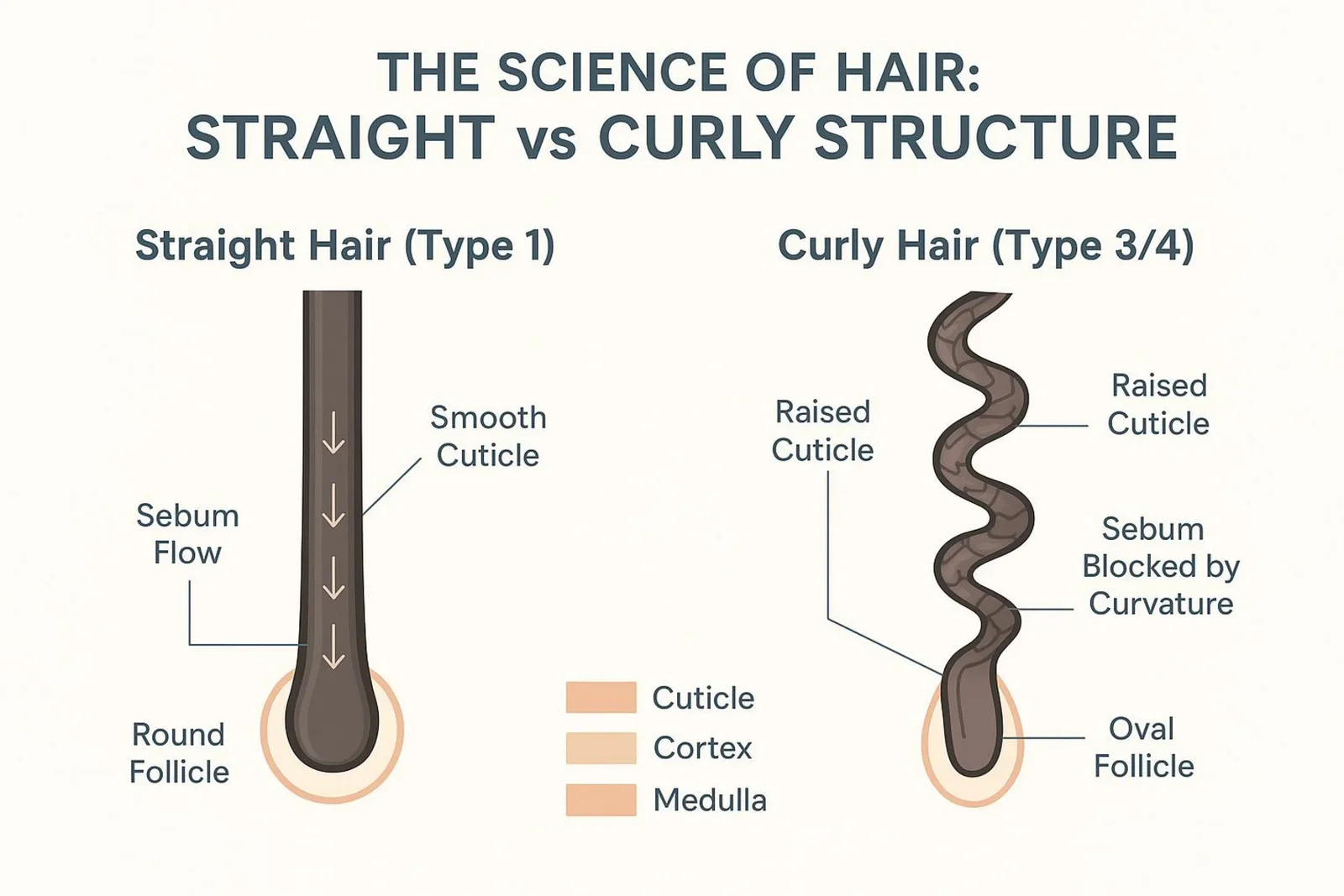
Curly hair needs special care because its spiral shape makes it naturally drier, more delicate, and much more likely to frizz than straight hair. On straight hair, the scalp’s natural oils (sebum) slide down the strand easily, adding moisture and protection. On curly hair, every twist and turn slows this down. These bends stop the oils from reaching the mid-lengths and ends, so curls are left dry, more likely to break, and easily affected by changes in weather, especially humidity. A routine focused on moisture and gentle handling is key to keeping curls healthy, shiny, and bouncy.
For many Australians dealing with strong sun and changing humidity, understanding why curls behave the way they do is the first step to easier hair days. The cuticle-the outer layer of each strand-tends to be more lifted on curly hair, so water escapes faster than it does from straight hair. Without a specific routine using sulphate-free cleansers and products that hold in moisture, curls can quickly look dull, lose their bounce, and turn into a painful tangle that is hard to comb out.
Why Curly Hair Needs Special Care
What Makes Curly Hair Different From Straight Hair?
The main difference between curly and straight hair starts at the hair follicle inside the scalp. Straight hair usually grows from a round follicle that sits upright. This lets hair grow straight and lets the cells line up neatly and evenly. The hair strand is round and easy for sebum to coat from root to tip. Curly hair, on the other hand, grows from oval or uneven follicles that can be bent or hooked. This shape causes cells to divide unevenly as the hair forms, which creates a curved strand that twists as it grows out of the scalp.
Inside the hair, the protein pattern is also different. In straight hair, proteins are spread out evenly, which gives even strength along the strand. In curly hair, proteins are unevenly placed, so certain spots-especially where the hair bends or twists-are weaker. This built-in imbalance is what gives curls their shape, but it also makes them more delicate and more likely to be damaged by brushing, combing, or heat styling.
How Does Hair Structure Affect Curly Hair Needs?
The shape of a curl creates little “high spots” on the strand where the cuticle scales lift slightly instead of lying flat. These lifted areas expose the inner layers of the hair and let internal moisture escape. This is why curly hair is often more porous and benefits from products that help fill in and smooth those gaps in the cuticle, like formulas with ceramides or natural oils such as jojoba and baobab oil.
Because sebum does not travel easily down curly strands, curls miss out on the natural moisturising that straight hair often gets. Someone with straight hair may have greasy roots after two days, but someone with curls can still have dry, rough ends a week after washing. Leave-in conditioners and hair oils that act like the scalp’s natural lipids help keep the whole length of the hair soft and protected from rubbing and wear, which can cause split ends.
Common Misconceptions About Curly Hair Care
A common myth is that curly hair must be washed every day to stay clean. Daily washing with strong, sulphate-based shampoos strips away the small amount of natural oil curls do have. This leads to very dry lengths and “rebound” oiliness at the scalp. Many people with curls find their hair is happier when washed only two to three times a week-or less for tighter textures-using gentle, low-foam cleansers like co-washes or mild micellar shampoos.
Another myth is that skipping conditioner keeps curls light and bouncy. In reality, curls soak up moisture like a sponge. If you skip conditioner, the hair will pull water from the air instead, which is a main cause of frizz. Many people also think they should brush their hair while dry. For curls, dry brushing is one of the worst things you can do. It breaks up the natural pattern, tears through fragile bends, and creates a big, frizzy cloud instead of defined curls.
What Are the Different Types of Curly Hair?
Wavy Hair (Type 2)
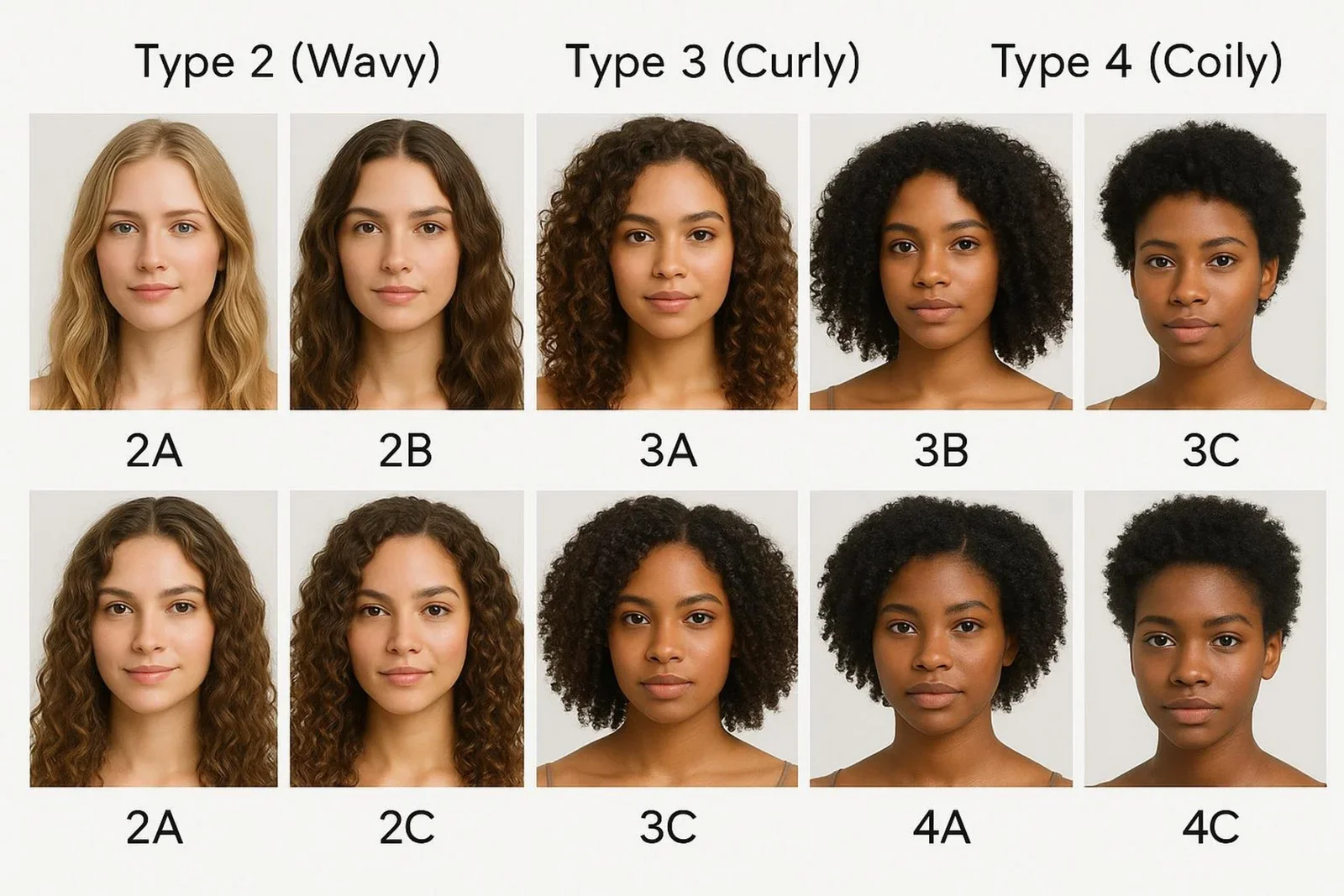
Type 2 hair sits between straight and curly. It usually has an “S” wave and lies closer to the head. It is broken down into:
2A: Fine, loose waves
2B: More defined waves that start from the mid-lengths
2C: Thick, strong waves that may sometimes form ringlets
Because the wave is looser, sebum can move further down the hair than on tighter curls. This means Type 2 hair can have oily roots while the ends still look dry and frizzy.
Looking after wavy hair is about balancing moisture and volume. Heavy products like thick butters or rich oils can weigh waves down and make them look flat or greasy. Lightweight mousses, sea salt sprays, or light curl creams work better, as they add shape and definition without taking away natural lift and movement.
Curly Hair (Type 3)
Type 3 hair has clear, springy spirals, ranging from loose loops (3A) to tighter corkscrews (3B) and small, dense ringlets (3C). This hair type usually has a lot of natural volume, and the curls form strong “O”-shaped loops. Because the hair twists often, it tends to be dry and needs steady moisture to stop the curls from losing shape and turning into a knotty mass.
People with Type 3 hair often focus on definition. A common approach is the “trio” of products: a leave-in conditioner for moisture, a curl cream to soften and group the strands, and a gel to create a light, firm “cast” that holds the curls as they dry. Night-time care is also very important, because rubbing against a cotton pillowcase can break up the curl pattern and cause frizz by morning.
Kinky or Coily Hair (Type 4)
Type 4 hair has very tight coils or a sharp zigzag “Z” pattern. It is the most delicate hair type because it has fewer cuticle layers and the most bends, and each bend is a possible weak point. Type 4 hair is grouped into:
4A: Soft, small, defined coils
4B: Zigzag strands with less obvious curl definition
4C: Very tight coils with little visible pattern and strong shrinkage
This hair type can be very dense, but it needs the most intense moisture care of all curl types.
Because Type 4 hair loses water very quickly, it benefits from rich ingredients like shea butter, castor oil, and thick creams. Protective styles such as braids, twists, and Bantu knots help reduce tangling and hold in moisture longer. For coily hair, water is the main moisturiser, so applying products to soaking-wet hair is a must if you want definition.
What Are the Main Challenges of Curly Hair?
Natural Dryness and Lack of Moisture
Dryness is the biggest problem for most people with curls. Without enough sebum covering the strand, curly hair becomes porous. It soaks up water fast but loses it just as quickly. This ongoing lack of moisture makes hair feel rough or “crunchy” and look dull because raised, dry cuticles do not reflect light as well as smooth, hydrated ones.
To help with this, every step of the routine should focus on adding and keeping moisture. Using lukewarm or cool water instead of hot water helps keep the cuticle from lifting more. Adding a weekly deep conditioning mask gives the hair a strong hit of moisture and nutrients like proteins and lipids, which go deeper than a normal daily conditioner.
Tendency Towards Frizz
Frizz is often a sign that curls are dry. When hair lacks moisture and the air is humid, the hair swells as it drags water from the air. The strands then separate from their curl groups and form the fuzzy halo we call frizz. Rough habits, like rubbing hair with a regular towel, create friction that lifts the cuticle and causes fast frizzing.
To manage frizz, you want to seal in moisture so the hair does not need to grab it from the air. Sealing oils and anti-frizz serums are helpful here. When you apply them to damp hair, they create a light barrier that keeps moisture inside the strand and limits extra water from the air, helping curls dry smoother and more defined.
Increased Fragility and Breakage Risk
Because curly hair is weaker at each curve in the strand, it breaks more easily during daily activities. Tight elastics, rough combing, and even friction from scarves can snap hairs. Heat tools and chemical treatments make this worse by damaging the cuticle and drying out the inner core of the hair.
Gentle care is key. This means using wide-tooth combs or your fingers to detangle, and only doing it when the hair is covered in a slippery conditioner. Choosing “hair-safe” accessories like silk or satin scrunchies and using less high heat on the hair can greatly lower the number of knots and broken strands over time.
Difficulty Achieving Curl Definition
Many people have “mixed textures,” where the top layer might be wavy while the underneath is much curlier. This makes an even, defined style harder to achieve. A lack of definition often comes from using the wrong products or touching and rearranging the hair while it is drying, which breaks the gel cast that helps curls hold their shape.
Methods like “shingling” (smoothing product through very small sections) or “finger coiling” can help encourage an even curl pattern. It is also important to use products with enough hold-such as jellies or gels-so that once curls are formed, they stay that way until the next wash.
Sensitivity to Humidity and Weather
Curly hair reacts strongly to changes in the air. In high humidity, curls can grow in size and lose clear definition. In dry, cold weather, they can become static-filled, rough, and brittle. This makes it hard to keep the same style all day, especially in places like Australia where the weather can change quickly.
Changing your routine with the seasons helps. In summer, you may need lighter, glycerin-free gels that do not draw extra moisture from the air. In winter, using richer butters and doing deep conditioning treatments more often helps protect hair from dry indoor heating and cold winds.
Shrinkage and Length Perception in Curly Hair
Shrinkage is when curly hair looks much shorter when dry than its true length when stretched. For Type 4 hair, shrinkage can reach up to 75% of the real length. While shrinkage usually shows that the hair has good elasticity and health, it can be annoying if you are trying to see growth or wear longer styles.
To change how long the hair appears, you can use heat-free stretching methods, such as “banding” (placing hair ties down the length of damp hair) or doing braid-outs. Accepting that shrinkage is part of how curls “spring” back can also help you enjoy their flexibility, since the same hair can look very different depending on how it is dried and styled.
What Are the Benefits of Special Curly Hair Care?
Reduced Frizz and Breakage
Switching to a curl-focused routine often quickly cuts down frizz and stray hairs. When curls are well moisturised and the cuticle is smoothed and sealed, the strands stay grouped together. Using a microfibre towel or an old cotton T-shirt to blot or “plop” the hair instead of rubbing it helps avoid the rough friction that leads to split ends and mid-length breakage.
Over time, less breakage means better length retention. Many people think their curls do not grow, but in most cases the hair is growing at the roots while the ends are breaking off at the same rate. Gentle, moisture-rich care helps the hair keep more of its length, giving the look of longer and fuller curls.
Improved Curl Shape and Shine
Healthy curls shine because a smooth, flat cuticle reflects light. Curl-focused care, especially using oils like jojoba or grapeseed, can boost this shine. Well-hydrated curls also have better “memory,” meaning they spring back into shape after you move or tie them up.
Styling methods such as drying with a diffuser on low heat and low speed help set curls in place while keeping volume and bounce. Instead of hair looking big but shapeless, a focused routine gives clear, defined curls that look neat, intentional, and full of life.
Improved Moisture and Manageability
Another big benefit is easier day-to-day styling. While wash day for curly hair can take more time, hair that is well moisturised is easier to live with between washes. Curls treated with leave-in products are less likely to mat or knot overnight, so a morning refresh can be very quick instead of taking half an hour.
Better moisture levels also make hair less reactive to weather. You are more likely to walk through a damp morning or a hot afternoon without your curls changing shape completely, which gives more confidence and comfort. Special curly hair care is about more than looks; it supports long-term strength and health for your natural texture.
Extra Tips for Healthy Curls: What you put into your body affects your curls as much as what you put on them. Eating enough protein and nutrients like Biotin, Zinc, and Omega-3 fatty acids gives your follicles the building blocks they need for strong hair. Drinking plenty of water also helps new growth come in as healthy as possible. A useful styling tip is the “pineapple” method: gather your curls loosely at the top of your head before bed. This helps protect the curl pattern while you sleep. Regular trims every 8-12 weeks are also very helpful. Even with careful care, the ends of curly hair are the oldest and weakest parts, and trimming off split ends stops damage from moving up the strand and causing bigger problems.
Do you live in Sydney?
Get the perfect look at our salon – schedule your appointment now!
Our Services
Check Out Our Instagram



Check out our instagram
Check out our instagram and see our latest posts!
Check out our facebook
Check out our facebook and see our latest
posts!