Dealing With Postpartum Hair Loss
A new baby brings love, cuddles, and... lots of hair in the shower drain? If you’ve recently given birth and see more hair than usual on your brush, in the bath, or on your clothes, you’re not imagining it. This common and often worrying change is called postpartum hair loss. It’s normal, temporary, and part of life after pregnancy. This article explains why it happens, what you can expect, and simple ways to get through this stage.
What is postpartum hair loss?
Postpartum hair loss is extra hair shedding that starts a few months after you have a baby. It can feel dramatic, but it is a normal response to big hormone changes during and after pregnancy. In a way, it’s your hair making up for the shedding it skipped while you were pregnant.
How does hair grow during and after pregnancy?
To understand postpartum hair loss, it helps to know the basic hair growth cycle. Hair grows from tiny openings in the skin called follicles. Hair does not grow nonstop; it goes through three main phases:
Anagen phase: active growth
Catagen phase: short in-between phase
Telogen phase: resting phase, after which hair falls out
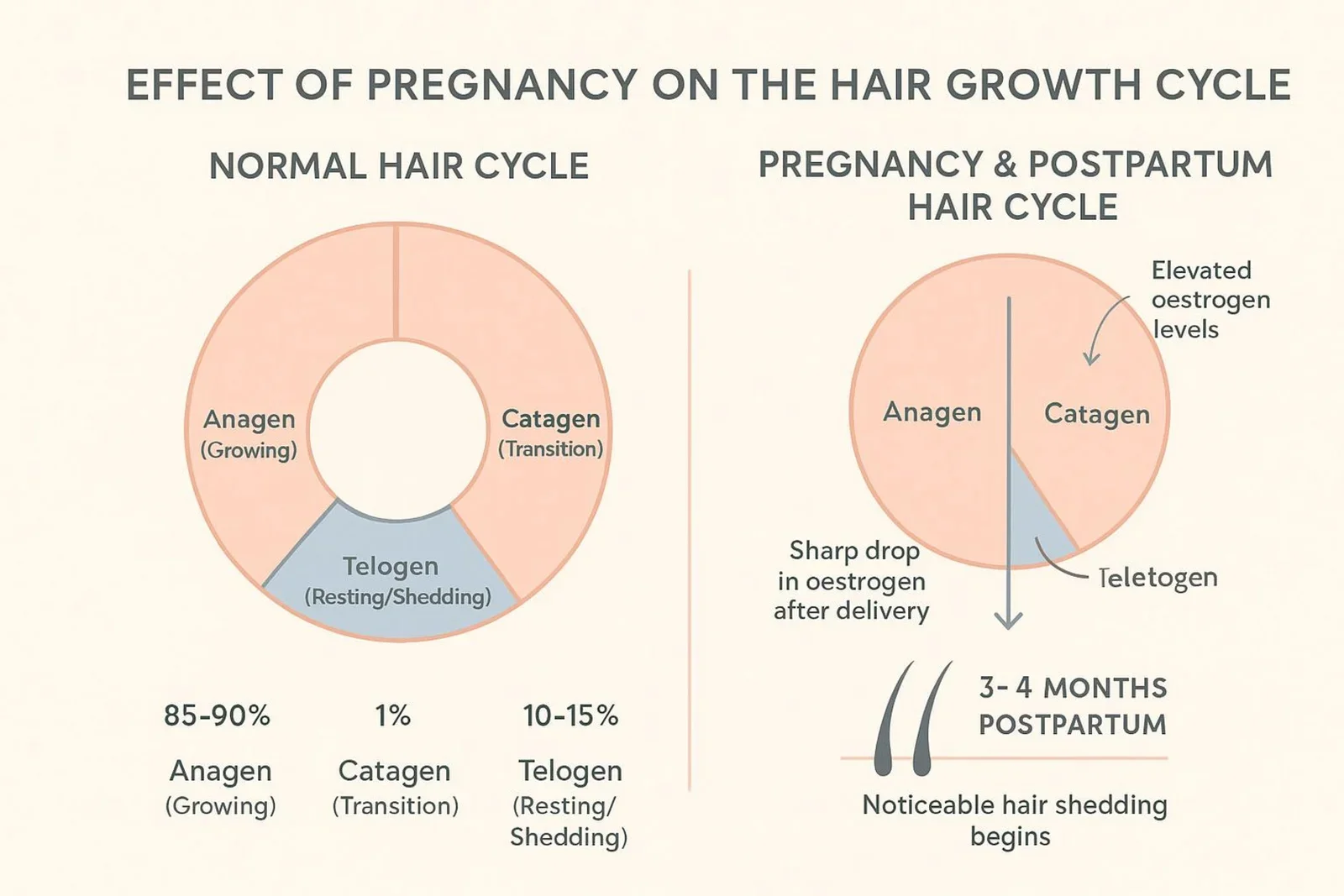
At any time, around 85%-90% of your hair is usually in the growing (anagen) phase. This phase can last two to six years. After the telogen phase, the hair is released and sheds.
During pregnancy, hormone levels, especially oestrogen, rise a lot. High oestrogen slows down normal daily shedding and keeps more hairs in the growing phase. This is why many pregnant women notice their hair looks thicker, fuller, and shinier. Your hair is effectively on a “growth hold,” delaying the usual shedding pattern.
When does postpartum hair loss usually start?
The timing often surprises new mums. Many expect shedding right after birth, but it usually starts around three months postpartum. This delay is linked to the hair cycle. After you give birth, hormone levels begin to fall back to normal. The hairs that stayed in the growing phase during pregnancy move together into the resting (telogen) phase. A few months later, they shed around the same time, which is why you suddenly notice more hair loss.
How common is hair loss after having a baby?
Postpartum hair loss is very common. Most new parents notice at least some extra shedding. Doctors often call this “telogen effluvium,” which simply means a lot of hair entering the shedding phase at once. The amount of hair lost varies from person to person, but many people share this experience in early parenthood.
What causes postpartum hair loss?
The main cause is a sharp change in hormone levels after birth. Other things can add to it, but hormones play the biggest role.
Which hormones are involved in postpartum hair loss?
The key hormone here is oestrogen. During pregnancy, oestrogen levels rise and keep hair in a thick, growing phase. After your baby is born, oestrogen levels drop quickly, going back to pre-pregnancy levels. This sudden fall tells many hairs that were growing to move into the resting phase at the same time. A few months later, these resting hairs shed together, leading to the heavy shedding you see. Other hormones, such as progesterone, also fall and are part of this shift.
What other factors can contribute to hair loss after birth?
Hormones are the main reason, but other things can make shedding worse:
Physical stress of childbirth: Labour and delivery put a lot of strain on the body.
Emotional stress: New routines, sleepless nights, and constant care for a newborn are tiring and stressful.
Nutrient gaps: After birth, especially if you’re breastfeeding, your body uses many nutrients for milk production, which may leave less for hair growth if your diet is low in certain vitamins or minerals.
Genetics: Some people are more likely to notice bigger changes in hair because of family patterns.
Health conditions: Issues such as untreated thyroid problems or low iron can also cause hair loss or make postpartum shedding seem worse.
If your shedding feels extreme or goes on for a long time, it’s sensible to talk to a doctor to rule out other causes.
What are the signs and symptoms of postpartum hair loss?
The signs are usually clear, but knowing what is normal can help reduce worry.
How much hair loss is normal after pregnancy?
Most people shed about 80-100 hairs a day without realising it. With postpartum hair loss, the amount is often much higher. You may notice:
Large clumps of hair on your brush or comb
Thicker bundles of hair in the shower drain
More strands on your clothes, pillow, or around the house
This can be shocking, especially if you enjoyed very thick hair during pregnancy. But in many cases, it is simply your body catching up on the shedding it paused for several months.
When should you worry about excessive hair loss?
Some extra shedding is expected, but there are times to check in with a healthcare provider. You should talk to a doctor if:
Heavy shedding lasts longer than 6-12 months after birth
You notice bald patches or very thin areas
Your hair seems much thinner than before and is not improving
You also have other symptoms, such as extreme tiredness, weight changes, or mood changes
These signs can point to problems like low iron or thyroid disorders, which can look like postpartum hair loss but may need treatment.
How long does postpartum hair loss last?
The positive side is that postpartum hair loss is usually short-term. It might feel endless while you’re going through it, but it does ease with time.
What is the usual timeline for hair shedding after pregnancy?
The general pattern is:
| Time after birth | What often happens |
|---|---|
| 0-3 months | Hormones shift; you may notice little change at first. |
| Around 3 months | Shedding usually begins. |
| 4 months | Shedding often feels strongest. |
| Up to 6 months | Most people see shedding start to slow down. |
| By 12 months | Hair growth and shedding usually look similar to pre-pregnancy. |
This timing matches the period it takes for hormones to settle and the hair cycle to return to its usual pattern.
Will your hair grow back to normal?
For most new mums, yes. Once the old hairs fall out, new hairs begin to grow. You may even notice short, wispy regrowth around your hairline. It can take several months for these new hairs to grow long enough to blend in with the rest of your hair. A small number of people might feel that their hair is a little thinner than before pregnancy, but this is less common. If your hair still seems very thin by your baby’s first birthday, a visit to a dermatologist is a good next step.
Preventing severe postpartum hair loss
Postpartum hair loss is a natural process caused by hormone changes, and there is no proven way to stop it completely. Still, you can support your hair and general health to help keep shedding from feeling too severe.
Can you prevent hair thinning after pregnancy?
There is no reliable method to fully stop postpartum shedding. The steep drop in oestrogen after birth is the main trigger, and you cannot prevent that. What you can do is understand that this is expected, which may ease some worry and shock when it begins. The goal is to manage it well and keep your body and hair as healthy as possible during this time.
Does stress play a role in postpartum hair loss?
Hormones are the main cause, but stress can make things worse or longer-lasting. Life with a newborn is demanding. Lack of sleep, feeding schedules, and general overload all raise stress levels. High stress can push more hairs into the shedding phase. While you may not be able to remove stress completely, finding small ways to rest, asking for help, and caring for your mental health can support both your hair and your overall recovery.
Tips to manage postpartum hair loss
While you cannot stop the process, you can use simple steps to make your hair look better, protect it from damage, and support new growth.
Best hair care practices for new mums
Gentle care is key right now. Try the following:
Wash gently: Use a mild, volumising shampoo and a light conditioner. Apply conditioner mainly on the ends, not the scalp, so your hair does not look flat or greasy.
Avoid heavy “2-in-1” products: Many “conditioning shampoos” contain heavy ingredients that can weigh hair down.
Limit heat styling: Reduce use of hair dryers, straighteners, and curling irons, or use them on a low heat setting.
Skip tight hairstyles: Avoid tight ponytails, buns, braids, or styles that pull on the roots, as they can lead to more breakage and hair loss.
Consider a haircut: A shorter or layered style can make hair look fuller and may be easier to manage when you’re busy with a baby.
Nutritional advice for healthier hair
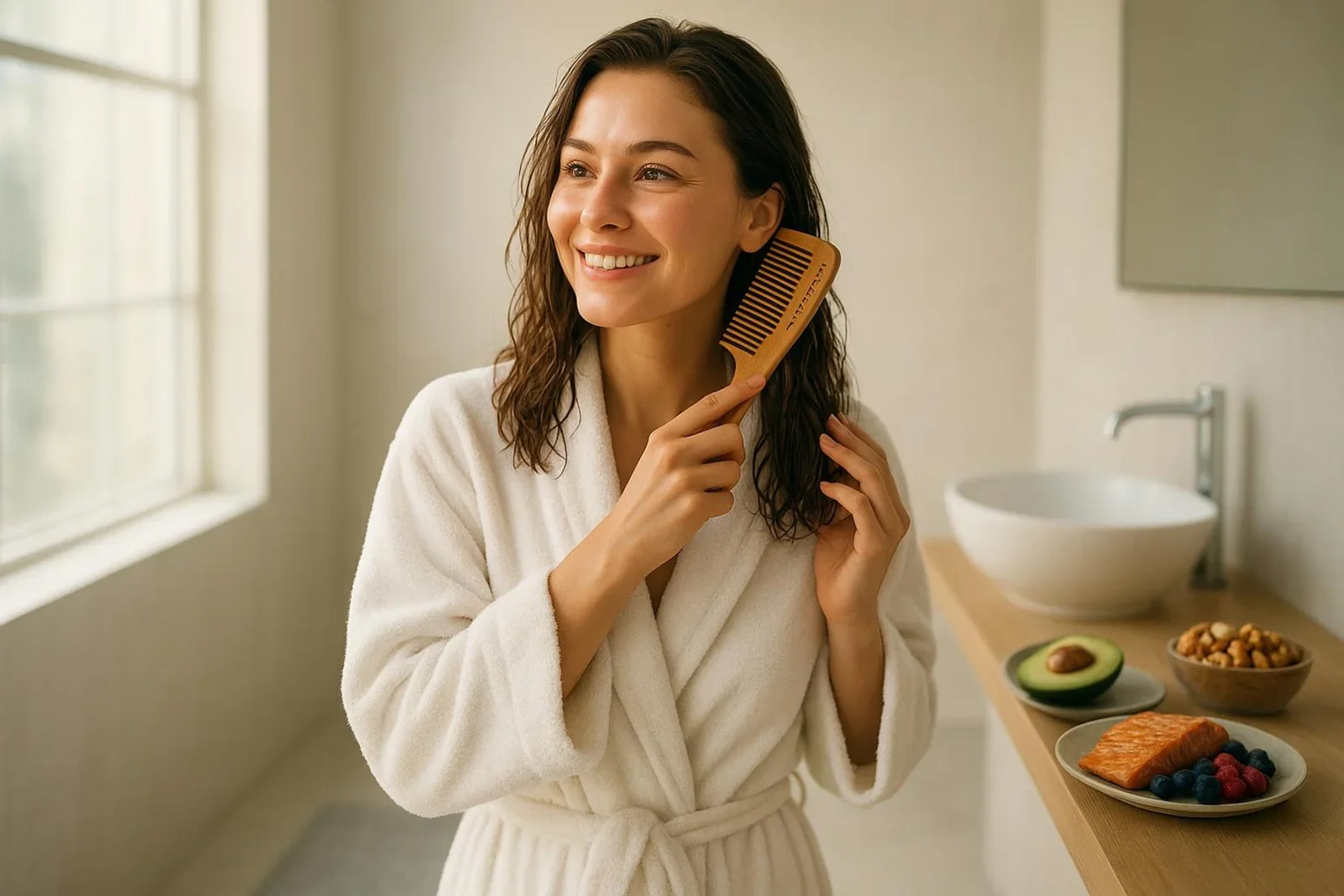
A balanced diet supports both your body and your hair. Try to include:
Fruits and vegetables: Especially dark leafy greens (for iron and vitamin C) and colourful options like sweet potatoes and carrots (for beta-carotene).
Protein sources: Eggs, lean meat, beans, and lentils help build strong hair.
Healthy fats: Fish, nuts, and seeds provide omega-3s and other nutrients linked with hair health.
Vitamins and minerals: Vitamin D, iron, and magnesium support normal hair growth.
Good food choices will not stop hormonal shedding, but they give your new hair the best chance to grow strong.
Should you take supplements?
Many doctors suggest that new mums keep taking prenatal vitamins after giving birth, especially if breastfeeding. These vitamins provide key nutrients that support your overall health and hair growth. However, they should go alongside a balanced diet, not replace it. If you think you may be low in certain nutrients, or if you want to start a new supplement, talk to your healthcare provider first.
Is it safe to use hair treatments while breastfeeding?
For chemical treatments like bleaching, dyeing, perms, or chemical straightening, many experts suggest waiting until the heavy shedding phase has passed. There is limited research on how these chemicals affect breastfeeding mums, and strong treatments can also weaken hair that is already fragile. If you are unsure, ask your doctor or a hairdresser who has experience working with breastfeeding clients.
When should you see a healthcare provider?
Most postpartum hair loss improves on its own. Still, you should see a healthcare provider if:
Shedding is very heavy and lasts more than 6-12 months
You see clear bald spots or patchy loss
You have other symptoms like feeling extremely tired, heart racing, mood changes, or large weight changes
A doctor can check for problems like low iron, thyroid disease, or other medical issues and suggest treatment if needed.
Living with postpartum hair loss: Coping and support
Losing hair during an already intense time can be upsetting. Your body is changing, and your identity may feel different as well. It helps to recognise these feelings and seek support when you need it.
How to handle the emotional impact of hair loss
Feeling worried, sad, or frustrated about hair loss after birth is very common. Your body has gone through a huge change, and seeing hair come out in clumps can feel like too much. Remind yourself that this stage is temporary and that your hair is likely to regrow.
Some ideas that may help:
Try new hairstyles or accessories (headbands, scarves, clips) that make you feel more confident.
Consider a shorter cut that feels light, stylish, and easy to manage.
Talk openly with your partner, friends, or family about how you feel.
Give yourself kindness and patience; you are recovering and adjusting to a big life change.
Where to find resources for support and advice
You are far from alone in this experience. Support can come from many places:
Online communities: Forums, social media groups, and websites for new parents where others share their stories and tips.
Health professionals: Your GP, midwife, or maternal and child health nurse can offer guidance and refer you to other services.
Mental health support: If hair loss or other postpartum changes are affecting your mood or self-esteem, a counsellor, psychologist, or support group for new parents can help.
Caring for yourself is an important part of caring for your baby. Asking for help, resting when you can, and speaking up about your concerns all make a difference as your body and hair recover.
Do you live in Sydney?
Get the perfect look at our salon – schedule your appointment now!
Our Services
Check Out Our Instagram



Check out our instagram
Check out our instagram and see our latest posts!
Check out our facebook
Check out our facebook and see our latest
posts!