
How to Grow Out Grey Hair
Choosing to grow out your grey hair is more than a new look; it can feel like freedom and a fresh stage of life. If you’re thinking about making this change, you’re in good company. More and more people are letting their natural silver show and finding pride, ease, and confidence in it. This guide takes you through the whole process, from the first decision to the moment you’re fully grey and loving it.
What prompts people to grow out grey hair?
Stopping hair dye and letting your natural grey grow in usually comes from a mix of practical reasons and emotional shifts. It’s rarely a sudden choice. Over time, many people realise the benefits of going grey are greater than the effort and cost of regular colouring.
Common reasons people choose to stop colouring
For a lot of people, constant root touch-ups simply become too much. Covering regrowth every few weeks is tiring and expensive. The numbers can be shocking: one person added up roughly $17,000 and 30 full days spent in the salon over 20 years. Another worked out they spent around $104,000 and 65 salon days in the same amount of time. That kind of time and money commitment can be a big push to stop.
Health can also play a role. Some people develop sensitive scalps, irritation, or allergies to hair dye. Others, especially those with a family history of illnesses such as breast cancer, decide to cut back on chemical exposure where they can. Stopping hair dye can feel like one clear, practical step towards that goal.
Emotional and psychological factors
The emotional side of going grey is rich and layered. For many, it’s about accepting their age and stepping into a new kind of confidence. There can be some sadness too, especially if you’ve linked coloured hair with youth or attractiveness. Working through those feelings often leads to a strong sense of relief and self-assurance, and that bold “grey hair, don’t care” mindset.
Social pressure to look young, especially for women, is a big factor. Ageism often hits women harder, as their value is frequently tied to a younger, sexualised image. Letting grey hair show can be a quiet act of resistance against those beauty rules. It lets your natural features shine, and your choice can encourage others who are thinking about doing the same.
Preparing for the move to grey hair
Starting your grey hair journey needs both planning and some mental strength. It’s a long process, not a quick fix, and a bit of thought at the start can make it far easier and more enjoyable.
Practical points to think about before you start
Before you stop dyeing, have a proper talk with your hairdresser. They can help you based on your natural colour, past dye use, and current haircut. They might suggest things like semi-permanent toners to soften the contrast or a new cut that makes the “growing out” stage easier. Think about your “grey goals”: do you want a fast change to full silver, or a slow salt-and-pepper mix? Your answer will guide your choices on products, blending methods, and cuts.
You’ll also need patience. Colourist Josh Wood reports the fastest change he’s seen took about nine months, but most people feel settled with their grey after around 18 months. For a long bob, it may take close to two years. Patience is your strongest asset here.
Getting your mindset ready for change
This part is often the most important. Expect some doubts in your own mind and some pushback from others. You might uncover hidden fears, like worrying you’ll look older or less attractive. Friends and family may say things like, “It’ll make you look 20 years older!” even if they mean well. Remember: this is your hair and your choice.
Talking with people who support you can help you stay confident. Remind yourself that your natural grey works with your real skin tone and can make your eyes stand out more. Treat this as a bold expression of who you are now. Keeping a sense of humour really helps-life is too short to stress over every single strand.
Steps to grow out grey hair successfully
There is no single “right” way to go grey. Different methods suit different people, depending on budget, lifestyle, and comfort level. Here are the main options and how they work.
Letting roots grow in: what to expect
The simplest method is to just stop colouring and let your roots grow. This “cold turkey” approach is cheap and straightforward, but the early months can be tough. Months two to five are often the hardest: the clear line between grey roots and coloured lengths becomes very obvious. It may look like you’ve skipped several salon visits. But this stage passes. Once your grey roots are long enough to tuck behind your ears (around six months), the look starts to seem deliberate rather than messy.
Should you go cold turkey or gradual?
With the cold turkey route, you simply stop dyeing and wait. Lisa Fennessy, founder of The New Knew, chose this method and shared photos from 0 to 18 months. This approach needs determination, especially early on, but it gives you 100% natural hair at the end.
The gradual route means working with a colourist to soften the change. They might use root smudging, which blends your natural grey roots into the coloured hair so the grow-out line is softer. This makes the shift less sharp and can feel easier to live with day to day.
Switching from permanent colour
If you’ve used permanent dye, you’ll be dealing with both new roots and old colour that runs through the lengths of your hair. As you stop touching up the roots, the mid-lengths and ends will still hold a lot of pigment. A deep-cleansing shampoo can gently fade the older colour so it doesn’t look like a solid block. Another option is to ask your colourist for thicker highlights, which add lighter sections and break up the solid dyed areas, helping your grey blend in.
Blending or softening the line of demarcation
The “skunk stripe” is a very common worry. To soften this strong line between grey and dye, especially around the hairline, leave a bit of grey regrowth on purpose. Your colourist can apply a slightly lighter tint at the front or use root smudging to blur the line. Temporary grey root touch-up sprays, powders, or mascaras are also handy here. They wash out with shampoo, so they don’t undo your plan, but they give you a quick confidence lift when you want it.
Using highlights, lowlights, or balayage
Salon blending techniques can give you a softer, more natural mix of tones during this time.
Highlights: lighter strands added throughout the hair to break up solid colour.
Lowlights: darker strands that add depth and balance lightness.
Babylights / balayage: very fine or painted-on highlights and lowlights that create a soft, sun-kissed look with easy upkeep.
These methods can ease you into grey without a hard line between old colour and new growth.
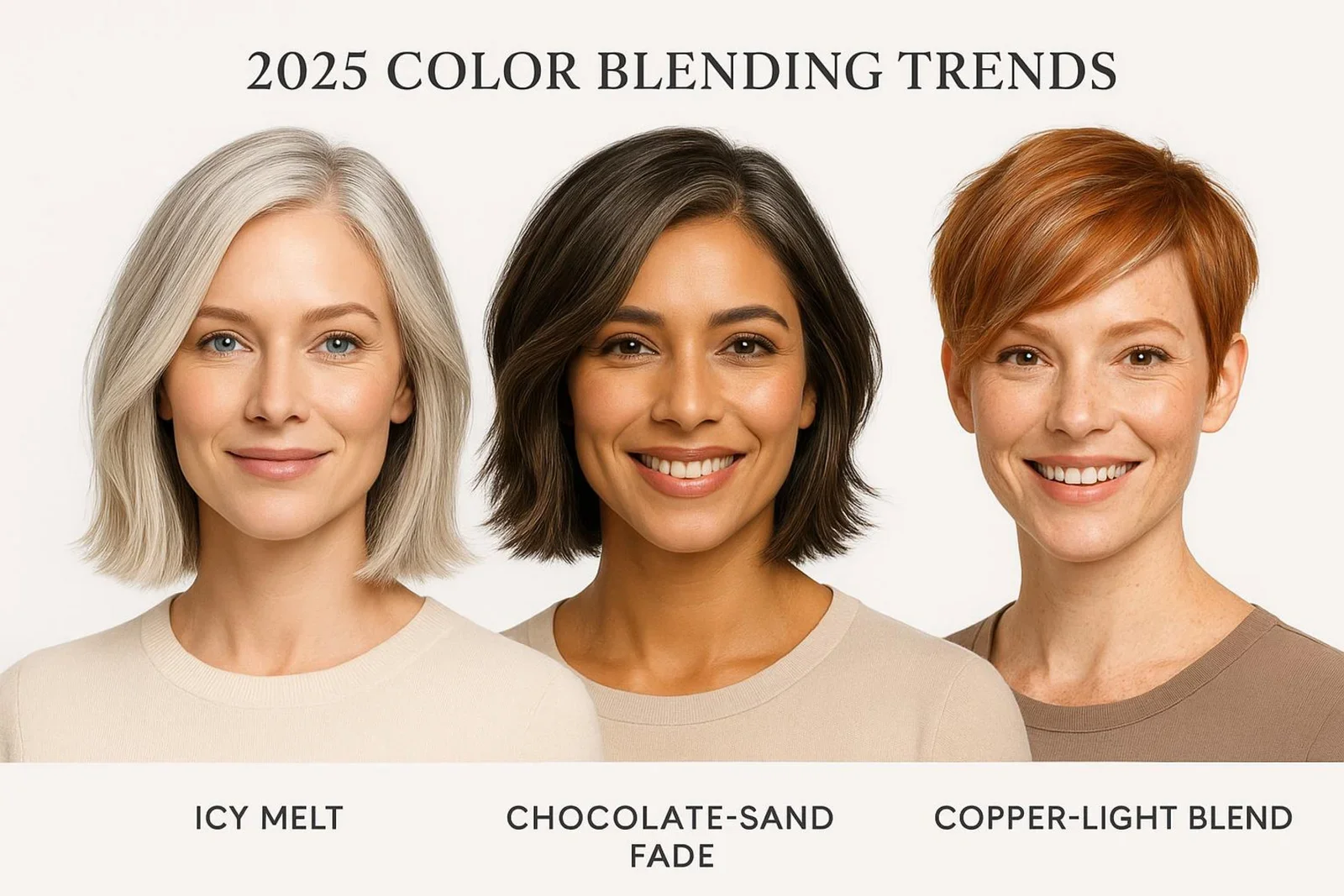
Blondes: Icy and cool blonde highlights with soft lowlights can create ashy shades that blend well with grey.
Brunettes: Deeper chocolate lowlights with sandy or golden highlights keep warmth and help grey strands mix in.
Redheads: A mix of blonde and brunette highlights and lowlights can keep a warm feel while letting grey grow through.
Cutting your hair to speed up the grow-out
The shorter you go, the faster you lose the old dye. A shorter cut can remove a big chunk of coloured hair in one go. This makes the visible grey section larger and the two-tone effect smaller. Shorter cuts also tend to look fresher and less damaged. Even a layered cut at your usual length can pull the eye away from the roots. If you feel ready for a big change, a pixie or buzz cut can almost skip the “awkward” stage and give you an instant all-grey look.
Tips for managing the look during the transition
The middle phase can feel strange: not fully grey, not fully dyed. With some smart styling and the right tools, you can still feel polished and confident while your hair grows.
Styling techniques that flatter growing-out grey
How you style your hair makes a big difference. Straight, one-length hair tends to show the colour change line very clearly. Adding movement helps break it up. Try:
Loose waves or “beachy” texture
Soft curls
A textured bob or shag-style cut
If your hair is naturally wavy or curly, let that texture shine-it naturally hides sharp lines between colours. A good blow-dry can also help tame any wiry new grey growth. Ask your stylist to show you how to style it at home with your own tools.
Using hair accessories and strategic parting
Accessories are very useful on days when you feel more aware of your roots. Try:
Headbands to cover the front regrowth
Scarves, turbans, or hats for quick coverage
Clips and barrettes to change where the eye lands
Where you part your hair matters too. At first, a side part can hide early regrowth areas. As the stripe becomes more obvious, styles such as half up, gentle teasing at the crown, or low ponytails and buns can draw attention away from the roots. Braids, in particular, mix the colours together and often make the line far less visible.
How often to trim during the process
Regular trims keep your hair healthy and help move the process along. Trimming:
Removes split ends and dryness from years of dye
Gradually cuts off the remaining coloured lengths
You will lose some overall length while growing out the grey, but you’ll reach a fully natural head of hair sooner. How often you trim depends on how fast your hair grows and how much length you want to keep, but regular appointments every 6-10 weeks work well for most people.
Common challenges and solutions when growing out grey
Growing out grey hair can come with a few problems, but most of them have simple fixes. Knowing what might happen makes it easier to handle.
Managing patchiness and uneven colour
Your grey might not grow in evenly. You may see bright white areas, darker grey patches, and leftover dye all at once. This can look blotchy. A good colourist can help even things out with:
Highlights and lowlights to balance light and dark areas
Toners or glosses to soften strong tones
An icy blonde gloss, for example, can calm yellow tones and help your new grey blend better. If your hair is light, at-home glossing treatments in the shower can also help bring the colours together for a more unified look.
Dealing with social perceptions and comments
Reactions from others can be one of the hardest parts. People may say you’ll “look older” or ask why you stopped dyeing. Often, these comments come from their own fears about ageing, not from how you actually look.
Try to build your own inner confidence by reminding yourself why you made this choice. Connect with others doing the same-online groups like Silver Sisters on Facebook can be a great source of support and ideas. Many people notice that their natural grey suits their skin tone better than dye did, giving their face a softer and often healthier look.
Handling texture and thickness changes
Grey hair often feels different from your dyed hair. It may be:
Wiry or coarse
Thicker in some areas and thinner in others
Curvier or with a new wave pattern
This can be surprising at first, and you might need to update your products and routine. Rather than straightening or fighting the new texture all the time, try styles that work with it, such as air-dried waves with a texturising spray. Grey hair can also feel drier because it has less natural pigment. This means focusing more on moisture, which we’ll cover next.
Caring for natural grey hair
Once your grey is fully grown in, you move into a new stage: keeping it healthy and bright. Grey hair has its own needs, and the right care helps it look shiny and soft instead of dull or frizzy.
Hydration and moisture for grey hair
Grey hair often has a more open cuticle, which can make it look rough, dry, or fluffy. With less pigment, it can also feel stiffer. This is why adding moisture is key. Try:
Hydrating shampoos and conditioners
Leave-in conditioners for extra softness
Oils or creams on the mid-lengths and ends
Products made for grey or silver hair can help with these specific issues. Deep conditioning once a week or every two weeks should become a regular habit to keep your strands smooth and flexible.
Best products for preventing yellowing or dullness
Grey hair can pick up yellow or brassy tones from pollution, smoke, heat tools, or product build-up. To keep your silver looking bright and clean:
Use purple shampoo once a week or as needed.
Pair it with a purple or violet-based conditioner.
Add an icy or cool-toned gloss treatment if your hair starts to look brassy.
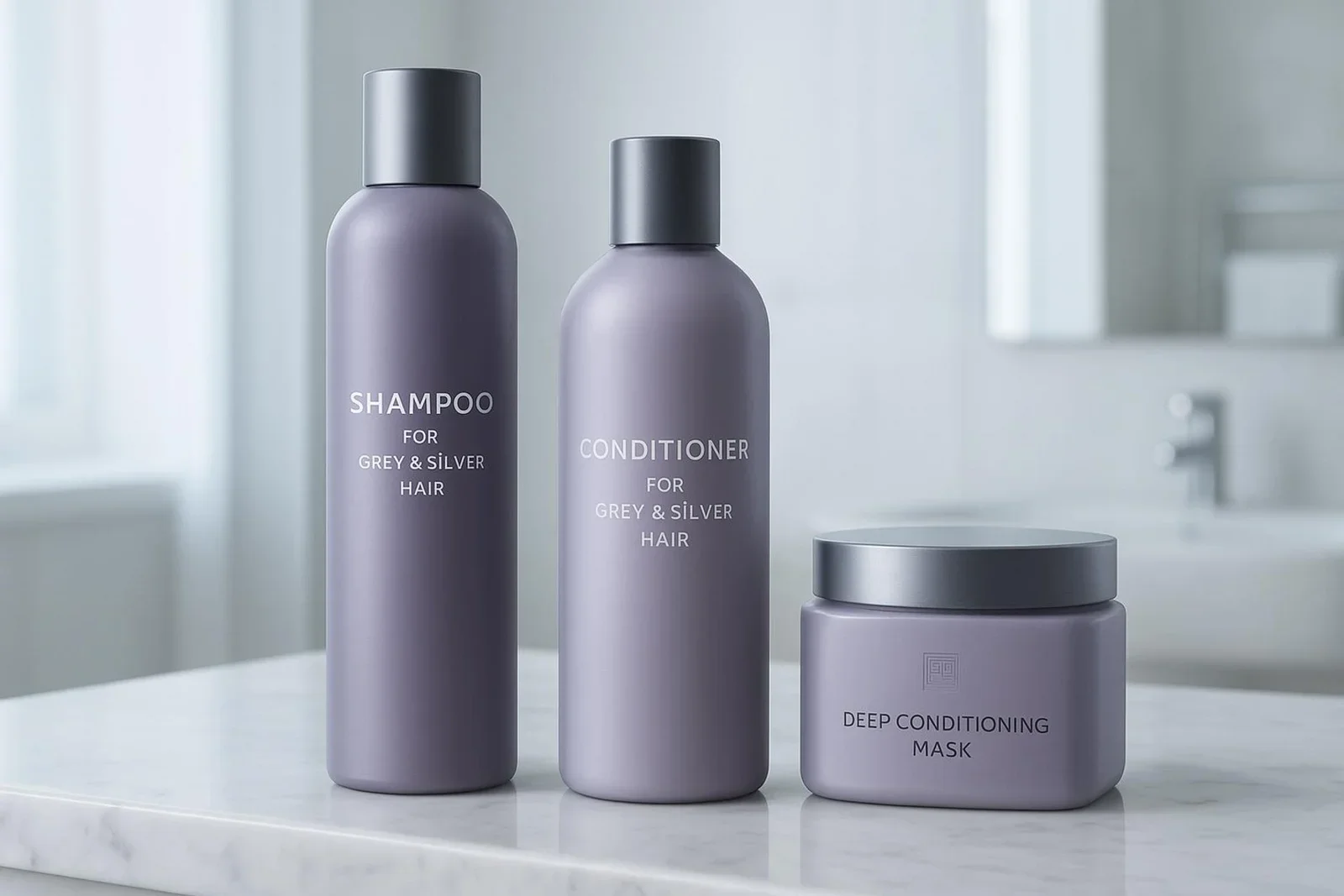
The violet pigments cancel out yellow, helping your grey stay cool-toned and clear.
Deep conditioning and shine treatments
On top of your usual conditioner, deep treatments and masks play a big role in how your grey hair looks and feels. They:
Add moisture and softness
Help smooth the hair surface
Reduce frizz and improve shine
Use a nourishing mask regularly, and add a gloss treatment or light serum if you want extra shine. With serums and oils, use a small amount: spray or pump it into your hands, rub them together, and then run your fingers lightly through the mid-lengths and ends. This prevents greasiness while giving your grey a healthy sparkle.
Frequently asked questions about growing out grey hair
Thinking about going grey often brings up a lot of questions. Here are clear answers to some of the most common ones.
How long does it take for grey hair to grow out?
Timing varies a lot from person to person, but there are some general guides. Hair usually grows about half an inch (1.25 cm) per month. That means:
| Desired Length | Approximate Time to Grow Out |
|---|---|
| Chin-length bob (~8 inches / 20 cm) | About 16 months |
| Shoulder length or longer | About 18-24+ months |
Stylist Josh Wood notes that while some people reach a stage they are happy with in about nine months, most feel fully content after roughly 18 months. Often, the first 9-12 months involve managing mixed colours, and the next year is about gaining the length you want.
Is grey hair coarser or different in texture?
For many people, yes. Natural grey hair can feel:
Coarser or stronger to the touch
Wiry in certain areas
Curvier or with a new wave or curl pattern
This is due to changes that come with age, including the loss of pigment. You’ll likely need richer, more moisturising products and maybe new styling tools or methods. Accepting and working with the new texture often leads to better-looking hair than fighting it every day.
What if you regret the change?
Doubts are completely normal at some point in the process, especially during the awkward middle phase. The good news is that hair gives you second chances. If you fully grow out your grey and decide it’s not what you want, you can always colour it again.
You don’t have to go straight back to solid colour, either. You might:
Add silver or icy highlights to play up the grey you have
Use lowlights to soften any areas that feel too bright
Try a clear gloss to add shine without changing the colour
The whole journey is about learning what feels right for you. No choice is final; you can always switch things up again later.
Inspiring stories from Australians who grew out their grey
Across Australia, many people have stopped dyeing and let their natural grey come through. Their experiences show that this change is possible, meaningful, and often surprisingly positive.
Personal journeys and before-and-after photos
Even without specific case studies to point to, the stories are often similar. Picture Sarah, 40, from Sydney. Years of dyeing left her hair dry and fragile, so she decided to grow it out. Over 18 months, her photos showed the shift from flat, faded colour to bright, multi-toned silver. She struggled at first, feeling washed out and experimenting with makeup for the first time, but encouragement from online groups and her desire for healthier hair kept her going.
Then there’s David, 55, from Melbourne. After years of hiding greys with dark dye, he decided to let his salt-and-pepper grow. His “before” shot showed flat, uniform dark hair; the “after” photo revealed a natural mix of grey and dark that suited his skin and made his features stand out. Stories like these, often shared online, highlight how personal this process is and how many different, beautiful results are possible.
Advice from real people who have made the change
Those who have already gone grey often share similar tips:
Find support: Talk to friends and family who get it, or join online groups like Silver Sisters for shared experiences and encouragement.
Expect comments: People will have opinions, but remember this is your hair and your life.
Play with style: Hats, headbands, and new hairstyles can really help during the tricky phases.
The most common messages are patience and kindness to yourself. Many people say they enjoy:
Saving time and money on salon visits
Healthier, stronger hair
A stronger sense of self and pride in their natural look
The road to natural grey can feel long at times, but the personal stories show that the end result-hair that’s truly yours and easy to live with-can be very rewarding.
Do you live in Sydney?
Get the perfect look at our salon – schedule your appointment now!
Our Services
Check Out Our Instagram




Check out our instagram
Check out our instagram and see our latest posts!
Check out our facebook
Check out our facebook and see our latest
posts!