
How to Prevent and Minimise Split Ends
To prevent and reduce split ends, you need a protective haircare routine that focuses on keeping hair hydrated, handling it gently, and getting regular trims. Many people believe split ends can be permanently “fixed” or glued back together, but once the hair fibre has split, the only real solution is to cut it off. Still, you can make split ends look less obvious with modern serums and oils that act like a temporary glue, and you can stop new ones from forming by protecting your hair from high heat, strong chemicals, and rough handling.
Keeping hair healthy is about stopping splits before they form. Hair is a delicate protein structure, and when it splits, it’s called trichoptilosis. With this in mind, you can adjust your routine to protect the oldest, weakest part of your hair: the ends. Simple changes-like swapping a cotton pillowcase for silk or turning down the heat on your straightener-can greatly cut down breakage and give you smoother, shinier hair.
What causes split ends?
Heat styling and thermal tools
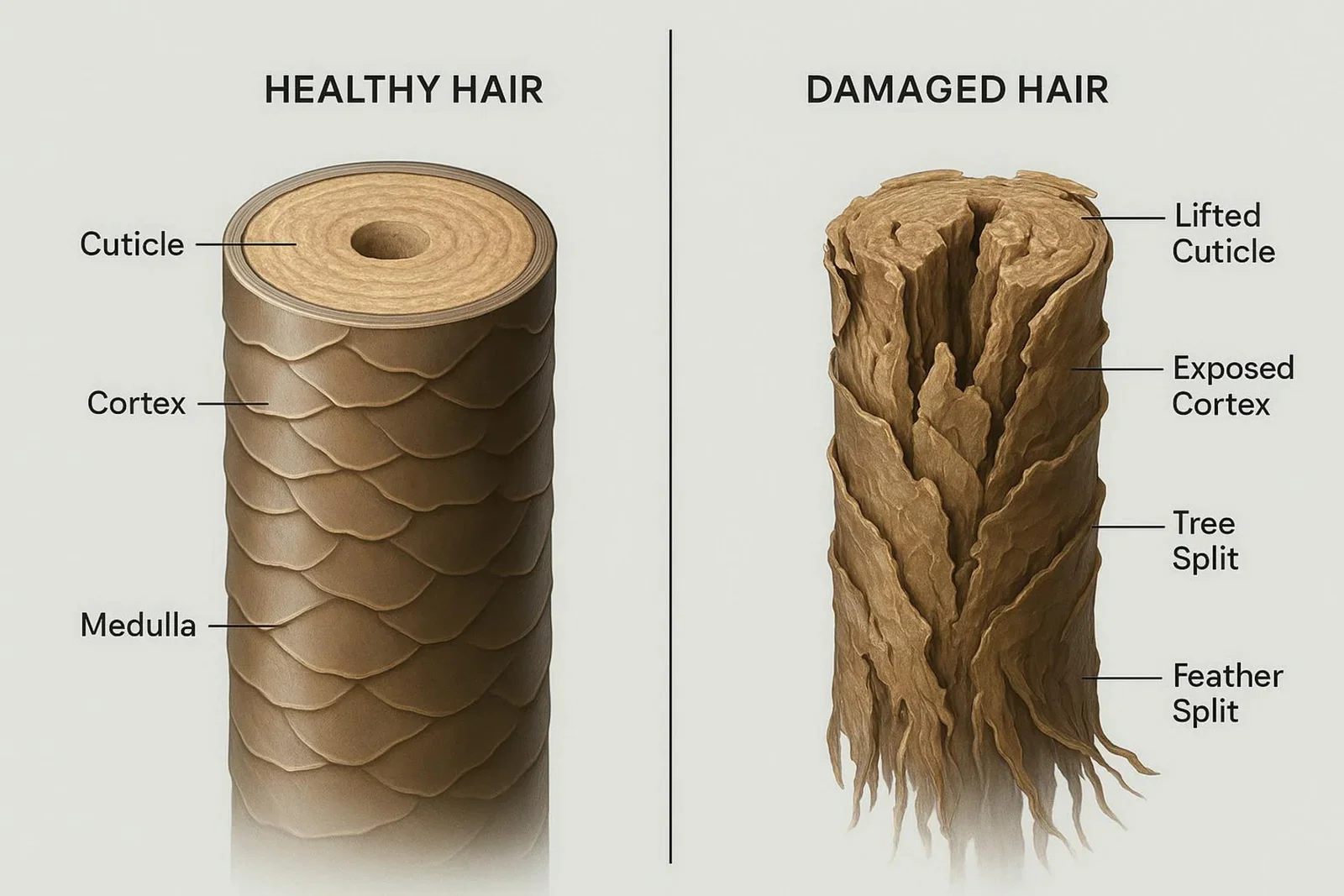
One of the main reasons for split ends is frequent use of hot styling tools. Using tools at temperatures above 150°C can damage the cortex, the inner layer that gives hair its strength. High heat removes natural moisture and oils from the cuticle, leaving hair dry, stiff, and easy to snap. Over time, this dryness weakens the protein in the strand, so the ends break with very little tension.
How often you use heat is just as important as how hot the tools are. Daily blow-drying, straightening, or curling without heat protection pushes hair past its limit. Without a protective layer, heat effectively “cooks” the keratin in your hair, causing the classic V- or Y-shaped splits that make styles look frizzy and rough.
Chemical processing and dyes
Colouring, bleaching, perming, and relaxing all change the inner structure of the hair to create a new look. These services can be beautiful, but they weaken the bonds that hold the hair together. Bleach is especially drying; if it is pulled through to the ends again and again, it can strip away the cuticle completely, leaving the inner cortex exposed and easy to split.
If you don’t follow chemical treatments with rich, hydrating care, damage can show up very quickly. Hair becomes more porous, meaning it soaks up moisture fast but loses it just as fast. This constant dryness leads to “tree” or “feather” splits, where one hair shaft splits into many pieces along its length-a clear sign the structure is breaking down.
Mechanical damage from brushing or tying
Everyday handling can cause major harm. Mechanical damage comes from friction-like forceful brushing, harsh towel-drying, or using the wrong hair ties. Dragging a brush from roots to ends through knots puts huge pressure on the strand and often makes it snap or peel. Wet hair is especially at risk, as it stretches more easily and is weaker at this stage.
Hair accessories matter, too. Tight elastics, especially those with metal parts, can create weak spots along the hair. If you always wear a high ponytail in the same place, you may see a ring of breakage or splits around the crown or mid-lengths. Even rubbing your hair dry with a regular cotton towel can rough up the cuticle, leading to frizz and, eventually, split ends.
Environmental factors and sun exposure
Your surroundings constantly stress your hair. UV rays from the sun break down natural pigment and damage keratin, in a similar way to how they damage skin. This type of damage makes hair feel dry, rough, and “straw-like,” especially on the outer layers. Wind and pollution make tangles more likely, which can cause more breakage when you try to comb them out.
Swimming is another factor. Chlorine in pools and salt in seawater are very drying. Chlorine harms the smooth outer layer, while salt leaves a residue that increases friction between strands. Without some kind of protection, these elements strip away natural oils, making hair much more likely to “weather” and split.
Underlying hair health or dehydration
Your hair often reflects your diet and hydration. If you aren’t getting enough protein, vitamins, and minerals, your body may produce weaker hair that splits more easily as it grows. Lack of moisture inside and outside the body is a leading cause of frayed ends. When hair is dry, it loses its stretch and can’t bend without breaking.
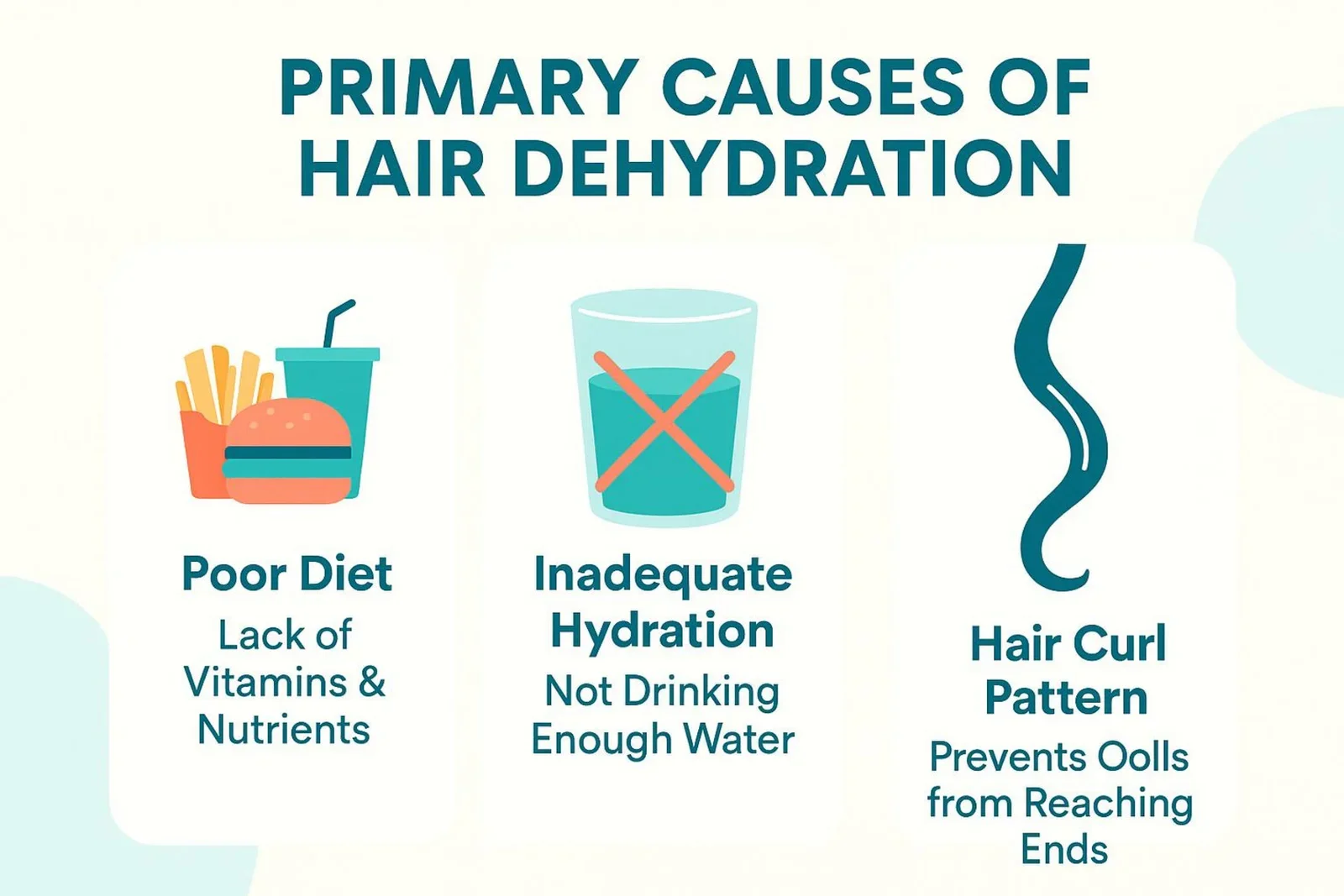
Genetics also affect how strong your hair is. Some people naturally have finer or more porous strands that damage faster. For curly and coily hair, natural oils from the scalp have a harder time travelling down the twists of the hair shaft, so the ends stay drier. These textures usually need extra nourishment at the tips to stop them from fraying.
How to prevent and minimise split ends
Get regular trims
The best way to control split ends is to cut them off before they move up the strand. Many professionals suggest trimming every 6 to 8 weeks. If you want to keep your length, ask for a “dusting,” where only the very tips are snipped to remove damage while keeping almost all of the length.
Regular trims stop small splits from turning into bigger breaks. If you leave a split, it can move all the way up toward the root, making hair look thin, uneven, and wispy. Staying consistent with trims keeps your ends neat and helps your hair look thicker and healthier from root to tip.
Be gentle when brushing and detangling
Take your time when detangling. Think of your hair like a delicate fabric. Instead of dragging a brush through knots, start at the ends and slowly work up in small sections. This prevents you from pushing tangles down the strand and creating one large knot that will likely break.
Gentle handling matters even more on damp hair. Wet strands stretch more and are easier to damage. Rough brushing at this stage can permanently harm the fibre. Spending an extra minute to detangle carefully helps keep the cuticle smooth and lowers the chance of split, rough ends.
Use a wide-tooth comb or detangling brush
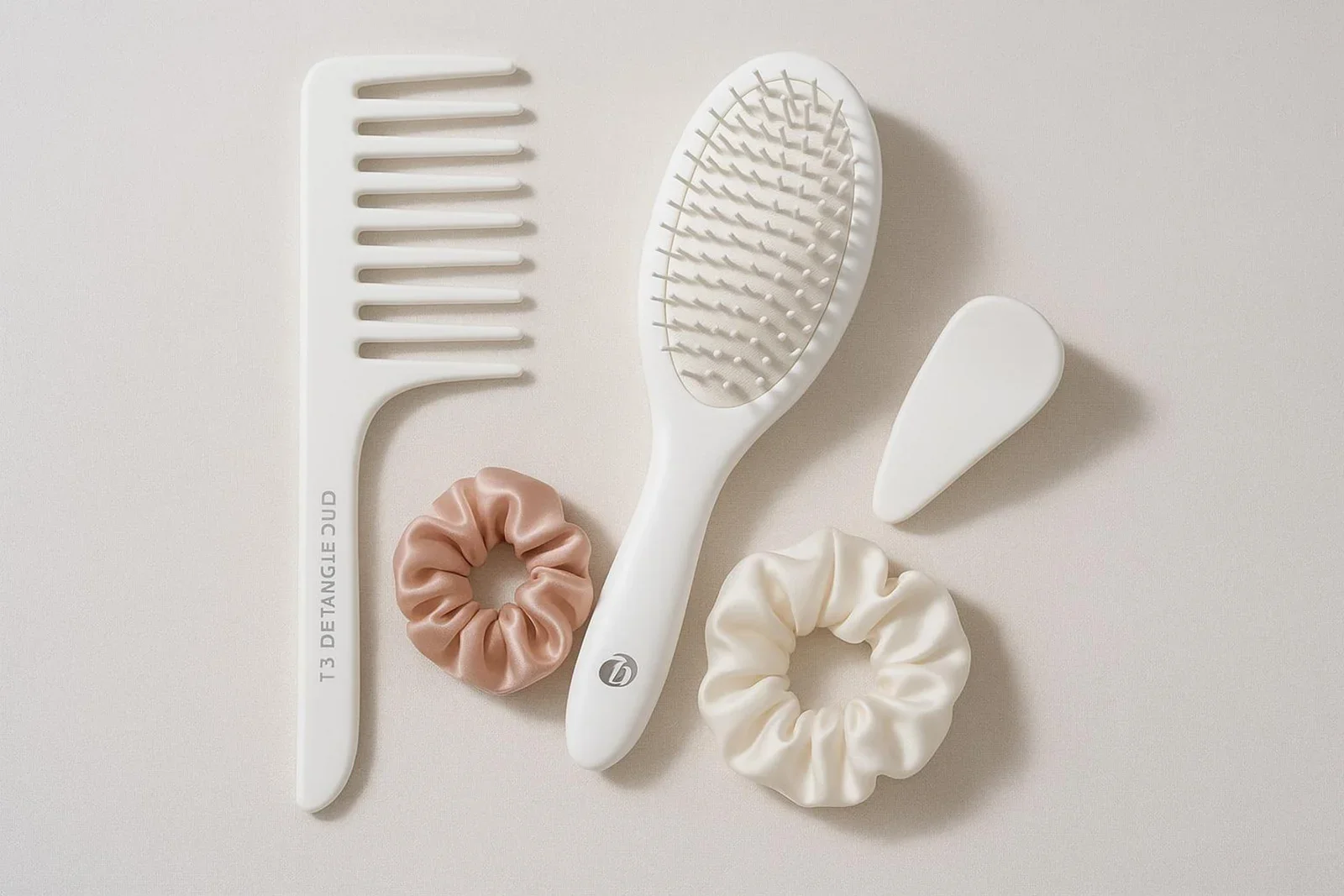
Good tools make a big difference. A wide-tooth comb is ideal for detangling, especially in the shower with conditioner on your hair. The wide gaps let hair move through more easily, which lowers friction and reduces split ends. It also helps spread masks and treatments evenly.
If you like brushes, choose one made for detangling. These usually have soft, flexible bristles that bend when they hit a knot instead of ripping through it. They glide more smoothly, helping the cuticle lie flat and protecting the inner part of the hair.
Avoid tight hairstyles and harsh hair ties
While a tight, sleek ponytail can look chic, wearing it too often can harm your hair. Constant tension can cause traction breakage, where hair snaps where the tie sits. Try to leave your hair loose more often to give it a break from pulling and pressure.
When you do tie your hair back, switch thin elastics for soft scrunchies or claw clips. These spread pressure over a larger area and don’t grip as harshly. Silk or satin scrunchies are especially gentle as they let hair slide without catching.
Avoid tying up wet hair
Putting wet hair in tight buns or ponytails can cause serious damage. As hair dries, it shrinks a little. If it’s held tightly, this shrinkage creates strong tension on the strand and the follicle, which can lead to breakage. Wet hair also stretches more, so tying it tightly can push it beyond its limit.
If you need your hair off your face while damp, use a loose clip or a soft microfiber wrap. Letting hair air-dry, or at least reach about 80% dryness, before you put it up greatly cuts down on breakage around the area where the tie usually sits.
Wash with nourishing shampoo and conditioner
Healthy hair starts with gentle cleansing. Try to avoid strong, sulfate-heavy shampoos that strip away the natural oils that protect your strands. Choose formulas that feed the hair, with ingredients like AHA to support the hair fibre and Omega-9 fatty acids to smooth the cuticle. A good shampoo should clean the scalp without drying out the ends.
Conditioner after every wash is a must. It helps your hair stay smooth, easier to comb, and less dry. If your hair is damaged, a repairing conditioner can support weak areas and make the tips more resistant to daily stress.
Deep condition and use hair masks weekly
Everyday conditioner handles basic care, but a weekly deep treatment or mask gives extra moisture and strength. These products are more concentrated and stay on the hair longer-from 20 minutes to a few hours-so ingredients can reach deeper into the strand.
Before applying a mask, gently squeeze out excess water so your hair can soak up the treatment better. Focus on mid-lengths and ends, as these are the oldest and driest parts. This habit helps hold in moisture and smooths frayed cuticles, making split ends less visible.

Maintain a healthy diet and hydrate
Hair quality often mirrors your general health. To grow strong hair that resists splitting, your body needs a regular supply of nutrients. Vitamins A, C, D, and E, Biotin, and Omega-3 fatty acids all support strong strands. Eating a variety of fruits, vegetables, nuts, and oily fish supports hair growth from within.
Staying well-hydrated matters too. Just like skin becomes dry and flaky when you don’t drink enough water, hair becomes brittle and more likely to break. Drinking enough fluids helps hair follicles work properly and produce flexible strands that can handle styling and daily wear.
Apply heat protectant before styling
If you use any heat tools-blow-dryers, straighteners, curling irons-you should always apply a heat protectant first. Think of it like sunscreen for hair. It forms a thin layer over the strand that spreads heat more evenly and reduces burning or scorching of the cuticle. Many heat protectants can protect up to 230°C.
Look for leave-in creams or sprays that also help with frizz and UV protection. Applying them to damp hair before styling helps support weak strands and offers extra defence during heat styling.
Reduce heat styling frequency
The simplest way to avoid heat damage is to use heat tools less often. Try leaving your hair to dry naturally a few days a week and working with your natural texture. Even skipping the blow-dryer sometimes allows your hair to restore some of its natural moisture.
When you do use heat, stick to the lowest temperature that still gives you the result you want. You may not need the highest setting; medium or even low heat plus the right technique and brush can give you smooth results with far less damage. Smart heat tools, like some models from Dyson, adjust temperature constantly to avoid overheating your hair.
Protect hair from UV and environmental damage
Just like you use SPF and hats for your skin, your hair also benefits from protection outdoors. On sunny days, wear a hat or use a serum or spray with UV filters. This helps keep your colour from fading and protects the keratin that keeps hair strong.
If you swim often, wet your hair with clean water before going into the pool or sea. Hair acts like a sponge and can only hold so much water; soaking it first means it will absorb less chlorine or salt. Rinsing your hair soon after swimming further cuts down on chemical damage.
Sleep on a silk or satin pillowcase
Regular cotton pillowcases can be rough on your hair. As you move in your sleep, cotton creates friction that lifts the cuticle, causing tangles, frizz, and breakage. Switching to a silk or satin pillowcase lets your hair slide more easily, reducing snagging.
This small change can bring big benefits over time. It helps prevent split ends, keeps your style looking fresher, and leaves hair smoother and shinier in the morning. People with curly or coily hair can get extra protection from a silk bonnet or by loosely “pineappling” their hair at night.
What products help prevent and treat split ends?
Repairing shampoos and conditioners
When choosing products, look for ranges labelled “repairing” or “reconstructing.” These are made to target weak areas along the hair. Ingredients like Quinoa, Pro-Keratin, and amino acids help support the hair’s natural structure. Shampoos such as Wella Ultimate Repair or Kérastase Resistance clean gently while starting to rebuild broken bonds.
Using a strengthening conditioner from the same line means your hair gets support during every wash step. Used together and regularly (about 2-3 times a week), these products can reduce breakage, make hair smoother, and help it withstand future damage.
Leave-in treatments and hair serums
Leave-in products are key helpers for split-end care. Unlike rinse-out conditioners, they stay on the hair and keep working all day. Serums with ingredients like Alpha Keratin 60ku or special anti-dryness polymers can “seal” the ends, making them look whole and helping stop splits from travelling further up the strand.
For fast results, treatments like Wella Ultimate Repair Miracle Hair Rescue claim to improve damage in as little as 90 seconds. These light sprays or creams work well on clean, towel-dried hair, adding a protective layer that makes hair easier to comb and style while shielding it from daily stress.
Oils for smoothing and protecting
Hair oils are very helpful if your ends are dry. A good oil, such as one with Squalane or Camelina oil, can be used on damp hair to lock in moisture or on dry hair for shine. Oil smooths the cuticle so hair lies flatter and reflects light, which hides some damage.
Using a small amount on the tips can make a big difference. It adds slip to stop tangles and gives one last layer of protection against friction. For curly hair, oils are especially useful to replace some of the natural oils that struggle to reach the ends.

How to minimise the appearance of split ends
Styling tricks to disguise splits
If you’re not ready to cut your hair yet, you can still make split ends less obvious. Updos like low or high buns let you tuck the ends away so they can’t be seen. Braids and twists also keep hair together and reduce friction. If your ends are very thin, clip-in extensions can give more fullness and a sharper-looking edge.
You can also control flyaways with a simple trick using hairspray and a spoolie or toothbrush. Split hairs often stick out along the lengths. Spray a small amount of light-hold hairspray on the brush and gently smooth it over the surface of your hair to press those short pieces back down and create a neater look.
Serums, creams, and oils for smoothness
Moisturising styling creams can act like temporary glue for split ends. They often contain ingredients with a positive charge that attach to the negatively charged damaged areas, helping to hold split fibres together until your next wash. This doesn’t repair the hair permanently, but it gives a smooth, glossy finish that looks much healthier.
For the best effect, use a smoothing serum or oil on your ends as the last step of your styling routine. The added shine distracts from any dryness or fraying. Products like Oribe Split End Seal or Pantene Split End Fuser are made for this job, giving a strong boost of care that leaves hair soft and refreshed in appearance.
Frequently asked questions about split ends
Is breaking off split ends safe?
Snapping or picking at split ends is very tempting, but it’s one of the worst habits for your hair. Tearing the strand creates an uneven edge that is actually more likely to split again. It also weakens the rest of the strand and can damage higher up where you pulled.
Think of it like pulling a loose thread on a jumper-once you pull, more starts to come undone. Instead of picking, use sharp hairdressing scissors for a careful “search and destroy” on individual splits if you must, or wait for your next professional trim. Cutting is the only gentle way to deal with damaged tips.
How often should you trim split ends?
Most people do well with a trim every 6 to 8 weeks, but the right timing depends on your hair type and routine. If you have a short or very shaped haircut, you may need a trim every 4 weeks to keep the style clean. If your hair is very healthy and you use little or no heat or colour, you might stretch trims to 10 or 12 weeks.
Watch your ends closely. If they tangle more, look thinner, or appear see-through compared to the rest of your hair, it’s time for a cut. Regular trims are still important when growing your hair out, as they stop damage from travelling up and breaking off the length you are trying to gain.
While split ends are a normal part of hair ageing-hair that reaches below your shoulders can be several years old-they don’t have to ruin your style. Think about haircare the same way you think about skincare: your routine might change with the seasons, your stress levels, and your daily habits. Genetics affect how strong your hair is to begin with, but with enough moisture and protection, anyone can enjoy stronger, smoother hair. Pound for pound, healthy hair is actually stronger than steel; your routine simply helps keep that natural strength for as long as you can.
Do you live in Sydney?
Get the perfect look at our salon – schedule your appointment now!
Our Services
Check Out Our Instagram


Check out our instagram
Check out our instagram and see our latest posts!
Check out our facebook
Check out our facebook and see our latest
posts!