
How to Repair and Care for Damaged Blonde Hair
Want bright, beautiful blonde hair? Lightening can get you there, but keeping your hair healthy afterwards is a whole different story. If your once-glossy blonde now feels dry, rough, or fragile, you’re not alone. While you can’t undo the chemical changes from bleach, you can absolutely improve how your hair looks, feels, and behaves. The key is knowing what causes the damage, spotting the signs early, and following a steady care routine that helps your hair recover as much as possible.
Lightening to your dream shade usually weakens the hair along the way. But don’t panic. With the right steps, you can turn rough, tired strands into soft, shiny, bouncy blonde hair. This guide covers it all: what bleach does to hair, how to treat damage, which products to use, and simple at-home tricks so your blonde can stay bright and healthy.
What Causes Damage to Blonde Hair?
Blonde hair, especially hair that has been lightened or bleached, is more fragile than darker, untreated hair. That’s not bad luck; it’s a direct result of what your hair goes through during colouring and everyday life. Knowing what harms your hair is the first step to protecting it and helping it recover.
Bleaching and Chemical Processing
Bleaching is the main reason many blondes struggle with damage. To lift your natural colour, bleach triggers a strong chemical reaction inside the hair. It breaks down melanin (the pigment that gives your hair its colour) and also affects the proteins in the hair shaft. This harsh process strips away natural oils and weakens the structure, leaving hair dry, rough, and easy to break.
How damaged your hair becomes depends on the bleach strength, how long it stays on, and your hair’s starting condition. Repeated bleaching, especially with short gaps between sessions or without proper care, makes each strand weaker over time. Bleach may be needed to get many blonde looks, but its impact on hair strength is very real.
Heat Styling and Environmental Stressors
On top of chemicals, daily styling and your surroundings can make things worse. High heat from straighteners, curling wands, and blow-dryers removes moisture from hair that is already dry and porous. This makes it even more brittle and easy to snap, especially on previously bleached hair.
Environmental factors also play a big role. Strong sun (UV rays) can break down hair proteins and fade colour, leaving your blonde dull and brassy. Swimming in chlorinated pools or the ocean can draw moisture out, roughen the hair shaft, and even cause colour changes (like that dreaded green tinge), making hair feel stiff and coarse.
Mechanical Damage from Brushing or Tying
Damage can also come from how you handle your hair day to day. Mechanical damage happens through friction and pulling. Brushing wet, bleached hair is a classic cause: wet hair is weaker, and lifted cuticles catch and tear more easily, so hard brushing can snap strands.
Very tight ponytails, buns, or harsh elastic bands can cause breakage where the hair is pulled tight. Regular rubbing against cotton pillowcases as you sleep also roughens the surface, leading to tangles, frizz, and extra wear on already fragile blonde hair.
Exposure to Sun, Salt, and Chlorine
Sunny, beach-heavy lifestyles can be tough on blonde hair. UV rays from the sun fade colour and weaken hair. Saltwater sucks moisture out, leaving hair dry, stiff, and rough. Chlorine strips oils, dries hair out, and can give blonde tones a greenish cast.
Each of these on its own is drying; together they can quickly break down blonde hair. Protective habits are especially important during hot months and long days outdoors or in the pool.
How Does Bleaching Affect Hair Structure?
To repair damaged blonde hair well, it helps to have a simple picture of what bleach actually does inside the strand. It’s not just a colour change; it changes the structure of the hair itself.
Effect on Hair Bonds and Cuticle
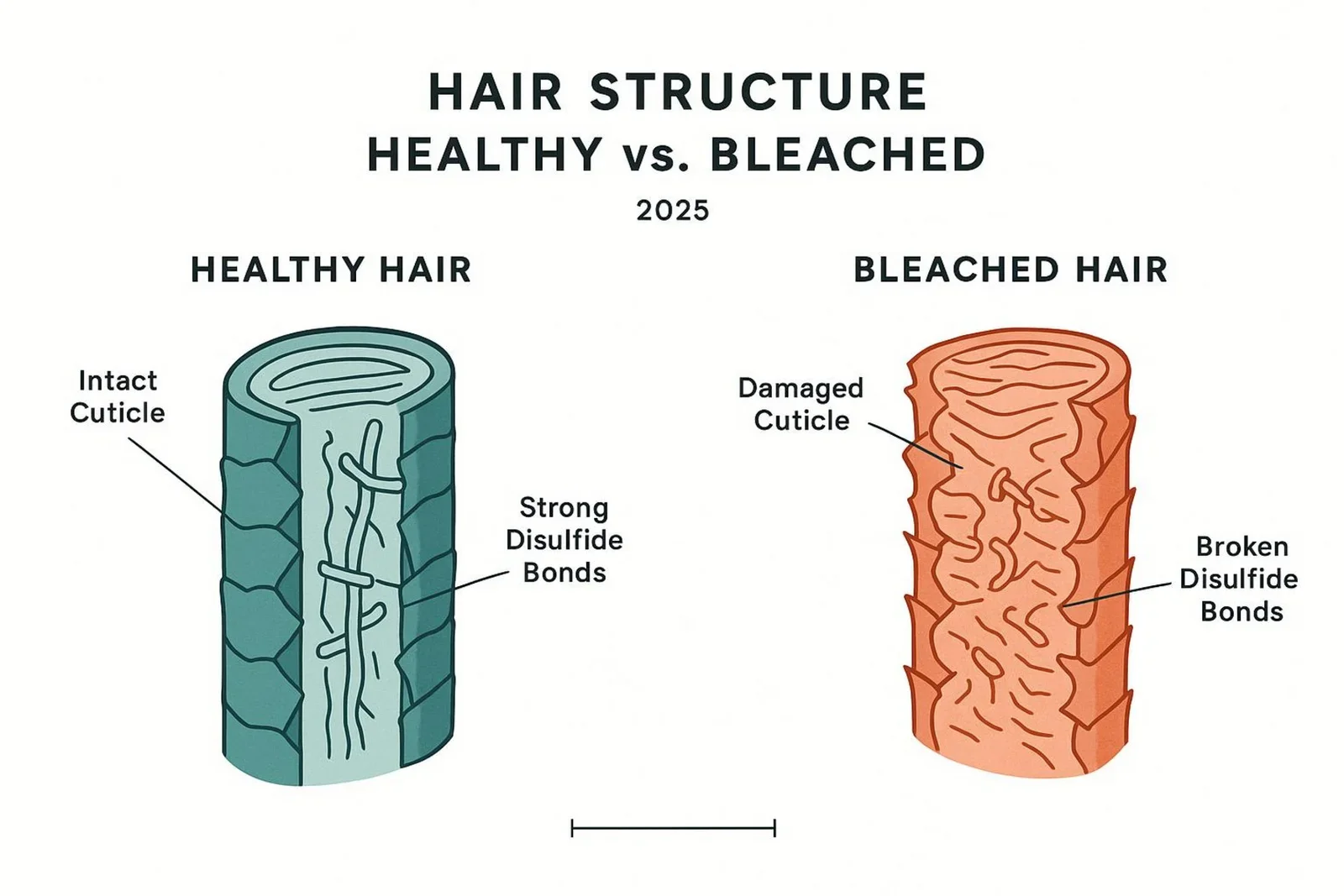
Each hair shaft is covered by an outer layer called the cuticle. This is made up of tiny overlapping scales. On healthy hair, these lie flat, so hair looks smooth and shiny. Bleach lifts and swells these scales so the chemicals can reach the inner part of the hair (the cortex), where pigment sits. This lifting is why bleached hair often feels rough or “grippy.”
Inside the cortex, bleach breaks down not only melanin but also the proteins that give hair strength, especially keratin. Keratin is held together by strong links called disulfide bonds. Bleach breaks many of these bonds, which reduces elasticity and strength. That’s why bleached hair can feel stretchy and “gummy” when wet, and why it snaps easily when pulled.
Is Damage Permanent or Reversible?
Once hair has been bleached, the inner structure is permanently changed. You can’t put melanin back or fully rebuild every broken bond so it’s exactly like virgin hair again. Bleached hair will always be more porous and more fragile than hair that’s never been coloured.
But you can greatly improve how it looks and feels, and stop it getting worse. Think of it like caring for a delicate fabric: you can smooth it, support it, and protect it, even if you can’t make it brand new. With bond-repair products, rich treatments, and gentle habits, you can strengthen the hair you have and support healthy new growth over time.
What Are the Signs of Damaged Blonde Hair?
Catching damage early makes it easier to manage. Look out for these common signs that your blonde hair needs extra care and repair.
Dryness and Dullness
One of the first things you might notice is a change in texture. Bleached hair often feels very dry, rough, and straw-like because its natural oils are stripped away and moisture escapes easily. This lack of hydration also kills shine, so your blonde may look flat and tired instead of glossy and bright.
If your hair feels scratchy or looks matte where it once looked glossy, it’s a sign that it needs deeper moisture and nourishment.
Brittle Strands and Split Ends
Weakened blonde hair breaks more easily. You might see more broken hairs in your brush, on your clothes, or around your sink. Strands may feel sharp or “crispy” when you run your fingers through them. Split ends are very common: the ends of the hair fray and split into two or more pieces. This means the outer layer is damaged and can’t protect the inner part of the hair.
If your ends look thin, uneven, or rough, or your lengths feel like they’re snapping off, it’s a clear sign your hair needs damage control.
Loss of Elasticity and Breakage
Healthy hair can stretch a little, especially when wet, and then spring back. Bleach-damaged hair often loses this “stretch and return.” If you gently pull a wet strand and it snaps straight away or turns to mushy “chewing gum,” the internal bonds are badly weakened.
In very damaged cases, hair can break off in random shorter chunks, not just at the ends. This kind of breakage shows the hair is under serious stress and needs very gentle handling and strong repair treatments.
Porosity and Difficulty Retaining Colour
Bleached hair usually becomes highly porous. That means the cuticle is lifted and full of tiny gaps. Porous hair soaks up water and colour fast but also loses both quickly. This leads to dryness, uneven tone, and colour that fades or washes out soon after toning or dyeing.
If your blonde always seems thirsty, dries out quickly after washing, tangles easily, or loses toner after just a few washes, high porosity is likely part of the problem.
What Immediate Steps Can Repair Damaged Blonde Hair?
If your blonde hair looks and feels distressed, some fast changes can help calm things down and stop further harm while you work on longer-term repair.
Gentle Cleansing with Specialised Shampoos
Regular shampoos can be too harsh for damaged blonde hair. Swap to a sulphate-free shampoo made for bleached, colour-treated, or damaged hair. These formulas cleanse without stripping the little natural oil you have left and are kinder to fragile cuticles.
Use lukewarm or cool water instead of hot. Hot water dries hair out and lifts the cuticle more, which speeds up colour fade. Gently massage your scalp, then let the lather run through the lengths instead of scrubbing the ends.
Never Skip Conditioner
If you’re blonde, conditioner is non-negotiable. After each wash, use a rich conditioner that matches your gentle shampoo. Conditioner smooths raised cuticles, adds slip for safer detangling, and pumps moisture back into thirsty strands.
Squeeze out extra water before applying so the product isn’t watered down. Focus on mid-lengths and ends, where damage is worst. Leave it on for a few minutes, then rinse with cool water to help close the cuticle and add shine.
Regular Protein and Moisture Treatments
Bleached hair needs both strength and hydration. Protein treatments help rebuild some of the structure that bleach wore away, by feeding the hair small protein fragments like hydrolysed keratin. But too much protein without moisture can make hair stiff and prone to snapping.
Use deep conditioners or masks once or twice a week. Pick ones with a mix of strengthening and hydrating ingredients such as proteins, argan oil, aloe vera, or similar nourishing oils. This mix helps refill both water and strength, giving hair a softer, more resilient feel.
Trimming Damaged Ends
Some damage can’t be “fixed” with products. Split ends can only be removed, not glued back together properly. If they’re left, splits travel higher, causing more breakage and a frayed look.
Regular trims every 6-8 weeks (or more often if your hair is in bad shape) remove the worst damage so the rest of your hair can look and feel healthier. It can be hard to part with length, but cutting off weak, shredded ends is a key step in getting strong, healthy hair again.
Which Treatments Help Restore Strength and Shine?
Once your routine is gentler and your hair is a bit more stable, you can add stronger treatments that target internal bonds, hydration, and surface smoothness to bring back strength and shine.
Bond-Building and Olaplex-Style Products
Bond-building treatments have changed how we care for bleached hair. Since bleach breaks internal bonds, these products aim to reconnect or support them. Systems like Olaplex and similar bond-repair ranges work inside the hair shaft to link broken bonds and protect existing ones, which helps hair feel stronger and more flexible.
Salons often use bond-builders during or after lightening, and many brands sell at-home versions like the Olaplex Intensive Bond Building Hair Treatment Kit. Used regularly, these can make a big difference to breakage, texture, and overall resilience in heavily damaged blonde hair.
Deep Conditioning and Hair Masks
Deep conditioners and masks are heavy-duty helpers for dry blonde hair. They contain higher levels of oils, butters, and active ingredients to sink deeper into the hair and boost moisture and softness.
Look for masks with argan oil, aloe vera, shea butter, or silk amino acids. Use once or twice a week after shampooing. Lightly towel-dry first so your hair is damp, not dripping, apply the mask through mid-lengths and ends, and leave it on for 10-30 minutes (or overnight if the product allows). Some masks also include purple pigments to help calm brass while hydrating.
Leave-In Conditioners and Detangling Sprays
Leave-in products keep working after you step out of the shower. Leave-in conditioners help smooth the cuticle, keep moisture in, and protect against daily wear and tear. Choose colour-safe, sulphate-free formulas with strengthening ingredients like keratin or collagen if your hair is very weak.
Detangling sprays are great for knot-prone blonde hair. They add slip so you can comb without tearing. Spray on damp hair, then gently work through with a wide-tooth comb from ends to roots. Many leave-ins double as detanglers, which saves time and gives ongoing protection.
Natural Oils and Overnight Treatments
Light oils can add a powerful extra layer of care. Jojoba, argan, and coconut oil are popular for dry, damaged hair. They coat and partly soak into the hair shaft, adding softness and protection.
Rub a small amount between your palms and smooth it through dry hair, focusing on mid-lengths and ends. Leave on for 20-30 minutes, or overnight for a stronger treatment (wrap your hair or cover your pillow). Wash out with a gentle shampoo and follow with conditioner. Done regularly, oil treatments can make hair feel smoother, shinier, and easier to manage.
What At-Home Remedies Can Improve Blonde Hair Health?
You don’t always need salon products to give damaged blonde hair a boost. Simple ingredients from your kitchen can offer rich moisture and nutrients for a fraction of the price, as long as you use them sensibly.
Coconut Oil and Avocado Masks
Coconut oil is well-known for helping reduce protein loss in hair and giving deep moisture. Warm about a tablespoon in your hands and apply it to dry hair from mid-lengths to ends (avoid the roots if your scalp gets oily). Leave it on for at least 30 minutes or overnight with your hair wrapped. Then wash with a sulphate-free shampoo and condition.
Avocado brings healthy fats, vitamins, and minerals. Mash a ripe avocado and mix with a tablespoon of honey and a little argan oil. Apply to damp hair, leave for around 30 minutes, then rinse with lukewarm water. This can help soften and nourish dull, dry lengths.
Egg Yolk, Honey, and Olive Oil Combinations
Egg yolks contain fats and proteins that can help add shine and a smoother feel to damaged hair. Mix one egg yolk with a tablespoon of honey and a few drops of olive or argan oil. Apply to hair, focusing on damaged areas, and leave for 20-30 minutes. Rinse with cool water so the egg doesn’t cook on your hair.
Olive oil on its own can work as a simple hot oil treatment. Gently warm some oil, apply to your hair, and leave for about 30 minutes before washing. For a richer mask, blend a mashed banana (for vitamins and potassium) with a tablespoon of olive oil. Apply to dry or slightly damp hair, leave up to 45 minutes, then rinse with cool to lukewarm water.
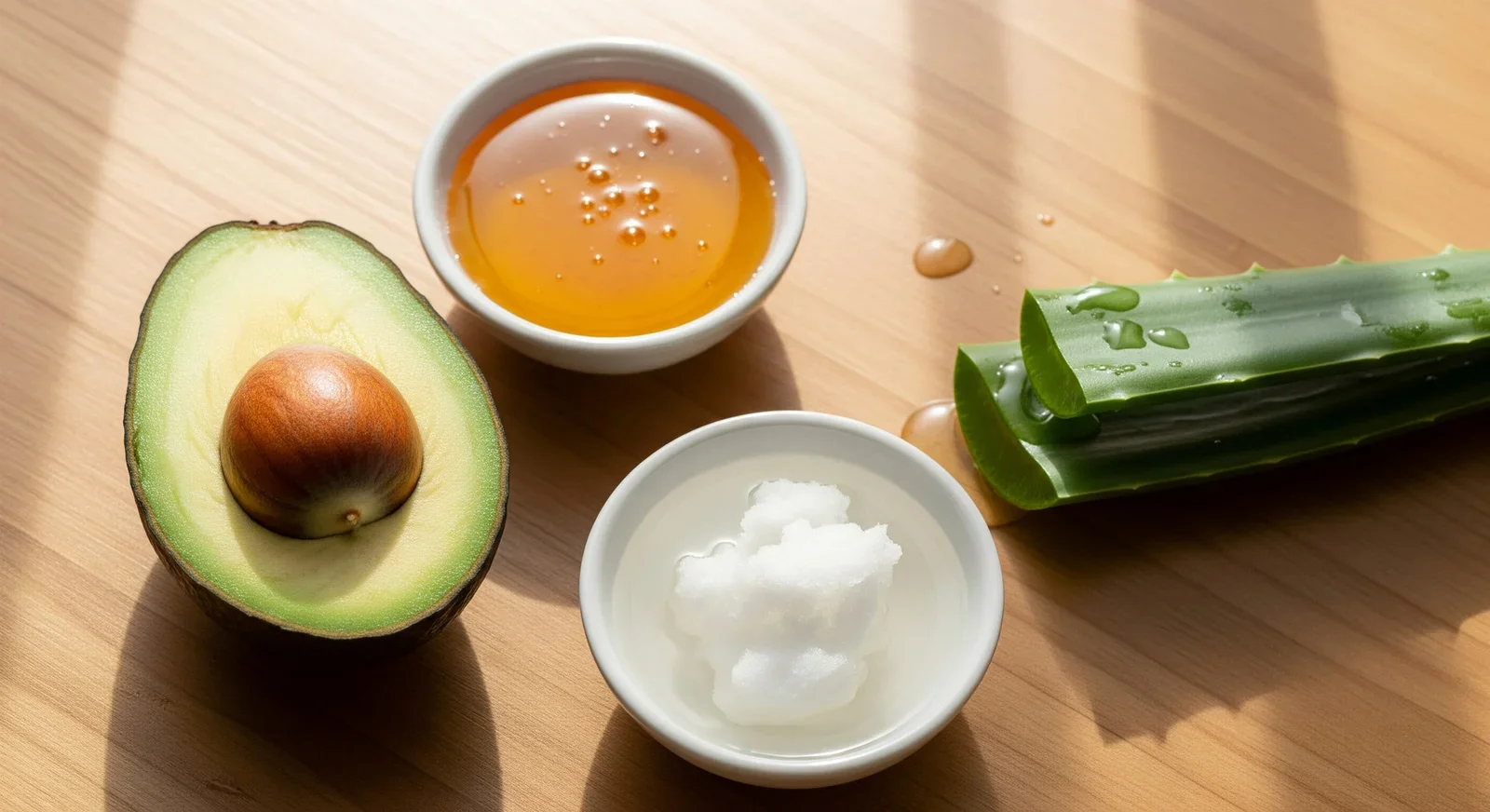
Aloe Vera for Hydration
Aloe vera is soothing and hydrating for both scalp and hair. It can calm irritation and add light moisture without heaviness. Mix pure aloe gel with a little of your favourite hair oil and apply to your scalp and lengths. Leave on for 30 minutes, or overnight if you prefer, then wash and condition as normal.
Aloe helps smooth the cuticle, making hair feel softer and look shinier, which is especially helpful for rough, dry blonde hair.
Use of Satin Pillowcases and Reduced Friction
Small changes to your sleep setup can help prevent damage. Cotton pillowcases grab at your hair and soak up moisture as you move in your sleep. This can cause tangles, frizz, and breakage over time.
Switching to a silk or satin pillowcase reduces friction and helps your hair stay smoother and more hydrated. You can also wear a silk or satin bonnet or scarf at night. These small tweaks can lead to fewer tangles, less frizz, and a softer feel in the morning.
How to Prevent Further Damage to Blonde Hair
Repair is only half the story; keeping new damage to a minimum is just as important. Good habits help protect the effort you put into treatments and trims.
Avoiding Excessive Heat Styling
Bleached hair is already weakened, so regular high heat can quickly push it over the edge. Try to air-dry whenever you can and give yourself “heat-free” days each week.
When you do use heat, always apply a heat protectant spray or cream first. Use the lowest heat setting that still works, keep tools moving, and avoid going over the same section again and again. When blow-drying, use medium heat and hold the dryer a little away from the hair.
Protecting Hair From UV, Salt, and Chlorine
Sun, ocean water, and pools are tough on blonde hair, especially in Australia. Use a UV-protective hair spray or wear a hat when you’ll be in direct sun for long periods.
Before swimming, soak your hair with fresh water and apply a leave-in conditioner. If your hair is already wet and coated in conditioner, it will absorb less salt or chlorine. Rinse your hair as soon as you’re out of the water to remove leftover chemicals and salt, then follow with your normal gentle routine later.
Minimising Mechanical Stress
Be kind to your hair physically. Avoid rough brushing, especially when hair is wet and most fragile. Use a wide-tooth comb or a brush made for wet hair, and work from the ends upwards in small sections.
Swap rough towels for microfibre towels or old soft T-shirts, and gently squeeze or blot out water instead of rubbing. Replace tight elastics with silk scrunchies or spiral ties, and avoid very tight styles that pull at the scalp and cause stress on fragile areas.
Choosing Protective Styles and Products
Protective styles help limit exposure to wind, sun, and friction. Loose braids, low buns, and soft updos keep ends tucked away and reduce tangling. At night, a loose braid or bun can lessen knots and friction while you sleep.
Pick products that are gentle and suited to coloured hair. Choose sulphate-free, colour-safe shampoos and conditioners, and use leave-in treatments and oils often to keep hair flexible and hydrated. If you use purple shampoo to fight brass, don’t overdo it; alternate it with your regular hydrating shampoo to avoid extra dryness.
How to Care for Blonde Hair Daily
Daily habits are what really shape the long-term health of your blonde hair. A simple, consistent routine will protect your colour and keep your strands in the best shape possible.
Best Washing Frequency and Temperature
Damaged blonde hair usually does better with less frequent washing. Washing too often strips away the natural oils that help protect the hair. Aim for every 2-3 days, or even less often if your scalp allows. Use dry shampoo on off days to refresh roots without stressing lengths.
Always wash with lukewarm or cool water. Hot water makes hair drier and encourages colour to fade faster. A final rinse with cool water helps flatten the cuticle so hair looks shinier and smoother.
Detangling Techniques from Ends to Roots
Because bleached hair tangles easily, how you detangle really matters. After washing, gently blot your hair with a soft towel until it’s damp. Apply a leave-in conditioner or detangler.
Use a wide-tooth comb or detangling brush and start at the very ends. Work slowly, removing knots at the bottom before moving up the length in stages. This method avoids dragging knots down and causing more breakage.
Best Styling Products for Blonde Hair
Choose styling products that protect and hydrate instead of drying your hair out. Always use a heat protectant before blow-drying, straightening, or curling. Lightweight oils or serums (like argan or squalane-based products) can add shine, smooth frizz, and shield ends without making hair greasy or heavy.
If you like creams or mousses, go for alcohol-free, hydrating formulas. Try to avoid heavy silicone build-up, as it can block moisture from getting into the hair. If you use salt sprays for texture, mix them with leave-in conditioner or follow with a little oil on the ends so they don’t become crunchy and dry.
Maintaining Colour and Reducing Brassiness
Yellow and orange tones often creep into blonde hair over time. Purple shampoos and masks help by cancelling yellow, while blue tones help with orange. Use them only when brass appears instead of every wash, to avoid over-toning or drying your hair further.
You can also refresh your colour with salon toners or glaze services between full lightening sessions. For example, a SHINEFINITY Color Glaze can add shine and adjust tone without extra lightening, helping your blonde look healthier and more polished.
Common Questions About Repairing Damaged Blonde Hair
Here are answers to some frequent questions people have when trying to heal and care for damaged blonde hair.
How long does it take for damaged hair to recover?
The time frame depends on how damaged your hair is. If you’re dealing with mild dryness or slight dullness, you might see improvement in a few weeks once you start a good routine. For heavily bleached hair with lots of breakage and stretchiness, it can take several months of steady care to see big changes.
Remember, the damaged lengths won’t become virgin hair again, but they can become much stronger, softer, and easier to manage while you grow out new, healthier hair.
Can dead hair grow back healthy?
The ends of your hair are made of dead keratin, so once they’re badly split or broken, they can’t truly be brought back to life. But the follicles in your scalp are alive. As long as your scalp is healthy and you’re gentle with your hair, new growth will come through in better condition.
The goal is to care for your existing lengths so they look and feel as good as possible while you cut away damage bit by bit and let healthier hair replace it.
How often can you bleach or lighten blonde hair safely?
This depends heavily on your hair’s condition, texture, and past chemical history, so a professional colourist should always guide you. As a rough guide, many stylists suggest waiting at least six weeks between bleach sessions, sometimes longer if the hair is very fragile.
If you push bleaching too often or too aggressively, hair can break off or become so weak it won’t hold colour. Listening to your hairdresser’s advice is important if they suggest spacing out lightening to protect your hair.
Ways to stop breakage and shedding
Reducing breakage and shedding usually takes a mix of steps:
Use both protein and moisture treatments (bond-builders, masks) to strengthen and hydrate.
Handle hair gently: detangle carefully, avoid tight styles, and sleep on silk or satin.
Protect from heat and the elements with heat protectants, UV sprays, and pre-swim products.
Have regular trims to remove split ends before they climb higher up the strand.
Eat a balanced diet that includes enough protein, iron, zinc, and vitamins that support hair growth.
Key Recommendations for Healthy Blonde Hair
Keeping blonde hair healthy is an ongoing process, not a quick fix. While you can’t undo every effect of bleach, you can greatly improve how your hair looks and feels and keep it from getting worse.
Use gentle, high-quality products for damaged blonde hair, limit heat, protect your hair from sun, salt, and chlorine, and treat your hair kindly during washing, drying, and styling. Keep up with trims to stop split ends from taking over.
Don’t forget that hair health also comes from within. Eating well, drinking enough water, and managing stress all support hair growth and strength. If you’re unsure what your hair specifically needs, a good hairdresser can suggest suitable products and salon treatments suited to your hair type and damage level.
With patience, steady care, and kind handling, your blonde hair can be soft, smooth, and luminous again. Give your lightened strands regular love and they’ll reward you with shine and movement, instead of dryness and breakage.
Do you live in Sydney?
Get the perfect look at our salon – schedule your appointment now!
Our Services
Check Out Our Instagram



Check out our instagram
Check out our instagram and see our latest posts!
Check out our facebook
Check out our facebook and see our latest
posts!