
How to repair dry hair
Repairing dry hair means working on both the outside and inside of each strand. You need to help the cuticle (the outer layer) lie flat again and add moisture deep into the hair shaft. To start fixing very dry hair, get a trim to remove split ends, swap to sulphate-free, nourishing shampoos, and add weekly intensive treatments like hair masks or hot oil treatments. You also need to protect your hair from the sun, wind, and harsh environments, and cut back on hot styling tools so your hair can slowly regain its natural shine and bounce.
Dryness usually means your hair is either not getting enough of your scalp’s natural oils, or those oils are being stripped away too quickly. Recovery takes time and regular care, but a good routine can turn rough, straw-like hair into softer, easier-to-manage strands. By learning what causes dryness and adopting gentler habits, you can stop ongoing damage and keep your hair hydrated from root to tip.
What Is Dry Hair?
Dry hair simply means hair that does not have enough moisture and oil to keep its normal shine and smooth feel. Hair has three layers: the inner medulla (often missing in fine hair), the middle cortex, and the outer cuticle. In healthy hair, the cuticle scales lie flat, locking moisture in and reflecting light. When hair dries out, these scales lift, chip, or break away, letting moisture escape and leaving the inner layers exposed.
Dry hair is not just a cosmetic issue; it affects the hair’s strength. Without enough natural oil (sebum), hair loses its stretch and flexibility. This makes it much easier to break during everyday actions like brushing or putting it up. Anyone can get dry hair, but it often becomes more common with age because the oil glands on the scalp naturally slow down.
What Are the Signs of Dry Hair?
The clearest sign of dry hair is a dull, flat appearance. Raised, rough cuticles can’t reflect light well, so the hair looks matte instead of glossy. You might also find your hair feels rough, brittle, or “crunchy,” especially at the ends. Frizz and flyaways are common too, as dry hair tries to pull moisture from the air, which makes strands swell and tangle.
Dry hair is usually harder to style and tends to knot more easily. If you wake up with severe tangles that feel like a “bird’s nest,” your hair is likely very thirsty. Other warning signs include more breakage (small pieces snapping off midway) and split ends that keep creeping further up the strand. When hair loses elasticity, it doesn’t spring back when you stretch it gently; it just snaps.
What Causes Dry Hair?
One major cause of dry hair is damage to the hair’s natural moisture barrier from outside forces. This can come from the weather, rough handling, or harsh products. When the protective oils and lipids on the hair surface are stripped away, hair becomes very porous. That means it can soak up water easily but can’t hold it inside. Your natural hair type also matters: curly and wavy hair are often drier than straight hair because the scalp oils struggle to travel along the bends and coils.
Internal causes matter too. If your scalp doesn’t produce enough sebum-because of age, hormones, or lack of nutrients-the hair misses its natural conditioner. Habits like smoking or eating a diet low in healthy fats can also show up as dry, brittle hair. Anything that upsets the balance of oil and moisture, inside or outside the body, will eventually dry hair out.
Which Factors Contribute to Dry Hair in Australia?
Living in Australia brings its own hair challenges. The climate can be harsh, and many people spend a lot of time outdoors. From sticky tropical heat in the north to very dry heat in the south, the weather often pulls moisture out of your hair. Knowing these local influences helps you build a repair routine that really suits Australian conditions.
Life here also often involves lots of time in the water-whether at the beach, rivers, or backyard pools. While that lifestyle feels great, it can be tough on the hair cuticle. Without protection, the sun, salt, and chlorine that come with Australian life can quickly turn hair frizzy, dry, and worn out.
Environmental Causes: Sun, Wind and Water Quality
The strong Australian sun is a major cause of hair damage. UV rays break down keratin (the main hair protein) and natural oils, which weakens the hair. This can lead to “sun-lightened” hair that may look nice but is actually dry and fragile. Strong coastal winds also roughen the cuticle and cause tangling and snapping.

Water quality is another key factor. Regular swimming in chlorinated pools or salty ocean water strips out moisture. Salt draws water out of the hair, and chlorine is a strong chemical that can leave hair feeling sticky, rough, or straw-like. Some parts of Australia also have hard water, which is high in minerals. These minerals can build up on the hair, making it feel coated and blocking conditioners from working well.
Haircare Habits That Lead to Dryness
Sometimes, the way we care for our hair is the root of the problem. Washing hair every day can wash away too much of the natural oil that protects it. Shampoos with strong sulphates (the ingredients that make a big foam) can be too harsh, especially on already dry hair, and leave it stiff and brittle.
Your routine after washing matters too. Rubbing hair roughly with a towel causes friction that snaps fragile wet strands and lifts the cuticle. Brushing soaking-wet hair with a normal brush instead of a wide-tooth comb or detangling brush can create pulling and breakage.
Impact of Diet and Hydration
Healthy hair starts with what you eat. Hair needs enough protein to grow strong because it is made mostly from keratin. If you don’t eat enough protein from foods like lean meat, eggs, beans, and lentils, your hair can grow in thin and weak. Your body also needs healthy fats like Omega-3s (found in salmon, walnuts, chia seeds, and avocados) to keep hair flexible and shiny. Vitamins A, C, and E, plus minerals like iron and zinc, help hair grow stronger and less dry.
Drinking enough water matters just as much. If you are dehydrated, your body will send water to your organs first, not your hair. This can lead to a dry scalp and dry hair. In Australia’s heat, drinking enough water each day supports both general health and softer, more hydrated hair. Alcohol can dry out the body too, and over time may make hair look dull.
Effects of Chemical and Heat Treatments
Many modern styling methods use chemicals, such as bleach, hair dye, perms, or chemical straightening. These treatments open the cuticle to change the inside of the hair or its colour. If you don’t follow them with strong repair care, hair can stay more porous and dry long term. Bleach is especially harsh because it removes pigment and can leave hair very porous and fragile.
Heat styling is another major cause of dryness. Straighteners, curling irons, and wands can reach up to 230°C. Without heat protection, this level of heat can “cook” the water inside the hair, causing bubbles and deep damage. Frequent blow-drying, especially at close range or on high heat, also wears away the hair shaft over time.
How to Repair Dry Hair: Step-by-Step Guide
Fixing dry hair is not a quick, one-off job. It takes steady, ongoing care. By following a clear step-by-step plan, you can bring moisture back and smooth the cuticle so it holds onto that moisture. Over time, you can move from trying to fix damage to simply keeping hair in good condition day to day.
This guide covers both fast improvements and long-term changes. With the right products and gentle handling, you may see better softness and shine within a few weeks. Keep in mind that hair itself is not alive, so “repairing” it means supporting and protecting what you have until new, healthier growth comes through.
Trim Split Ends to Prevent Breakage
The first move in any repair plan is a fresh trim at the salon. Many products claim to fix split ends, but once a strand has split, cutting is the only lasting solution. If you leave splits, they keep moving up the shaft, causing more breakage. Cutting your hair every 6-8 weeks to remove these ends instantly makes hair look fuller and healthier.
If you’re worried about losing length, ask your stylist for a “dusting” or “Cut & Seal.” This means trimming just the very tips of damaged hair while keeping the length. Removing these weak ends also makes the hair easier to comb and style, which reduces daily wear and tear.
Use Sulphate-Free, Nourishing Shampoos and Conditioners
Start by checking the products in your shower. Choose shampoos and conditioners made for dry or damaged hair. These are often sulphate-free, so they clean without stripping away all your natural oils. Helpful ingredients include keratin for strength and rich oils or butters-like argan oil, avocado oil, or shea butter-to soften and smooth.
When washing, focus shampoo on the scalp to clean away oil and product buildup, and let the lather run through the lengths instead of scrubbing them. Apply conditioner from the mid-lengths to the ends, where hair is driest and oldest. If your hair is extremely dry, you can try “co-washing,” where you use a cleansing conditioner instead of a regular shampoo to keep more moisture in.
Incorporate Weekly Hair Masks and Treatments
Daily conditioner helps, but very dry hair also needs a deeper treatment once a week. Hair masks usually contain higher levels of active ingredients like Alpha Hydroxy Acids (AHAs) to support internal bonds and Omega-9 oils to fill gaps in the cuticle. For best results, apply a mask to towel-dried hair so excess water doesn’t water it down. Leave it on for 20-30 minutes, ideally under a shower cap to hold in warmth, then rinse with cool water.
Hot oil treatments are another great choice for dry hair. Warm a small amount of plant oil-such as coconut, olive, or almond oil-and massage it into your hair and scalp. These oils coat the cuticle, add rich moisture, and help smooth rough areas on the hair shaft. Regular use can make hair feel stronger and reduce frizz.
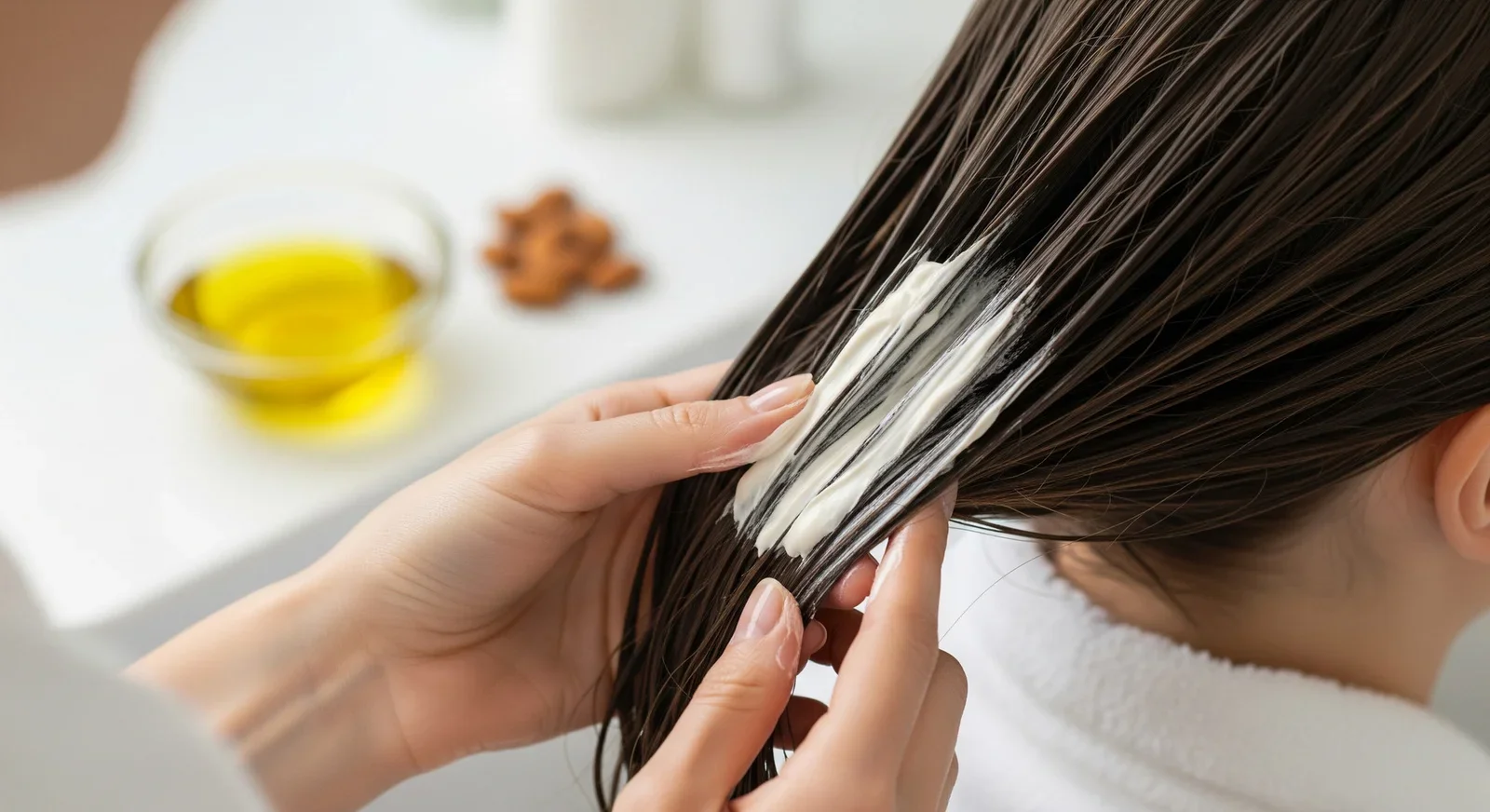
Apply Hair Oils and Serums for Added Moisture
Leave-in products shield your hair all day. Lightweight oils like argan or jojoba oil help smooth the cuticle and add instant shine. Work a few drops through the mid-lengths and ends of damp or dry hair. This helps seal in moisture from your wash and conditioner. Jojoba oil is especially useful because it is very similar to your natural scalp oils.
Serums are also helpful for flyaways and humidity control. Choose formulas with bond-supporting ingredients or gentle silicones (such as dimethicone) that form a thin coating around the hair. This layer boosts shine and helps protect against moisture from the air, which can cause frizz and puffiness in dry hair.
Minimise Heat Styling and Chemical Exposure
To repair your hair, you’ll need to ease up on the things that damaged it. Try to use hot tools only once or twice a week, and always choose the lowest heat setting that still works for your style. Let your hair air-dry until it’s at least 60% dry before you blow-dry, to shorten the time under hot air.
Also, stretch out the time between chemical treatments. If you colour your hair, focus on root touch-ups instead of colouring all the lengths every time. If your hair is badly damaged, avoid bleach, perms, or relaxers until your stylist says your hair is strong and stretchy enough to cope.
Adopt Gentle Drying and Brushing Techniques
Your hair is at its weakest when wet. Swap rough terry towels for a microfibre towel or a soft cotton T-shirt and gently press or squeeze water out instead of rubbing. Wrap your hair loosely and let the fabric soak up moisture.
When brushing, start from the ends and slowly move upward. This way you remove knots in small sections rather than pulling them all into one big tangle. Use a wide-tooth comb or a detangling brush with flexible bristles to keep tension low and reduce breakage.
How Lifestyle Supports Healthier Hair
Topical products treat the hair that already exists, but your day-to-day lifestyle shapes the new hair that grows. Looking after your general health and daily habits helps your follicles produce stronger, more hydrated strands over time.
This inside support matters even more during stressful times or changes of season. Hair is often one of the first areas to suffer when your body is short on nutrients or under pressure. When your body is well-nourished and balanced, your hair often shows it through better shine, thickness, and growth.
Best Diet for Hair Repair
To help repair and grow stronger hair, focus on a diet high in protein and healthy fats:
Protein: Eggs, chicken, turkey, fish, Greek yoghurt, beans, lentils.
Healthy fats: Salmon, mackerel, walnuts, flaxseeds, chia seeds, avocados.
These supply amino acids and lipids that support hair strength and flexibility.
Also add foods full of antioxidants and key vitamins, such as:
Berries (blueberries, strawberries)
Leafy greens (spinach, kale, silverbeet)
Nuts and seeds (almonds, sunflower seeds)
These help protect hair follicles and support healthy oil production on the scalp.
Benefits of Staying Hydrated
Plain water is one of the easiest “treatments” for better hair. When you drink enough, your scalp stays more comfortable, and follicles can work properly. This supports softer, less brittle hair.
In Australia, many adults do well with around two to three litres of water per day, with more if you are very active or in high heat. You can also boost your intake with foods that hold water, like cucumber, watermelon, oranges, and celery. If you often feel thirsty, your hair has probably already missed out on some of the moisture it needs.
Managing Stress to Reduce Hair Damage
Ongoing stress can affect hair growth and quality. When you are stressed, your body releases hormones like cortisol and adrenaline. Over time, these can reduce blood flow to the scalp and disturb the normal hair growth cycle, leading to shedding, thinning, or weaker strands.
Adding stress-relief habits to your routine-such as walking, yoga, meditation, journalling, time in nature, or a regular sleep schedule-can support both mental health and hair health. Giving your body a chance to rest and reset helps keep hormones more stable, which supports stronger, more regular hair growth.
How to Prevent Dry Hair Recurrence
Once you’ve restored moisture and strength to your hair, the next step is keeping it that way. Prevention relies on consistent habits rather than occasional big fixes. Small daily actions can protect your hair from the main causes of dryness.
Think of this stage like routine maintenance. Just as you apply sunscreen on your skin or service your car, your hair needs regular care to stay in good condition. With the right habits, you can enjoy soft, hydrated hair through different seasons and styling trends.
Protect Hair from Sun and Environmental Damage
The strong sun in Australia means your hair needs shade and protection. When you’ll be outside for a long time, wear a hat with a wide brim to block direct UV rays. If a hat isn’t practical, use a UV-protect spray or leave-in conditioner with UV filters to help shield your hair.
If you swim often, wet your hair with fresh water before going into the pool or ocean. When hair is already wet, it soaks up less chlorine or salt. After swimming, rinse as soon as you can and follow with a gentle, clarifying shampoo to remove chemicals and minerals, then apply a moisturising conditioner or mask.
Wash Less Often and Choose Mild Products
Try to extend the time between washes. For most people, washing two or three times a week is enough to keep the scalp comfortable without drying the lengths. On non-wash days, a good dry shampoo can help absorb oil at the roots and refresh your style, cutting down on exposure to hot water and blow-dryers.
When you do wash, use lukewarm rather than very hot water. Very hot water opens the cuticle wide and allows moisture to escape, leaving hair more prone to frizz. Finishing with a cool water rinse can help smooth the cuticle and boost shine.
Use Heat Protection Before Styling
A heat protectant is a must whenever you use hot tools. Sprays, creams, or serums made for heat styling create a thin barrier that slows down how quickly the hair heats up and helps keep moisture inside. Many also include conditioning ingredients and list the maximum temperature they protect against on the label.
Choose styling tools with adjustable heat settings and avoid using the highest level unless you really need it. For everyday styling and quick touch-ups, aim for a medium or low temperature. Reducing both the temperature and the time the hair is under heat lowers the risk of dryness and breakage.
Select Hair Ties and Styles That Minimise Stress
Hair accessories can either protect or damage your hair. Standard elastics with metal joins often catch and snap dry strands. Switch to silk or satin scrunchies or spiral hair ties, which glide over the hair more smoothly and reduce rubbing. Try not to tie your hair in exactly the same spot every day, as this can weaken that area over time.
Gentle “protective” styles can also help, such as loose braids, low buns, or soft twists that keep ends tucked away from sun and wind. Avoid very tight ponytails or sleek, pulled-back looks that tug at the scalp all day. Wearing your hair down or in loose styles when you can gives your roots and strands a break.
Frequently Asked Questions on Repairing Dry Hair
Finding your way through all the advice and products for fixing dry hair can be confusing. The questions below cover the issues people with dry, damaged hair often ask about most. Knowing the facts makes it easier to choose treatments and habits that really help your specific hair type and level of damage.
Everyone’s hair is unique. Fine, straight hair will react differently to products and methods than thick, curly, or coily hair. Use these answers as a guide and adjust your routine based on how your own hair responds.
Can Severely Damaged Hair Be Restored?
You can improve how very damaged hair looks and feels, but you can’t return it to untouched, “virgin” condition. Hair fibres cannot repair themselves the way skin does. However, modern bond-support treatments (such as those with AHAs or special proteins) can strengthen the inner structure and make hair more resistant to breakage. These treatments help fill weak points so you can manage and style the hair more safely while you wait for new growth.
If your hair feels stretchy, sticky, or “gummy,” or breaks off in bunches, a bigger haircut is often the safest option. Removing the worst parts lets you focus your time and products on strands that can still respond. From there, a moisture-focused, gentle routine can protect the remaining hair while healthier hair grows in.
Should You See a Professional for Dry Hair Issues?
If your hair is snapping at the root, coming out in handfuls, or if you see patches of missing hair, book an appointment with a doctor or dermatologist. These can be signs of medical issues like thyroid problems, low iron, or severe stress, which can’t be fixed with products alone. Blood tests and a health check can reveal if something deeper is going on.
For general dryness and damage from styling, a qualified hairdresser is very helpful. They can test your hair’s elasticity and strength to see whether it needs more moisture, more protein, or both. They may also offer in-salon treatments that are stronger than at-home masks and can give your repair plan an early boost.
Which Ingredients Should Be Avoided with Dry Hair?
People with dry hair should be careful with products that contain high levels of drying alcohols (common in some hairsprays and styling gels). Choose alcohol-free or low-alcohol versions when you can. Also be cautious with strong sulphates such as Sodium Lauryl Sulphate, which can strip away too much oil along with dirt.
Be mindful with protein-heavy treatments if your hair already feels very stiff and dry. While protein is needed for strength, using too much without enough moisture can make hair hard and even more likely to snap, often called “protein overload.” Pair any protein treatment with a rich, hydrating conditioner or mask to keep a healthy balance between strength and softness.
As you move into 2026, remember that your hair reflects both your surroundings and your daily self-care. The Australian climate can be demanding, but modern haircare has given us many tools to manage dryness. Along with products and salon visits, think about simple upgrades like sleeping on a silk pillowcase to reduce friction and overnight moisture loss. Combined with a steady, gentle routine, these small choices help your hair go beyond just “repaired” to genuinely healthy, soft, and full of life over the long term.
Do you live in Sydney?
Get the perfect look at our salon – schedule your appointment now!
Our Services
Check Out Our Instagram



Check out our instagram
Check out our instagram and see our latest posts!
Check out our facebook
Check out our facebook and see our latest
posts!