
How to Tackle Tangled Hair
Dealing with tangled hair takes a mix of good moisture, the right tools, and a gentle “bottom-up” brushing method. To remove knots, soak your hair with a detangling spray or leave-in conditioner so it’s nice and slippery, divide it into sections, then use a wide-tooth comb or flexible detangling brush. Start at the ends and slowly work up to the roots. This soft, steady method lets you work through even the toughest “bird’s nest” without extra breakage or pain.
For many Australians, fighting with a hairbrush happens every day. Wind at the beach, a restless night’s sleep, or your natural hair texture can all lead to knots. But once you understand why hair tangles and how to treat it gently, this painful job can become a calm, simple part of your self-care. Let’s look closely at what causes knots and how to keep your hair smooth and easy to manage.
What causes tangled hair?
Common factors that increase hair tangling
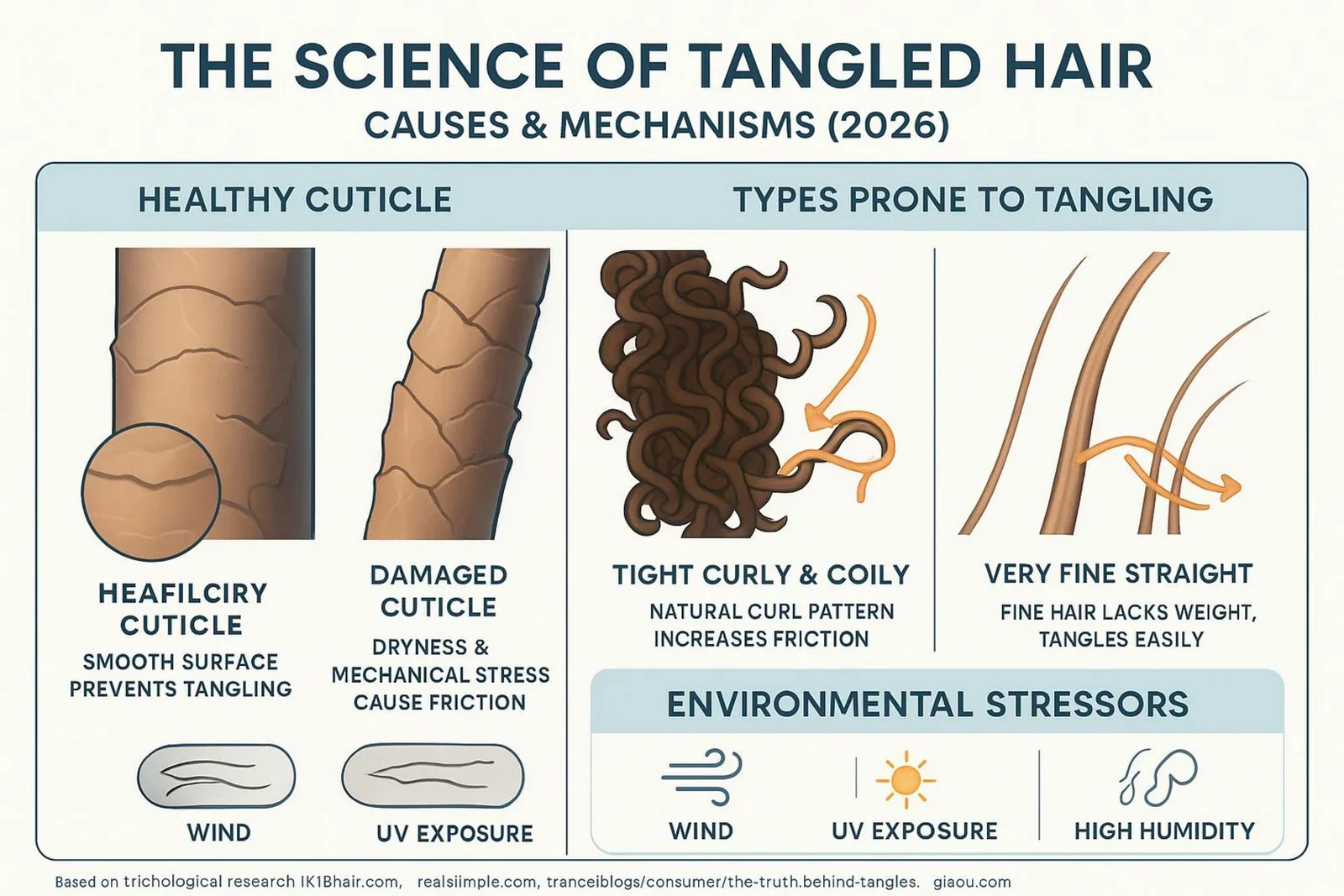
A tangle forms when two or more hairs wrap around each other and get stuck. Once a few strands catch, they pull in more, and the knot grows bigger and harder to remove. Natural shedding is one of the main reasons this happens. Most people lose 50-100 hairs a day. If these loose hairs don’t get brushed out, they stay in your hair and twist into knots with the rest.
The environment also plays a big part. Australian weather can be tough on hair. Wind blows strands together, and heat and humidity can cause the hair shaft to swell and hook onto nearby strands. Pollution and dust can dry out hair, making it rough and more likely to tangle. When hair is dry, the outer layer (the cuticle) lifts instead of lying smooth, so hairs catch on each other easily.
The role of hair type and texture
Anyone can get knots, but your natural hair type affects how often you get them. Curly and coily hair tangle more because the curls and bends give the strands many places to twist around each other. Natural oils from the scalp also travel more slowly down curly hair, so it tends to be drier, which makes tangling worse.
Very fine hair tangles easily too. Think of the difference between thread and rope: thin thread knots quickly, while a thick rope is harder to tangle. Fine hair moves with the slightest breeze or friction from clothing, causing tiny knots, especially at the back of the neck. Long hair is also more likely to knot simply because there’s more of it to twist around, so regular care is extra important if your hair is long.
Daily habits that lead to knots
Some of our normal hair routines quietly cause more tangles. A big one is rough towel-drying. Rubbing your hair hard with a thick towel after washing lifts the cuticle and grinds strands together into knots. Sleeping with loose hair lets it rub against your pillow all night, leading to “bedhead” knots from constant friction.
Other unhelpful habits include washing too often with strong, sulphate-heavy shampoos that strip natural oils, or skipping conditioner. Many styling products-especially those with lots of alcohol, like some hairsprays, mousses, or gels-can leave a sticky coating that makes hair clump. Even your hair ties matter: tight elastics with metal joins or rough edges can catch and snap hair, causing tangles when you pull them out.
Should you detangle hair when wet or dry?
Benefits and risks of wet detangling
People with thick, curly, or coily hair often prefer detangling when hair is wet. When hair is wet and covered in slippery conditioner, it’s much easier for a comb to move through knots. This reduces rough pulling and helps prevent chunks of hair from breaking off. Many hair pros suggest detangling in the shower while the conditioner is still on.
But wet hair has downsides too. Hair is weakest when soaked. Water loosens some of the bonds inside the hair, so it stretches more easily and can snap if pulled too hard. If you detangle wet, you must be very gentle and use tools made for wet hair, like a wide-tooth comb or a wet-safe brush with soft, flexible bristles.
Benefits and risks of dry detangling
People with fine, straight, or light waves often do better with dry detangling. Dry hair is stronger and less stretchy than wet hair, so it is less likely to snap when you brush it. Gently using your fingers on dry hair before washing can also stop knots from tightening when they get wet.
The main problem with dry detangling is static and extra friction. Brushing dry hair too hard can cause flyaways and frizz, especially when the air is dry. To help with this, use a light hair oil or dry detangling spray before you start, so hair can slide more easily. Never force your way through a dry knot; that almost always leads to split ends and damage.
Best approach for different hair types
The best method depends on your hair. For curly, wavy, or coarse hair, detangle when hair is damp (not soaking) and coated with conditioner. This helps keep your curl pattern and avoids the big fluffy “poof” that brushing dry curls can cause. Start with your fingers to separate big knots, then move to a wide-tooth comb.
For fine or straight hair, detangle while hair is dry or just slightly damp. A light leave-in conditioner helps the comb slide but won’t weigh hair down. No matter your hair type, some rules are the same: work in sections, go slowly, and don’t rush. Spending an extra five minutes now can stop major matting and breakage later.
Choosing the right products and tools for detangling
Leave-in conditioners and detangling sprays
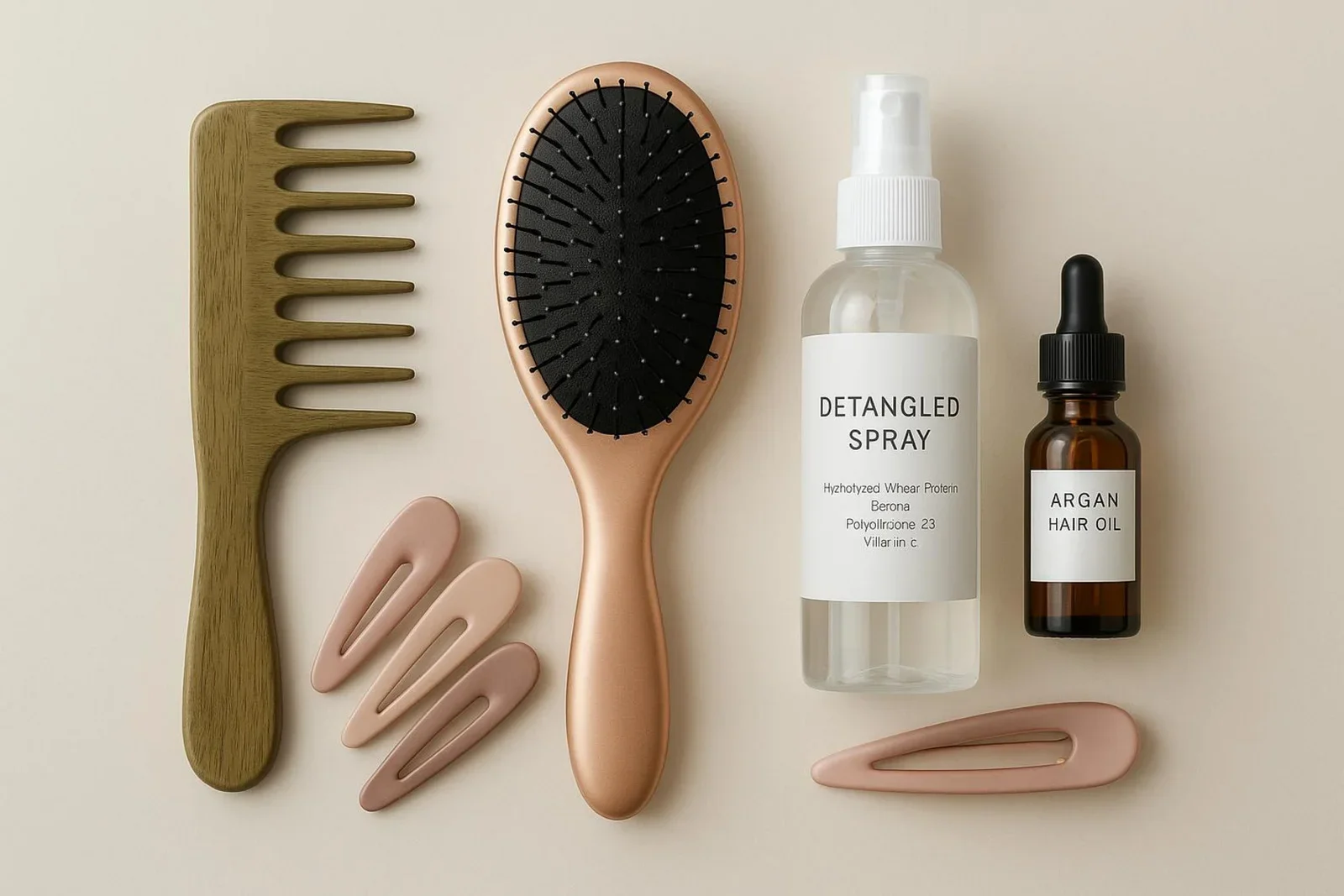
If you want detangling to feel easier, a good leave-in conditioner or detangling spray helps a lot. These products smooth the cuticle and add “slip,” so strands slide past each other instead of sticking. Look for ingredients like argan oil, jojoba oil, or shea butter to nourish and soften your hair while also making it easier to comb. If your hair is coloured, choose a sulphate-free spray with UV protection to help prevent both fading and tangles.
You don’t always need a special shop-bought spray. You can make your own by mixing a few pumps of your usual hydrating conditioner with water in a spray bottle. This homemade mist is handy for quick touch-ups, especially after windy weather. Just choose a mix that adds moisture but doesn’t feel sticky, as leftover product on the hair can lead to more knots over time.
Selecting the best combs and brushes
The brush or comb you use makes a big difference. The wrong tool can turn a small knot into a huge tangle. A wide-tooth comb is usually the best choice for most detangling jobs. The wide gaps between the teeth let hair move through more freely and remove bigger knots with less pulling. Neem wood combs are a nice option because they’re gentle and help reduce static.
If you prefer a brush, pick one labelled as a “detangling brush.” These usually have flexible bristles in different lengths that bend when they hit a knot, instead of dragging through it. A paddle brush with firm nylon bristles can work well on thick or coarse hair. For fine hair, a soft boar-bristle brush can be helpful, as it spreads your scalp’s natural oils along the hair, which makes strands smoother and less likely to stick together.
Hair masks and oils that prevent tangles
Stopping knots before they form is just as helpful as learning how to remove them. Using a deep-conditioning hair mask once a week can make hair smoother and springier. Masks with keratin help repair weak or damaged strands so they don’t break and knot as easily. Coconut oil works well as a natural treatment. Applied before shampooing (a “pre-poo”), it can protect hair from drying out during washing.
For day-to-day care, put a few drops of a light hair oil-such as argan or almond oil-on your ends. This keeps the cuticle closed and smooth. This is especially handy if you have split ends, which act like tiny hooks and catch on other hairs. Keeping your ends nourished and smooth lowers the chance of tangles overall.
Step-by-step guide: Tackling tangled hair safely
Prep: Tools and products to use
Before you start, gather what you need: a wide-tooth comb, a detangling spray or leave-in conditioner, and a few hair clips to section your hair. If you’re facing a very tight knot or matted area, have a natural oil (like coconut or olive oil) close by. Having everything ready means you don’t have to walk around mid-detangle, which can create more knots.
Lightly mist your hair with your spray or apply your leave-in. It should feel damp and slippery, not drenched. If you’re in the shower, coat your hair well with a smooth, slippery conditioner. The aim is to help strands slide past each other instead of grabbing and tightening into worse knots.
Detangling straight, wavy, and fine hair
For straight or fine hair, it’s usually best to work on hair that is dry or just a little damp. Divide your hair into at least four sections: two at the top and two at the bottom. Clip away the parts you aren’t working on. This breaks the job into smaller pieces and makes it feel more manageable.
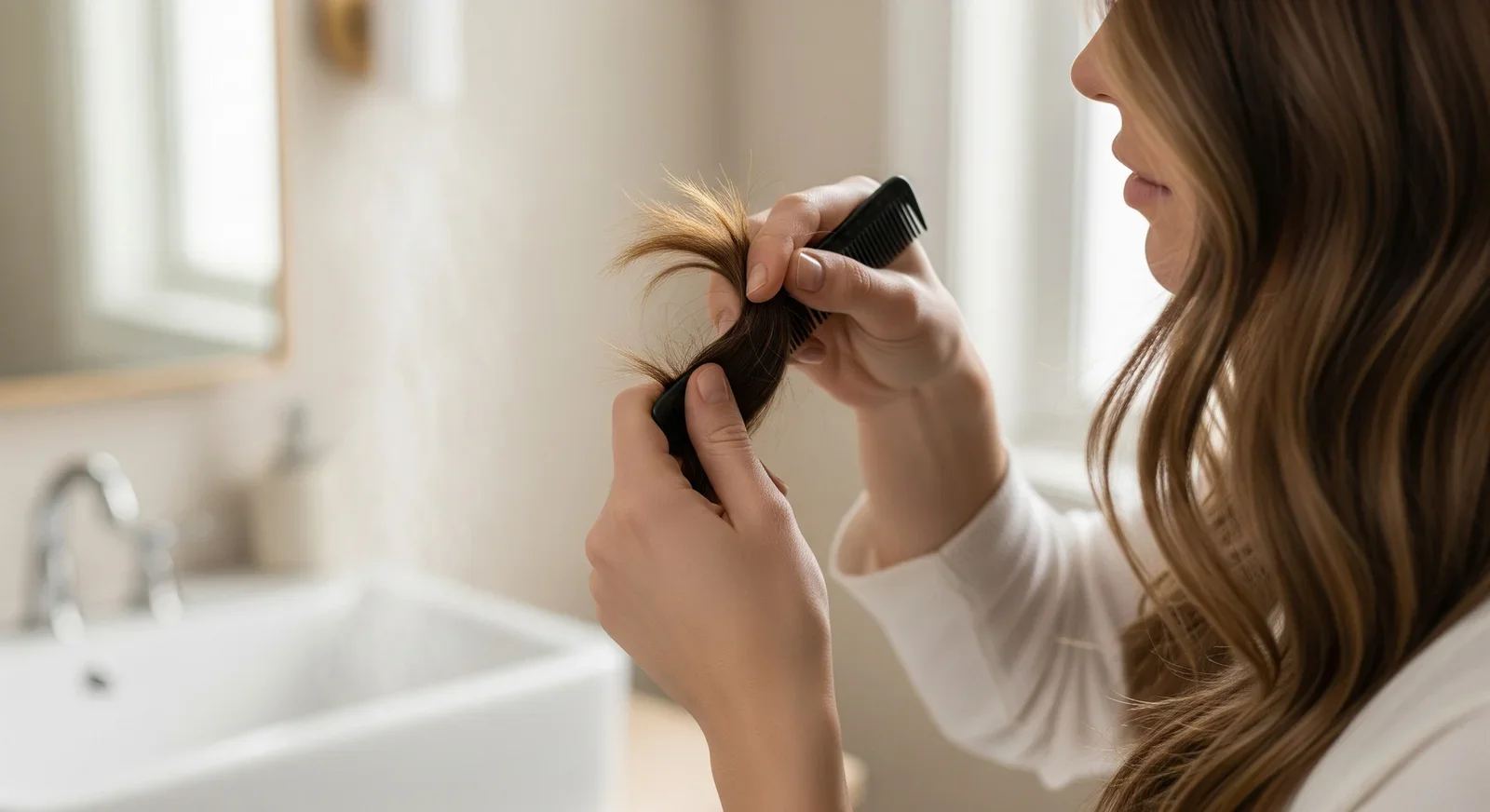
Take one section and hold it firmly a few inches above the ends. Start by combing the bottom 5 cm or so with your wide-tooth comb. Once that part is smooth, move your hand up another few centimetres and comb through to the ends again. Keep moving up bit by bit until you reach the roots. This “bottom-up” method stops you from pushing knots further down and turning them into a solid clump.
Detangling curly, coily and thick hair
Curly, coily, and thick hair need more time and plenty of product. It’s almost always best to detangle these hair types when they’re wet and covered in conditioner. After adding a generous amount of conditioner, use your fingers to gently rake through the strands. Finger detangling is very gentle and helps you feel where the bigger knots are without snapping hairs with a comb.
Once you’ve broken up the main clumps with your fingers, move to a wide-tooth comb or a detangling brush. Work in small sections-sometimes up to eight or more sections for very thick hair-and use the same bottom-up technique. If you hit a snag, add more water or conditioner. Curls love moisture, so don’t be shy about using enough product to keep everything slippery.
Tips for removing severe knots without damage
When you reach a really stubborn knot, staying calm matters most. Pulling hard will only break hair and can even leave a noticeable thin patch. Instead, put a good amount of oil or a rich detangling cream right onto the knot and let it sit for a few minutes so the hair softens.
Then, use your fingers to gently pick the knot apart. Try to slide hairs out of the knot one by one instead of pulling at the whole lump. A pin-tail comb can help: use the point to gently loosen the centre of the knot. Be patient. If you’re stuck and getting frustrated, ask a friend for help or go to a hairdresser rather than cutting the knot out yourself.
How to prevent tangles and knots in the future
Protective hairstyles for bedtime and exercise
Keeping your hair secured is one of the simplest ways to stop knots forming. Before bed, loosely braid your hair or put it in a high, soft “pineapple” bun with a silk or satin scrunchie. This limits how much your hair rubs on the pillow, which is one of the main causes of morning tangles. A loose plait also keeps hair neat without pulling on your scalp.
Do the same when you exercise. Sweat and movement can quickly create mats, especially at the back of the neck. For workouts, runs, or sports, choose a braid, bun, or ponytail that holds well. If your hair is very long, a French braid is great for keeping all the hair in place. Reducing how much your hair swings around cuts down on friction and knots.
Washing and drying techniques that reduce tangling
The way you wash your hair can strongly affect how tangled it gets. When you shampoo, focus on the scalp. Use gentle, circular finger movements and avoid piling your hair on top of your head and scrubbing the lengths, as this can twist everything into one big knot. Let the shampoo run down the lengths as you rinse instead.
Swap a heavy terry-cloth towel for a microfibre towel or an old cotton T-shirt. Gently squeeze or blot the water out rather than rubbing. These smoother fabrics create less friction and help keep the cuticle flat. If you blow-dry, point the dryer nozzle down the hair shaft to smooth the cuticle and finish with a cool setting to help keep the hair sleek.
The importance of regular trims
If your hair always tangles at the ends, that’s a clear sign you need a trim. Split ends are one of the biggest triggers for tangles. Once a strand splits, the frayed end becomes rough and catches on other hairs. Getting a trim every 6-8 weeks-even just a tiny “dusting” of the tips-keeps your ends neat and reduces tangling a lot.
Even if you’re growing your hair out, small regular trims matter. It’s better to remove half a centimetre often than to let splits travel up the strand, which may force you to cut off several centimetres later. Smooth, healthy ends glide past each other; damaged ones stick together. Keeping up with trims helps you keep length and manageability at the same time.
Tips for minimising friction and static
Friction is a quiet, steady cause of knots. Switching to a silk or satin pillowcase is a smart move for your hair. Cotton is rougher and more absorbent, while silk and satin let hair slide easily and help it keep its natural moisture. This means fewer tangles and less frizz in the morning.
Static is another problem, especially in dry weather or when you wear synthetic fabrics. A humidifier at home can help keep some moisture in the air and reduce static. Try to avoid plastic combs and brushes, which often create more static. If you’re out and notice your hair standing up, you can smooth it with a little leave-in conditioner on your hands, or gently swipe a dryer sheet over your hair to calm it down.
Managing tangles in special situations
Minimising tangles for children’s hair
Brushing a child’s hair can be tricky. Kids’ hair is often fine, they move a lot, and they may already fear the brush. Make detangling feel friendly by turning it into a game or storytelling time. Use a gentle kids’ detangling spray with a nice smell and a brush with very soft, bendy bristles to avoid pulling and pain.
Regular brushing helps a lot. Comb or brush children’s hair twice a day-morning and night-to stop small knots from turning into big mats. If they have long hair, putting it in braids for school and play keeps it tidy and helps you avoid big tangles later. Always start at the ends and move up slowly, and stay patient so they don’t develop a long-term fear of hair care.
Caring for hair extensions and wigs
Hair extensions and wigs need special care because they don’t get natural oils from the scalp. This makes them dry out faster and tangle more, especially near the bonds or base where they attach. Use a loop brush or a soft brush made for extensions to avoid catching the bonds or damaging wig lace.
When brushing extensions, always hold the hair near the bonds with one hand and brush with the other. This supports the join and avoids pulling on your own hair. For wigs, place them on a wig stand before you start. Use a detangling spray made for synthetic or human-hair wigs and work in small sections to keep the fibres smooth and intact.
Dealing with knots after swimming or outdoor activities
Beach days and pool visits are fun but tough on hair. Chlorine and saltwater dry hair out and lead to tangles. Rinse your hair with fresh water before you swim to fill the hair shaft so it absorbs less salt or chlorine. Adding a leave-in conditioner or a light coat of coconut oil beforehand gives extra protection.
After swimming, rinse your hair with clean water as soon as you can and apply a detangling spray. Don’t let your hair dry with the salt or chlorine still in it; this makes knots harder to remove. After hiking or a windy day, gently run a wide-tooth comb through your hair as soon as you get home. The quicker you deal with those early tangles, the easier they are to manage.
Frequently asked questions about tackling tangled hair
Why does my hair keep knotting despite care?
If you’re careful and still get lots of knots, your hair’s porosity might be the cause. High-porosity hair has a more open cuticle, which feels rougher and catches more easily. Product buildup can also be a problem. Heavy creams and silicones can leave a sticky film that makes hairs cling together. Try using a clarifying shampoo once a month to clean away leftover product and give your hair a fresh start.
Water quality can also play a part. If you live in a hard-water area, minerals can collect on the hair and make it feel stiff and tangled. A shower filter can help remove some of those minerals. Also, check your clothing and accessories-wool coats, rough scarves, and some jewellery can rub and catch on your hair, causing knots you may not notice until later.
What should I do if I can’t remove a knot?
If you’ve been working on the same knot for half an hour and it won’t budge, stop before you do serious damage. Take a break so you don’t get annoyed and cut it out in frustration. Cover the knot in a thick layer of oil or a deep-conditioning mask and wrap it in plastic for about an hour. That extra time and moisture can soften the hair enough for it to loosen.
If the knot is still there after that, see a hairdresser. They have special tools, stronger products, and a better view of the knot, so they can often save more length. They may suggest a tiny “micro-trim” to remove just the worst of the tangle. Letting a pro handle it is usually much better than chopping away at it yourself and regretting the uneven result.
Are there medical reasons for excessive tangling?
Most tangles come from styling, weather, or products, but sometimes hair can show signs of health issues. Lack of nutrients-especially iron, biotin, or omega-3 fats-can make hair dry and brittle, which causes more knots. Hormone changes, such as thyroid problems, pregnancy, or menopause, can also change your hair texture and make it more likely to tangle.
If you notice a sudden big increase in tangles, or if it comes with heavy shedding or thinning, talk to a doctor. They can run blood tests and check for anything going on inside your body. While you wait for answers, eat a balanced diet, drink enough water, and keep using gentle, hydrating hair products.
Your hair is always reacting to what’s around it. For example, during dry Australian winters, static can cause flyaway tangles, while humid summers bring more frizz and matting. Adjusting your routine with the seasons helps. You might use a richer mask in winter and a lighter, UV-protective spray in summer. Learning about your hair’s porosity can also help you choose products. Low-porosity hair often benefits from a bit of warmth (like a warm towel over a mask) to help moisture sink in, while high-porosity hair needs sealing products like oils or creams to keep that moisture inside. By watching how your hair behaves and tweaking your routine, you can move from constantly fighting knots to enjoying smoother, easier-to-manage hair every day.
Do you live in Sydney?
Get the perfect look at our salon – schedule your appointment now!
Our Services
Check Out Our Instagram




Check out our instagram
Check out our instagram and see our latest posts!
Check out our facebook
Check out our facebook and see our latest
posts!