
Winter Hair Care Tips: A Complete Guide to Healthy, Hydrated Hair
To keep your hair healthy and bright during the colder months, focus on two main goals: holding in moisture and giving your hair steady physical protection. This means using hydrating, sulfate-free shampoos, washing less often to keep your natural oils, and protecting your hair from both harsh outdoor winds and dry indoor heating. When you treat your hair like you treat your winter skin, you can avoid the usual cold-weather problems like dryness, static, and breakage.
A good winter routine is about more than adding extra products; it’s about understanding how cold weather changes your hair. When temperatures drop and the air dries out, the hair cuticle lifts as it searches for moisture. This leaves the inside of the hair exposed and weak. In the rest of this guide, we’ll look at what happens to your hair in winter and share a clear, step-by-step plan to keep it soft and healthy until spring.

What Happens to Hair in Winter?
How does cold weather affect hair and scalp?
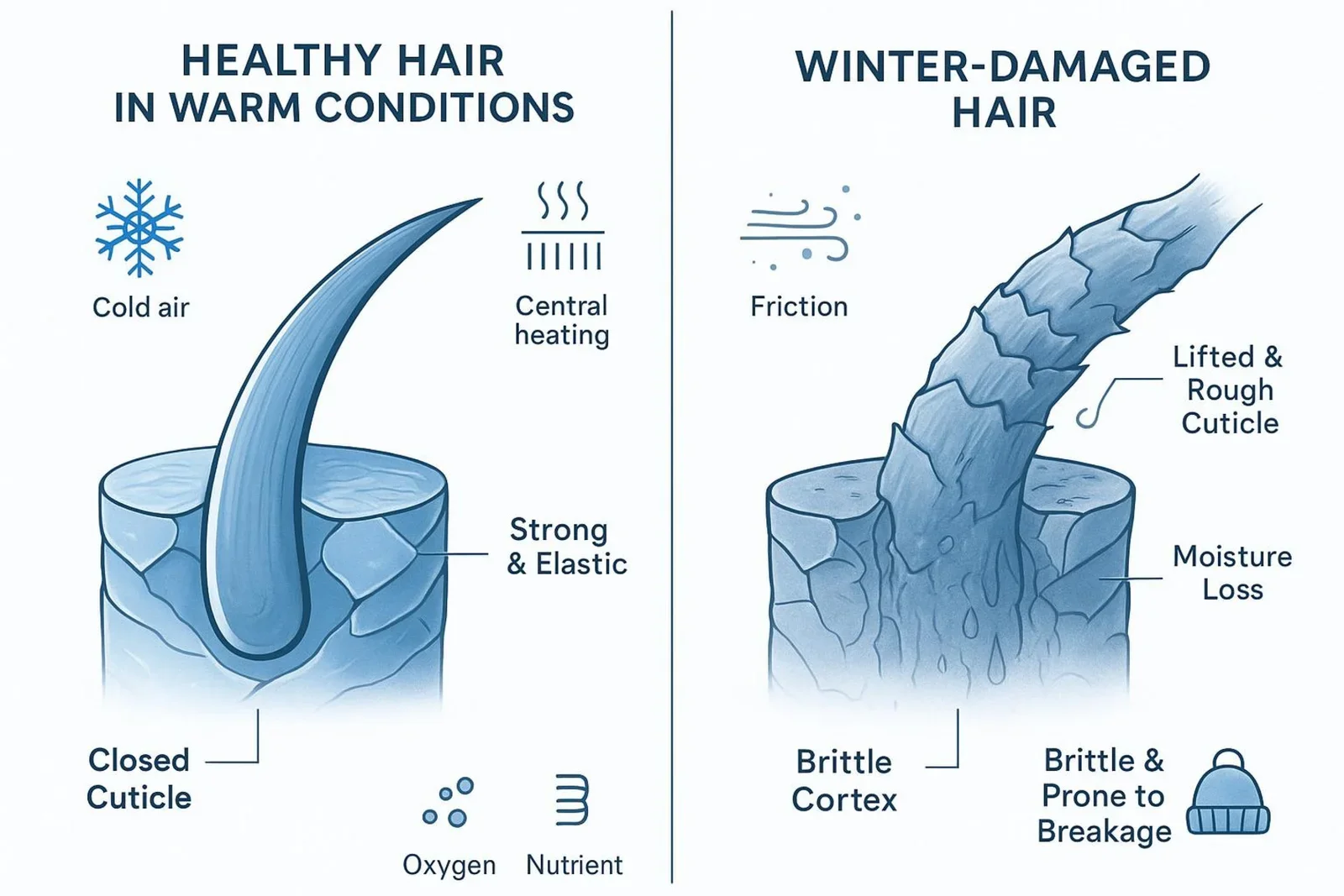
When it gets cold, our bodies tense up, and our hair follicles react too. Low temperatures can cause the cuticle to lift, which stops moisture from staying inside the hair shaft. This makes hair feel rough and dry. Your scalp also feels the impact. Cold weather can reduce blood flow to the scalp, so the follicles receive fewer nutrients than in warmer months.
Moving back and forth between freezing air outside and hot, dry indoor heating puts your hair under constant “thermal shock.” This back-and-forth strips the scalp of its natural oils, often leading to dryness, sensitivity, and itchiness. When the scalp’s natural balance is upset, the hair that grows out can be weaker and less able to handle styling and daily wear.
What are the common winter hair problems?
Typical winter hair issues include extra brittleness, more split ends, and stubborn frizz. Because the air is so dry, static becomes a daily annoyance, especially when your hair rubs against synthetic fabrics like polyester or acrylic in scarves, jumpers, and coats. You may also notice your hair looking dull, since lifted cuticles don’t reflect light smoothly the way flat, healthy cuticles do.
Many people also notice more shedding or “seasonal fallout.” The mix of indoor heating and cold outdoor air can dry out the hair and scalp, sometimes leading to more hair loss than usual. Dandruff often gets worse too, as the scalp’s oil balance is disturbed. This can cause flaking and irritation that may be uncomfortable and hard to manage without the right care.
How Does Dryness Develop in Winter Hair?
Why does winter cause dry, brittle hair?
Winter dryness mainly comes from low humidity. Water naturally moves from where there is more of it to where there is less. When the air is very dry, it pulls moisture out of your hair. Central heating speeds this up by warming the room while removing even more water from the air, leaving your hair feeling stiff and straw-like.
When hair loses moisture, it also loses flexibility. Healthy hair can stretch and spring back, but dry winter hair becomes stiff and brittle. When you brush or style dry hair, it is more likely to snap than bend. This is why it may feel like your hair “stops growing” in winter. In reality, it’s breaking off at the ends at about the same rate it grows from the roots.
What are the risks of frizz, static, and split ends?
Frizz and static are signs that the cuticle is damaged or raised. When the outer layer is lifted, strands catch on each other and on clothing, creating a messy, puffy texture. Static is worse in winter because dry air holds electrical charges on the hair. This makes strands repel each other, causing flyaways that are hard to smooth down.
If dryness is ignored, deeper split ends start to form. Once a strand splits at the tip, the split can travel up the shaft if you don’t treat or trim it. This weakens the whole strand and can make your hair look thinner over time. On top of that, rubbing from woolly hats and heavy coats can rough up and tear the ends, turning your winter layers into a hidden source of damage.
Which Daily Habits Prevent Winter Hair Damage?
Should you adjust how often you wash your hair in winter?
In summer, daily washing may feel necessary because of sweat and sunscreen, but winter calls for a gentler routine. Washing too often in cold weather strips away the natural oils your scalp makes to protect and feed the hair. These oils form a natural shield against dry air, and removing them too often leaves your hair exposed.
Most hair specialists suggest washing only two or three times a week in winter. If your hair looks flat or oily between washes, try a dry shampoo made with natural powders. This can soak up extra oil and refresh your style without the drying effect of water and shampoo, helping to keep your hair’s moisture levels more steady.
How do you choose the right water temperature for washing?
A very hot shower may feel comforting on a cold day, but it’s tough on your hair. Hot water strips moisture from your strands and removes natural oils from your scalp. This can cause the scalp to produce even more oil to make up for it, leaving you with greasy roots and dry, rough ends. High heat can also cause the hair shaft to swell, making it easier to damage.
The best choice for winter washing is lukewarm water. It cleans well without overheating the hair and scalp. For an extra boost, finish with a cool rinse. This helps flatten the cuticle and “close” the surface, helping your conditioner stay in the hair and leaving your strands smoother and shinier.
Should you avoid leaving thehouse with wet hair?
Going outside with wet hair in winter is risky. Hair is weakest when wet because water inside the shaft makes it stretch. If you walk into freezing air with wet hair, the water in the strands can freeze. Since water expands when it turns into ice, it can swell inside the hair and cause it to crack and break on the spot.
If you’re short on time, a blow dryer on low heat is much safer than stepping out with damp hair. Even better, wash your hair in the evening so it can air-dry before bed. If you must wash in the morning, dry your hair completely before you leave, and consider wrapping it in a silk scarf to protect it from wind and cold.
What Ingredients and Products Help Winter Hair?
What makes a hydrating shampoo suitable for cold weather?
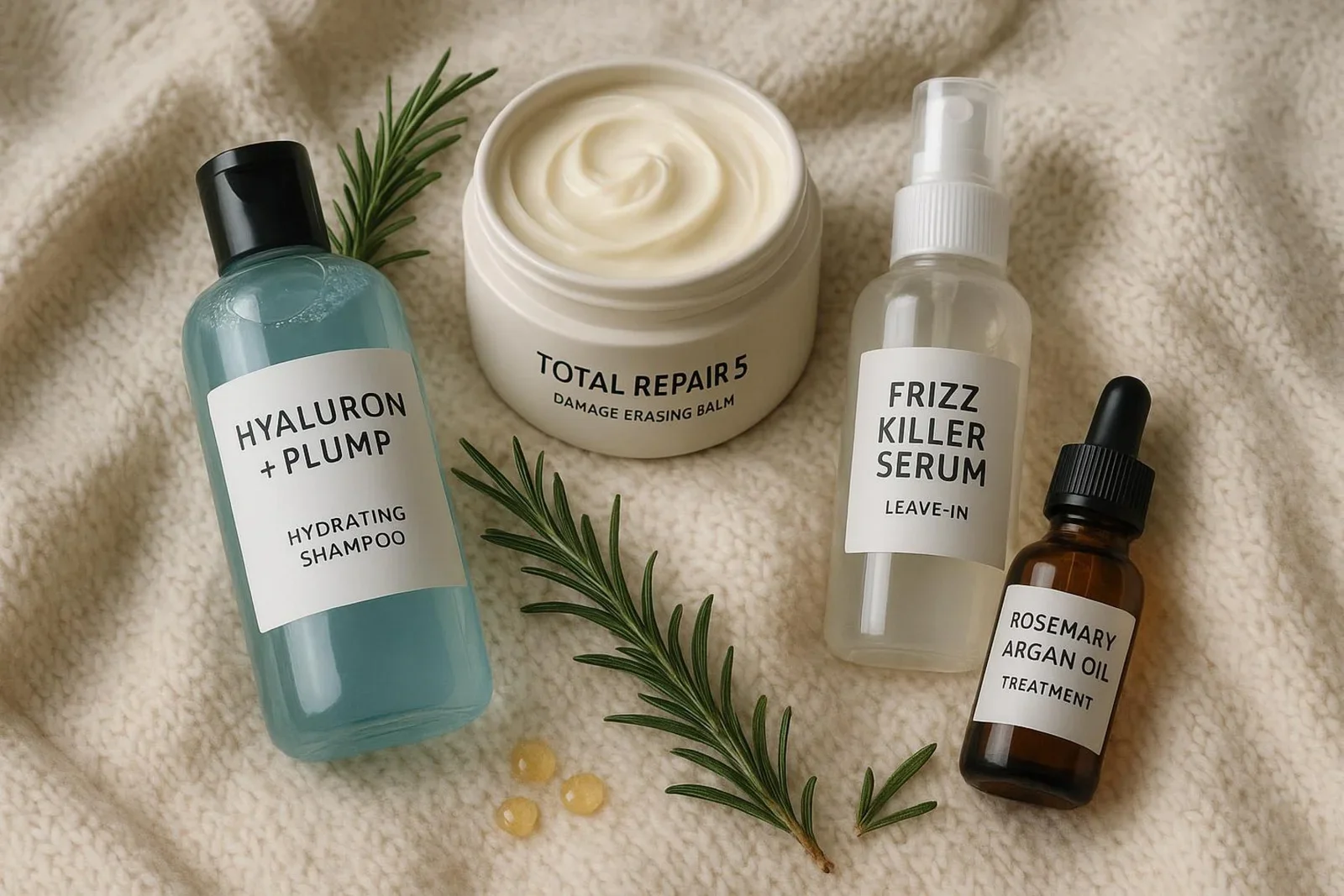
Shampoos behave differently on winter-stressed hair. In cold months, choose gentle formulas without harsh sulfates and parabens, as these can strip away the moisture you’re trying to keep. A good winter shampoo should include humectants like glycerin, which draw water into the hair, and ingredients like niacinamide to support scalp health.
Plant-based proteins are also very helpful because they strengthen the hair from the inside. Look for creamy or gel-like textures that glide through the hair easily, so you don’t rough up the strands while washing. After rinsing, your hair should feel soft and smooth, not squeaky. That squeaky feeling often means your hair has been over-cleansed.
How do nourishing conditioners and leave-in treatments combat dryness?
Conditioner is your main tool for smoothing the cuticle. In winter, a good conditioner acts like a moisturiser for your hair, coating each strand with hydration and forming a light barrier to slow down water loss. For best results, gently squeeze out extra water before you apply it so that the product can soak in rather than just slide off.
Leave-in treatments add a second layer of care that lasts all day. This might be a spray, cream, or milk. These products help with detangling, which lowers the risk of breakage while you brush. They also protect hair from wind, friction, and pollution. If your ends are very dry, using a leave-in daily can make them softer and more flexible.
Are scalp serums or oils beneficial in winter?
Scalp care is often missing from winter routines, but it’s key to strong hair. Since hair grows from the follicles in the scalp, a healthy base supports better growth. Scalp serums with vitamins and gentle oils can help even out oil levels and calm irritation. Oils like jojoba or sunflower are great choices because they are similar to the scalp’s own oils and hydrate without feeling too heavy.
Using a scalp serum or oil a few times a week and massaging it in can also help with blood flow. A gentle massage encourages more oxygen and nutrients to reach the follicles. This is especially helpful in cold weather, when circulation tends to be lower, and helps keep the scalp in good condition for hair growth.
How do hair masks and deep conditioning treatments work?
Regular conditioners mainly work on the surface, while masks go deeper into the hair shaft. These richer treatments contain higher amounts of oils, lipids, and plant extracts. Using a deep conditioning mask once a week gives your hair a large boost of moisture that can make up for days spent in dry air and heated rooms. It’s like giving your hair a weekly spa treatment to bring back softness and shine.
Look for masks with ingredients such as shea butter, babassu oil, or iris root. These help refill moisture inside the hair and smooth the outer layer. If your hair is very damaged, you can also try an overnight serum or mask that works while you sleep, giving your hair several hours of steady nourishment so you wake up with smoother, easier-to-manage strands.
How Can You Minimise Heat and Environmental Stress on Winter Hair?
Does limiting the use of hot styling tools help prevent breakage?
Heavy use of hot tools is a big cause of winter hair damage. Straighteners and curling irons above about 150°C change the shape of keratin inside the hair. This breaks down natural oils and weakens the outer layers, making split ends more likely. In winter, when hair is already drier and fragile, this can quickly lead to lots of breakage.
Try embracing your natural texture or using low-heat styles like braids, buns, or twists. If you do use heat, always apply a heat protectant product first. These sprays or serums create a light shield on the hair that reduces heat damage, even at high temperatures. Using tools with adjustable settings also helps you keep the heat as low as possible while still styling effectively.
Why is it important to wear a hat or cover hair outside?
In winter, a hat does more than keep you warm; it also protects your hair from wind, rain, and snow that can steal moisture. Covering your hair stops some of the rough “weathering” that makes strands look frayed and worn over time. But fabric choice matters. Hats made from acrylic or polyester can cause friction that leads to static and breakage.
Hats lined with silk or satin are a better option. These smooth fabrics let hair glide instead of catching, which cuts down on frizz and static. If your favourite wool hat isn’t lined, you can wear a silk scarf or cap underneath. This small change lets you stay warm while keeping your hair protected from rubbing and pulling.
Should you use a humidifier indoors for hair health?
Indoor heating quietly dries out hair. Heaters take moisture out of the air, which pulls water from your hair and skin to make up for it. Using a humidifier is a simple way to fight this. By adding water back to the air, a humidifier helps your hair keep more of its own moisture, so it feels softer and less like straw.
Running a humidifier in your bedroom overnight works especially well. It creates a gentler environment for your hair and scalp while you sleep. This can help keep your hair hydrated and also reduce scalp itchiness and flaking caused by very dry air, making it a useful tool for your winter self-care routine.
What Role Does Nutrition and Hydration Play in Healthy Winter Hair?
How does diet influence hair strength during colder months?
Strong hair starts with what you eat. In winter, it’s easy to eat more comfort food and fewer fresh foods, but your hair needs a mix of nutrients to stay strong. Leafy greens, eggs, and salmon are great sources of protein and iron, while avocados and nuts give you healthy fats that keep hair shiny and less prone to snapping. These nutrients feed the follicles so they can grow sturdy strands.
Winter also brings seasonal foods that are good for hair. Root vegetables like sweet potatoes and carrots are high in beta-carotene, which your body turns into Vitamin A. Vitamin A supports the scalp’s ability to make healthy natural oils. Even raw cacao in a healthier hot chocolate can help, since its minerals play a role in hair growth. Eating a varied, nutrient-rich diet gives your hair the inner support it needs, even when cold air makes things tougher on the outside.

Does increased water intake improve hair condition?
Many people think hydration matters only in summer, but your body needs water all year. Staying hydrated in winter helps offset the drying effect of indoor heating. Australian dietary guidelines suggest around eight cups of water a day. When you’re short on water, your body looks after vital organs first, and hair and nails tend to miss out.
If cold weather makes plain water unappealing, try herbal teas, warm lemon water, fruit smoothies, or sparkling water. Keeping up your fluid intake supports hair growth, collagen production, and steady blood flow to the follicles. Think of water as the base layer of your hair’s moisture supply-without it, even rich conditioners and oils won’t work as well.
How Do You Adjust Hair Care for Different Hair Types in Winter?
How does winter care differ for curly, straight, and colour-treated hair?
Curly hair is naturally drier because natural oils from the scalp struggle to travel down the twists and turns of the curl. In winter, this becomes even harder, so curls can quickly become frizzy and hard to manage. People with curly hair should focus on rich masks and oils that both hydrate and define the curl pattern. Washing at night can also help, giving curls time to dry gently indoors.
Straight hair often gets oily at the roots while the ends stay dry. A gentle, silicone-free clarifying shampoo can help keep volume at the roots, while a light oil applied only to the tips can smooth dryness without making hair limp. Colour-treated hair needs the most care, since dyeing already weakens the cuticle. Using colour-safe, sulfate-free products in winter helps keep colour bright and prevents already fragile strands from snapping.
Are there special considerations for fine, thick, or mature hair?
Fine hair can easily look flat if you use heavy creams and oils. If your hair is fine, choose lighter conditioners and only a small amount of serum or oil to avoid a greasy look. Mature hair often becomes thinner and drier over time as the scalp makes less oil, making it extra sensitive to cold, dry air. For mature hair, focus on scalp-boosting treatments and products with ingredients like niacinamide to support hair fullness and health.
Thick or coarse hair usually handles richer formulas well. Strong masks and heavier oils such as argan or marula can soak into thicker strands and keep them hydrated for longer. No matter your hair type, the aim stays the same: balance. You want enough moisture to fight dry air without overloading your hair and changing its natural look.
Practical Solutions for Common Winter Hair Concerns
How do you fix static and frizzy hair?
The quickest way to calm static is to add a bit of moisture and reduce friction. Swapping to a silk or satin pillowcase can help a lot, letting your hair slide smoothly while you sleep and cutting down on static created by cotton. When you’re out and about, a small amount of leave-in conditioner or an anti-frizz spray can help settle flyaways and smooth the surface of your hair.
Using a wide-tooth comb rather than a plastic brush can also make a difference. Plastic brushes tend to build up static, while wide-tooth combs are gentler and less likely to create frizz. If your hair puffs up the moment you go outside, try a light hair oil on the mid-lengths and ends to form a thin shield that keeps the cuticle flatter and more controlled.
What helps repair split ends and stop breakage?
Once a split end appears, the only real fix is cutting it off. Still, you can stop it from getting worse by using products that temporarily smooth and “seal” the ends. Serums with oils like marula or argan can help pull frayed ends together, making your hair look neater and helping to stop the split from travelling further up the strand. Be gentle when drying your hair: instead of rubbing with a regular towel, wrap it in a microfibre towel and press lightly.
To limit breakage, you need to support your hair’s strength and flexibility. Weekly deep treatments and protein-based serums help repair and reinforce the inner structure. It also helps to avoid tight hairstyles such as high ponytails or tight buns in winter. These pull on the hair, and when strands are already weakened by the cold, they’re far more likely to snap where the band sits.
Which products work best for dry or flaky scalp?
A dry scalp needs both gentle removal of build-up and plenty of moisture. A scalp scrub or clarifying shampoo every couple of weeks can lift away dead skin and product so the scalp can “breathe” again. After this, use a calming serum or oil to bring moisture back and ease itching. Ingredients like tea tree oil can help with microbes on the skin, while jojoba oil can soothe and soften.
If you get seasonal dandruff, build your routine around keeping the scalp balanced. Use lukewarm water, avoid harsh formulas, and don’t scrub too hard. Regular scalp massages are very helpful-they spread natural oils more evenly and can calm irritation while helping with circulation.
Questions About Winter Hair Care Answered
Does cold weather slow hair growth?
Cold weather can make hair growth seem slower, even if the follicles are still working. This is partly because low temperatures can reduce blood flow and hydration, so the scalp doesn’t always get the nutrients it needs. At the same time, more breakage and split ends in winter mean you lose length from the tips, so it looks like your hair isn’t growing.
To help with this, look after your scalp and keep your lengths well-hydrated. Massaging the scalp, eating a varied, nutrient-rich diet, and protecting your ends from damage all support steady growth and better length retention. When you avoid breakage, you can see the inches you’ve grown instead of trimming them off later.
How often should you trim your hair in winter?
Regular trims are especially helpful in winter. Many professionals suggest having a trim every six to eight weeks. This timing lets you remove split ends before they travel up the hair shaft and cause wider damage. Even a tiny “dusting” of just the very tips can make hair look thicker and healthier.
Keeping to a schedule also keeps your haircut in shape and avoids that worn, ragged look winter can bring. If you’re growing your hair, don’t skip trims. Cutting about half a centimetre of rough ends every couple of months is far better than needing to remove several centimetres of badly damaged hair at the end of the season.
Can winter hair routines help with seasonal dandruff?
Yes, a clear winter routine can greatly improve seasonal dandruff. Switching to gentle, hydrating shampoos and using calming scalp treatments can help target the main triggers: dryness and irritation. Avoid very hot showers, as heat can inflame the scalp and cause more flaking.
Keeping the scalp clean with regular, but not daily, washing removes build-up that can make irritation worse. If your dandruff sticks around, look for scalp products that contain vitamins and moisture-boosting ingredients. These help strengthen the scalp’s natural barrier so it can cope better with the weather changes that often cause dandruff to flare up.
Key Takeaways for Winter Hair Care in Australia
Australia is famous for its sunshine, but winter in many regions still brings tough conditions for hair. Dry southern winds, cold nights, and constant indoor heating all put stress on your strands. The main point to remember is that your hair reacts to its surroundings. It needs different care in July than it does in January.
Beyond picking the right products, winter is also a good time to slow down and build in small, caring habits. Spend an extra few minutes massaging a mask into your hair or letting it dry gently while you sip a warm drink. These simple routines help both your hair and your mind during shorter, darker days. By staying consistent with small steps, your hair can come into spring looking glossy, hydrated, and full of life.
Do you live in Sydney?
Get the perfect look at our salon – schedule your appointment now!
Our Services
Check Out Our Instagram




Check out our instagram
Check out our instagram and see our latest posts!
Check out our facebook
Check out our facebook and see our latest
posts!