
Winter Hair Survival Guide: 5 Must-Haves to Beat the Cold and Keep Hair Gorgeous
As temperatures drop and chilly winds sweep across Australia, many of us see an unwelcome shift in our hair – dryness, frizz, static, and even more shedding. The good news: you can absolutely beat the cold and keep your hair looking beautiful all winter. It comes down to knowing what winter does to your hair and using the right products and habits. Just like you would never go out in the cold without a warm coat, your hair also needs protection from harsh winter weather.
Why Does Winter Weather Affect Hair Health?
Winter may bring cosy nights and clear, crisp days, but it can be surprisingly harsh on your hair. The back-and-forth between icy outdoor air and warm, dry indoor heating creates a perfect storm for hair problems. Hair, just like skin, reacts quickly to changes in the environment. Winter air is very good at stripping away natural moisture, leaving hair and scalp dry and dull.
What Are the Most Common Winter Hair Problems?
The colder months bring a long list of hair issues. Dryness is usually the main one and leads to other problems. When hair loses moisture, it becomes brittle and breaks more easily, and split ends show up faster. Static, often made worse by wool jumpers and scarves, can turn smooth styles into a mess of flyaways. Frizz, which some people battle all year, changes in winter too – it’s less about humidity and more about the lack of moisture in the air. You might also notice your scalp feels tight, itchy, or flaky, and you may shed more hair than usual. All of these are signs that your scalp is struggling.

Which Factors Contribute to Seasonal Hair Damage?
Several things work against your hair in winter:
Cold, dry outdoor air: pulls moisture from your hair and scalp.
Indoor heating: central heating, fireplaces, and heaters lower indoor humidity. While your skin and scalp like 40–60% humidity, many heated homes in winter sit around 20–30%.
Moving between dry cold and dry heat: this constant switch keeps drawing moisture out of your hair.
Hot showers: long, very hot showers feel great but strip away natural oils from the scalp.
Beanies and scarves: while they keep you warm, they can cause friction and static, rough up the hair cuticle, and lead to tangles and breakage.
How Can You Prevent Dryness and Frizz as Temperatures Drop?
To cut down winter dryness and frizz, you need to add moisture back in and help your hair hold onto it. This means building up a light barrier against the weather and tweaking your routine so your hair keeps more hydration.
What Causes Hair to Get Drier in Winter?
Hair dries out in winter mainly because the air holds less moisture. Cold air simply cannot hold as much humidity as warm air. Each time you go outside, your hair and scalp are exposed to air that acts like a sponge, pulling water out. Indoors, heating systems dry the air further. This low humidity makes the outer layer of the hair, the cuticle, lift up. When that happens, moisture escapes more easily, and hair feels rough, dry, and frizzy.
Should You Change Your Hair Washing Routine in Cold Weather?
Yes, your hair washing routine should change in winter. Try washing your hair less often. If you wash every day, stretch it to every second day, or even every third day. This lets your scalp keep more of its natural oils, which help with hydration. When washing, avoid very hot water. It might feel comforting, but it strips away natural oils and makes hair and scalp drier. Use lukewarm water instead, and if you can handle it, finish with a cooler rinse to help the cuticle lie flat. This helps hair hold moisture and adds shine. Choose gentle, hydrating shampoos and put strong clarifying shampoos aside until the weather warms up.
What Steps Keep Your Scalp Healthy in Cold Weather?
Scalp care is the base of healthy hair and matters even more in winter. Your scalp is skin, just like the skin on your face and hands, and it takes a hit from cold, dry conditions. A healthy scalp creates a good setting for hair growth, so giving it extra care in winter makes a big difference.
Does Scalp Care Prevent Flakiness and Itchiness?
Yes. Winter dryness often leads to a flaky, itchy, and irritated scalp. When the scalp is very dry, tiny areas of inflammation can form around the hair follicles. This feels uncomfortable and can interrupt the hair growth cycle, which may cause extra shedding. Using scalp-focused products such as gentle exfoliating scrubs or soothing scalp treatments can help. They clear away product build-up, hydrate the skin, and bring back balance. This eases itchiness and flakes and gives hair a healthier base to grow from.
Are Regular Scalp Massages Useful for Winter?
Regular scalp massages are a great habit in winter. They feel relaxing and also boost blood flow to the hair follicles. Better circulation means more nutrients and oxygen reach the roots, which supports strong hair growth and a healthier scalp, especially under winter stress. You can massage your scalp while shampooing or use a nourishing scalp oil and gently work it in. This spreads natural oils, helps the scalp feel less tight, and fights dryness caused by cold air.
What Are the 5 Must-Haves for Gorgeous Hair During Winter?
To handle winter hair problems and keep your hair looking great, it helps to have a simple set of key products. These five items are your main tools against dryness, frizz, and static, and they keep your hair hydrated and healthy.
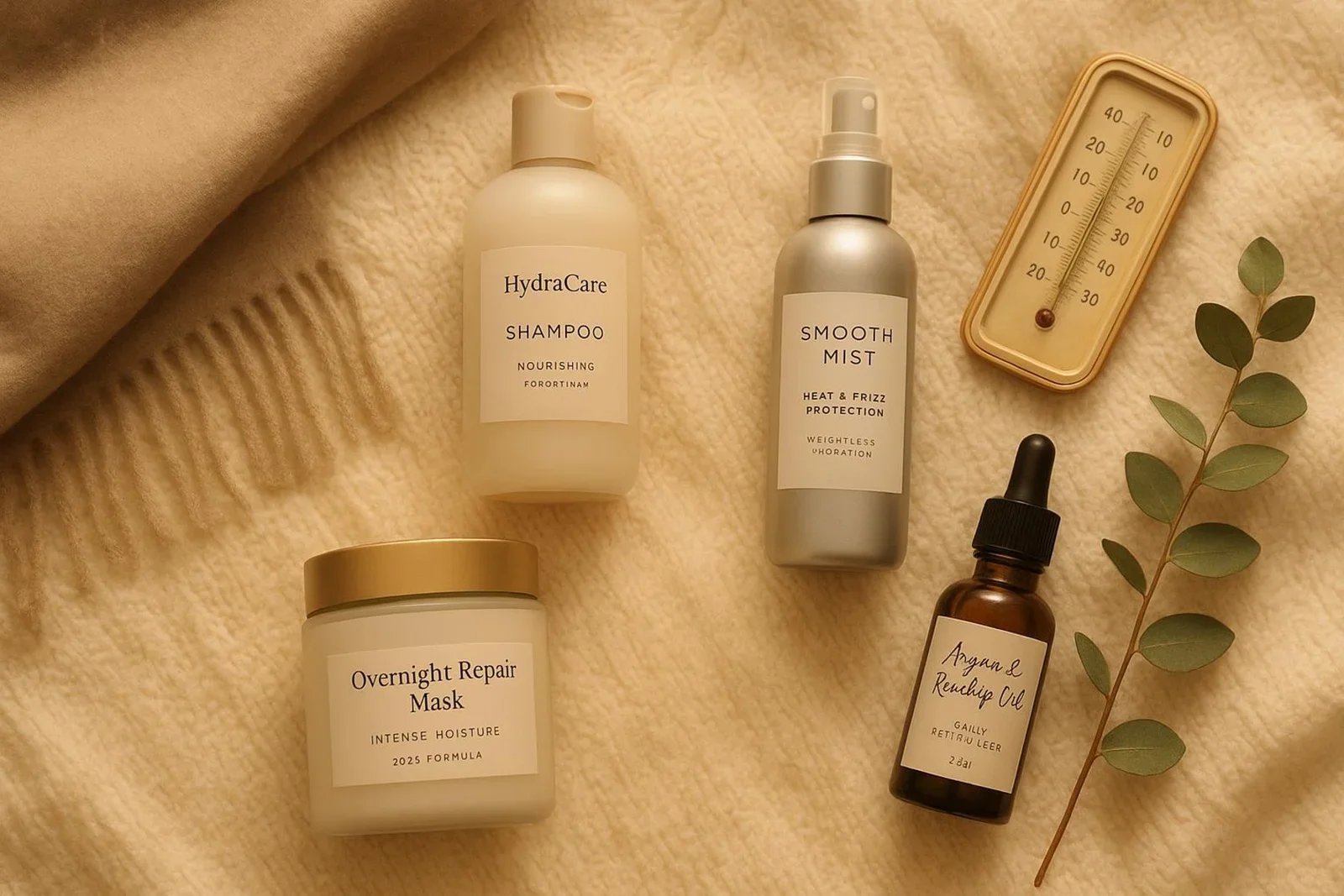
1. Moisturising Shampoo and Conditioner
The first and most important change is switching to a hydrating shampoo and conditioner. Put aside products that say "clarifying" or "volumising" for now. In winter, your hair needs moisture more than anything. Hydrating formulas clean gently while adding water and nutrients back into each strand. This helps bring back elasticity and reduces brittleness and breakage. Look for ingredients that soften and help hair hold moisture, leaving it smooth and less likely to pick up static.
Tips for use:
Focus shampoo on the scalp; let the suds cleanse the lengths.
Apply conditioner mainly to mid-lengths and ends, where hair is driest.
Squeeze out excess water before adding conditioner so it can absorb better.
2. Deep Conditioning Treatments
A weekly deep conditioning treatment is a winter must-have. Think of it as an intense drink of water for your hair. These masks work more deeply than daily conditioners, helping repair damage, fill in weak spots in the cuticle, and restore lost moisture. The result is stronger, softer, more flexible hair with fewer split ends.
How to use:
Use once a week after shampooing.
Apply generously to mid-lengths and ends.
Leave on for 10–20 minutes, then rinse well.
Finish with a light conditioner if recommended on the product to smooth the cuticle.
3. Leave-In Conditioner or Hydrating Hair Mist
To keep hair protected all day, a leave-in conditioner or hydrating mist is very helpful. These products form a light shield that protects hair from dry indoor and outdoor air. A leave-in used after washing helps detangle, reduce friction, and give extra moisture before styling. A hydrating mist is handy for quick touch-ups during the day when hair feels dry or static starts to show. Both help smooth the cuticle, calm frizz, and add shine without making hair heavy when used in moderation.
4. Nourishing Hair Oil or Serum
Hair oils and serums are winter heroes. They help seal in moisture, add shine, and protect against rough fabrics and weather. A few drops on damp or dry hair can smooth frizz, soften the cuticle, and give hair a glossy, healthy look. Oils like argan, coconut, and jojoba are great for nourishment. Serums often include ingredients that coat the hair lightly to block static and surface damage.
Usage tips:
Start with a pea-sized amount or a few drops.
Warm the product between your palms and apply to mid-lengths and ends.
Avoid the roots to prevent a greasy look, especially on fine hair.
5. Heat Protectant and Protective Styling Products
Even if you cut back on heat styling in winter, using a heat protectant whenever you blow-dry, straighten, or curl is a must. Heat protectants coat the hair shaft and reduce damage from high temperatures. They help keep hair from drying out and breaking. Choose sprays or creams that protect up to the temperature of your tools and help maintain moisture.
Other styling helpers for winter include:
Anti-frizz balms and smoothing creams: to fight static and roughness.
Light volumising foams: to lift hair at the roots and fight flat "hat hair".
What Are the Benefits and Risks of Each Winter Haircare Essential?
Knowing what each product does – and how it can go wrong if overused – helps you build a winter routine that works well for your hair type.
Moisturising Shampoo and Conditioner: Improves Hydration, Prevents Breakage
Benefits:
Add and hold moisture in the hair shaft.
Reduce brittleness and breakage caused by dry air and heating.
Help hair stay flexible and less likely to snap.
Possible downsides:
Very rich formulas can feel heavy on fine hair.
If not rinsed well, they may leave hair feeling coated.
Most people dealing with winter dryness find the positives far outweigh these small issues.
Deep Conditioner: Repairs Damage, Reduces Split Ends
Benefits:
Penetrate deeply to strengthen the hair shaft.
Smooth damaged cuticles and improve elasticity.
Help reduce split ends and make hair easier to manage.
Possible downsides:
Overuse or poor rinsing can cause product build-up.
Hair may feel heavy or look dull if too much is left in.
Stick to weekly use unless your stylist suggests otherwise, and rinse as directed.
Leave-In Products: Fights Static, Boosts Shine
Benefits:
Control static and flyaways by smoothing the cuticle.
Add instant shine and make hair look healthier.
Provide light, ongoing hydration and surface protection.
Possible downsides:
Using too much, especially on fine hair, can leave hair limp or greasy.
Start with a small amount and apply mainly to the lengths and ends, adding more only if needed.
Hair Oils: Increases Smoothness, May Cause Build-Up if Overused
Benefits:
Add strong shine and smoothness.
Help control frizz and seal moisture inside the hair.
Provide some protection from environmental stress.
Possible downsides:
Too much oil can make hair look greasy and flat.
Heavy use near the roots can cause build-up on the scalp and may irritate it.
Use only a small amount, applied from mid-lengths to ends, and adjust the quantity to your hair type.
Heat Protectants: Prevents Damage from Styling Tools
Benefits:
Create a barrier between hair and hot tools.
Reduce moisture loss and weaken the impact of high temperatures.
Help cut down on breakage and split ends from styling.
Possible downsides:
Using too much product can sometimes leave a slight residue.
Apply evenly to damp or dry hair (based on product directions) and use the amount recommended on the label.
Which Hairstyles and Accessories Help Shield Hair from the Cold?
Products aren’t the only way to protect hair in winter. Your choice of styles and accessories also has a big impact on how much damage your hair takes from wind, cold, and friction.
Should You Change to Protective Hairstyles for Winter?
Yes, winter is a great time to wear protective hairstyles. These styles limit how much of your hair is exposed to the air and stop it from rubbing constantly against coats and scarves.
Good options include:
Braids: French, Dutch, fishtail, or simple three-strand braids.
Buns: low, loose, or messy buns that keep ends tucked in.
Twists or roll-ups that keep hair off your shoulders.
Loose ponytails that are not pulled tight.
Aim for styles that are secure but not too tight, so you avoid pressure on the scalp and hairline. These looks reduce friction, dryness, and tangles while still letting you feel stylish.
Do Beanies and Scarves Cause Hair Damage?
Beanies and scarves are winter essentials for warmth, but they can cause problems if materials are rough. Fabrics like wool or some synthetics can scrape against the hair cuticle, leading to frizz, static, and breakage. Tight beanies can also flatten hair and worsen "hat hair," and sometimes irritate the scalp.
To protect your hair while staying warm:
Choose smoother fabrics where possible, like silk or satin.
Use silk or satin linings inside wool hats or wear a silk/satin cap under your beanie.
Avoid very tight hats that pull on the hairline.
Smoother fabrics reduce friction so hair glides instead of catching, helping it keep more moisture and shine.
Tips to Maintain Gorgeous Hair All Winter Long
Keeping your hair looking great through winter is about more than just products. Daily habits and the odd professional treatment also make a big difference. Think of winter as a time to give your hair a bit more care and attention.
What Daily Habits Support Hair Strength Against the Cold?
Simple everyday habits can help your hair stay strong through winter:
Drink enough water: even if you don’t feel thirsty, regular water intake keeps your scalp and hair better hydrated from the inside.
Use a humidifier: placing one in your bedroom adds moisture to the air, helping hair, skin, and sinuses.
Be gentle when drying: instead of rubbing with a regular towel, gently squeeze out water using a microfibre towel or soft cotton T-shirt.
Use lower heat settings: if you blow-dry, always apply heat protectant and pick a medium or low heat setting.
Eat nutrient-rich foods: include omega-3 fatty acids, leafy greens, root vegetables, nuts, and healthy fats to support hair from within.
Are Salon Treatments Recommended for Seasonal Hair Care?
Salon treatments can give your hair a strong boost during winter. Professional services such as deep conditioning masks, scalp scrubs, or repair treatments often use highly concentrated products that go deeper than most at-home options.
For example:
Deep moisture treatments to rehydrate very dry hair.
Scalp treatments to clear build-up and soothe irritation.
Repair services (such as Kérastase Fusio-Dose) to strengthen weak or damaged strands.
Talk to your stylist about how your hair behaves in winter – dryness, frizz, scalp issues, or breakage – and they can recommend the best treatment plan. Think of these visits as regular check-ups that keep your hair strong, smooth, and shiny through the coldest months.
Do you live in Sydney?
Get the perfect look at our salon – schedule your appointment now!
Our Services
Check Out Our Instagram



Check out our instagram
Check out our instagram and see our latest posts!
Check out our facebook
Check out our facebook and see our latest
posts!