
The Science Behind Color Correction: Why Some Fixes Take Multiple Sessions
Why does fixing a hair colour mistake often take more than one salon visit? The simple reason is that protecting your hair health while lifting out old dye or brassy tones takes careful chemistry and patience. Rushing the process can cause serious breakage, so working step by step is the safest way to achieve a tailored colour you love.
The Science Behind Colour Correction: How It Works
Colour correction is much more than applying a new shade over an old one. It combines hair science, chemistry, and years of hands-on experience. When hair turns out too brassy, yellow, green, or muddy, an expert stylist uses colour theory to neutralise unwanted tones and rebuild a balanced, even base.
Natural Hair Pigment and Its Role in Correction
Every colour change starts with the natural pigment living inside your hair strands. Natural hair colour is made of two main pigments:
- Eumelanin: creates brown and black shades
- Pheomelanin: creates red and yellow shades
Your genetics decide your unique pigment mix. When we lighten your hair, the dark eumelanin breaks down first. This reveals the warm pheomelanin underneath, which is why dark hair naturally pulls red, copper, or orange as it gets lighter. Even after toning your hair to a cool blonde, underlying warmth can gradually show through over time. That is why routine toner appointments are key to keeping your colour looking fresh and bright.
How Colour Theory Guides Correction Decisions
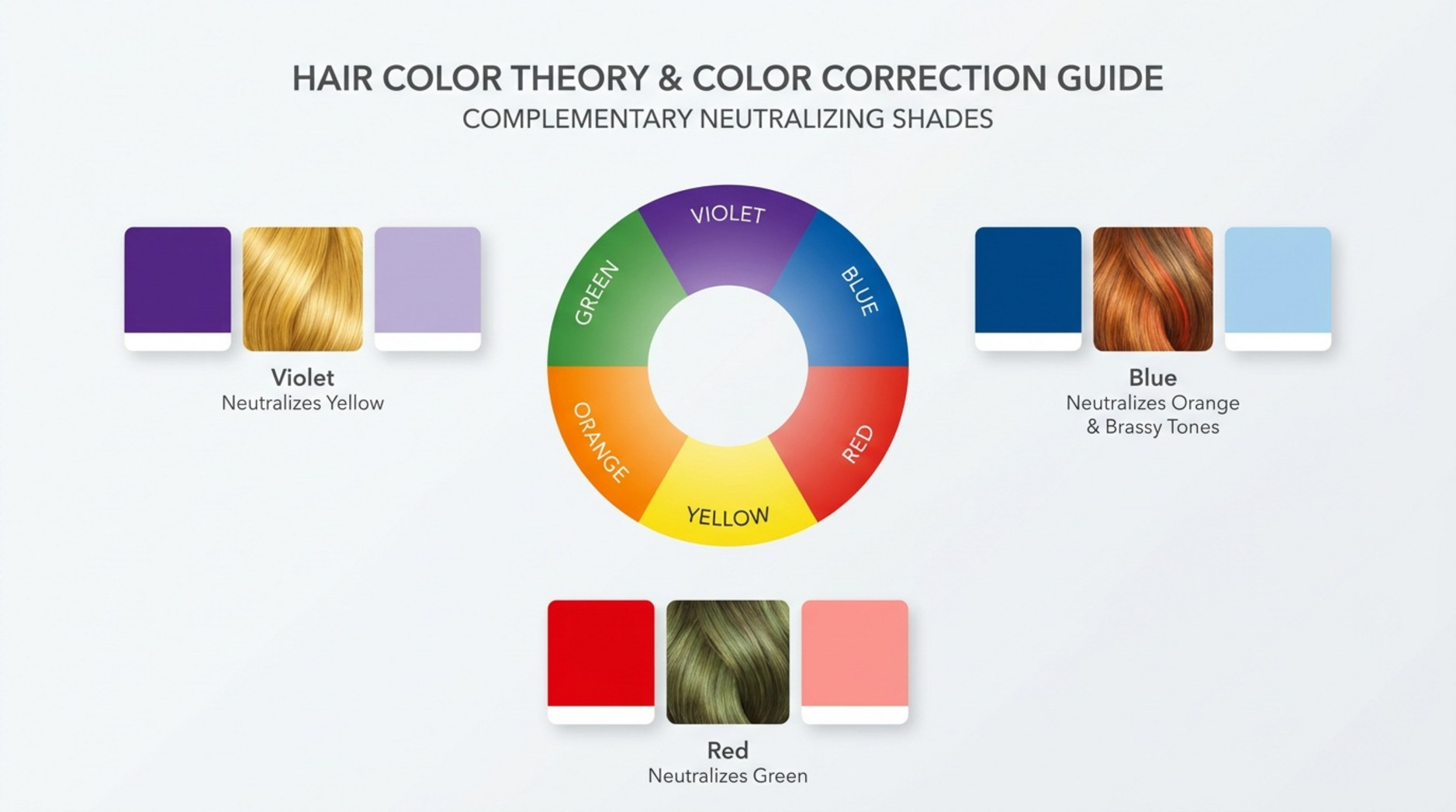
Colour theory is our guiding map during any correction. We use the classic colour wheel to cancel out unwanted tones. The simple rule is that colours opposite each other on the wheel neutralise one another.
| Unwanted tone | Common neutralising tone |
|---|---|
| Orange / brassy | Blue |
| Yellow | Violet / purple |
| Green (often from chlorine or minerals) | Red |
Stylists also look closely at two key factors:
- Level: how light or dark your hair currently is
- Intensity: how strong or bright the unwanted tone looks
For a toner to work properly, your hair must first be lifted to the correct lightness level. If the hair is still too dark underneath, a cool toner cannot fully disguise the warmth. In that case, we need to lift the hair further before applying the final tone. This is why many corrections require several steps to get right.
Key Chemical Processes: Lifting, Depositing and Neutralising
During a colour correction service, we rely on a few specific techniques depending on what your hair needs and what its condition will safely allow.
Lifting uses professional lightener to break down natural or artificial pigment. This process opens the outer cuticle layer so the product can reach the inner core of the hair strand.
Removing uses specialised colour removers that shrink artificial dye molecules so they can be washed away. This can be gentler than lightener and works well for lifting out dark box dyes without over-stressing the hair.
Depositing adds new colour back into the strand. We use permanent colour, demi-permanent glosses, or toners to create your final shade.
When transitioning from a light blonde back to a rich brunette, a step called filling is essential. Lightened hair has lost its natural warm undertones. If you apply a dark dye straight onto blonde hair, it can turn flat, muddy, or even khaki green. A filler reintroduces warm tones (like gold or copper) first, giving your new brunette shade depth, richness, and better longevity.
Why Some Colour Corrections Take Multiple Sessions
It is completely natural to want an instant fix when you are unhappy with your hair colour. However, hair has natural limits, and safe chemistry cannot be rushed. Multiple sessions allow us to protect your hair health while steadily moving toward your dream look.
How Previous Colour Treatments Affect Correction
Your hair holds a history of every colour service, chemical treatment, and heat style you have had. Virgin hair lifts easily and predictably, but hair with old dye behaves differently.
If you have coloured your hair dark for several years, the ends often hold heavy layers of built-up pigment. When lightener is applied:
- the natural roots lift quickly
- the ends lift much more slowly and can stay darker
This creates uneven colour bands that must be addressed carefully to prevent damage.
Past treatments like keratin treatments, perms, or relaxers also alter how your hair absorbs moisture and colour. Home box dyes can be particularly tricky because they often contain metallic salts or heavy dyes that settle deep into the strand. Removing these layers safely takes time and careful attention.
Hair Thickness, Porosity and Condition
The thickness, porosity, and overall condition of your hair dictate how quickly we can work. Hair is made of keratin proteins held together by delicate bonds. Strong chemical processing weakens these bonds. If we push the hair too far in a single visit, the cuticle breaks down, leading to frizz, split ends, or breakage.
Porous or heat-damaged hair can also:
- absorb colour unevenly
- cause toners to fade much faster
- grab unwanted tones in dry patches
- produce patchy, unpredictable results
During a stylist consultation, we often run a strand test to see how your hair responds to lightener. If your hair feels delicate, we may begin with bond-strengthening and deep moisture treatments before continuing with more colour work. This keeps your hair strong enough to hold beautiful colour long-term.
Complex Scenarios: Dark to Light, Bands and Uneven Tones
Certain colour corrections are naturally complex and almost always require a multi-stage plan.
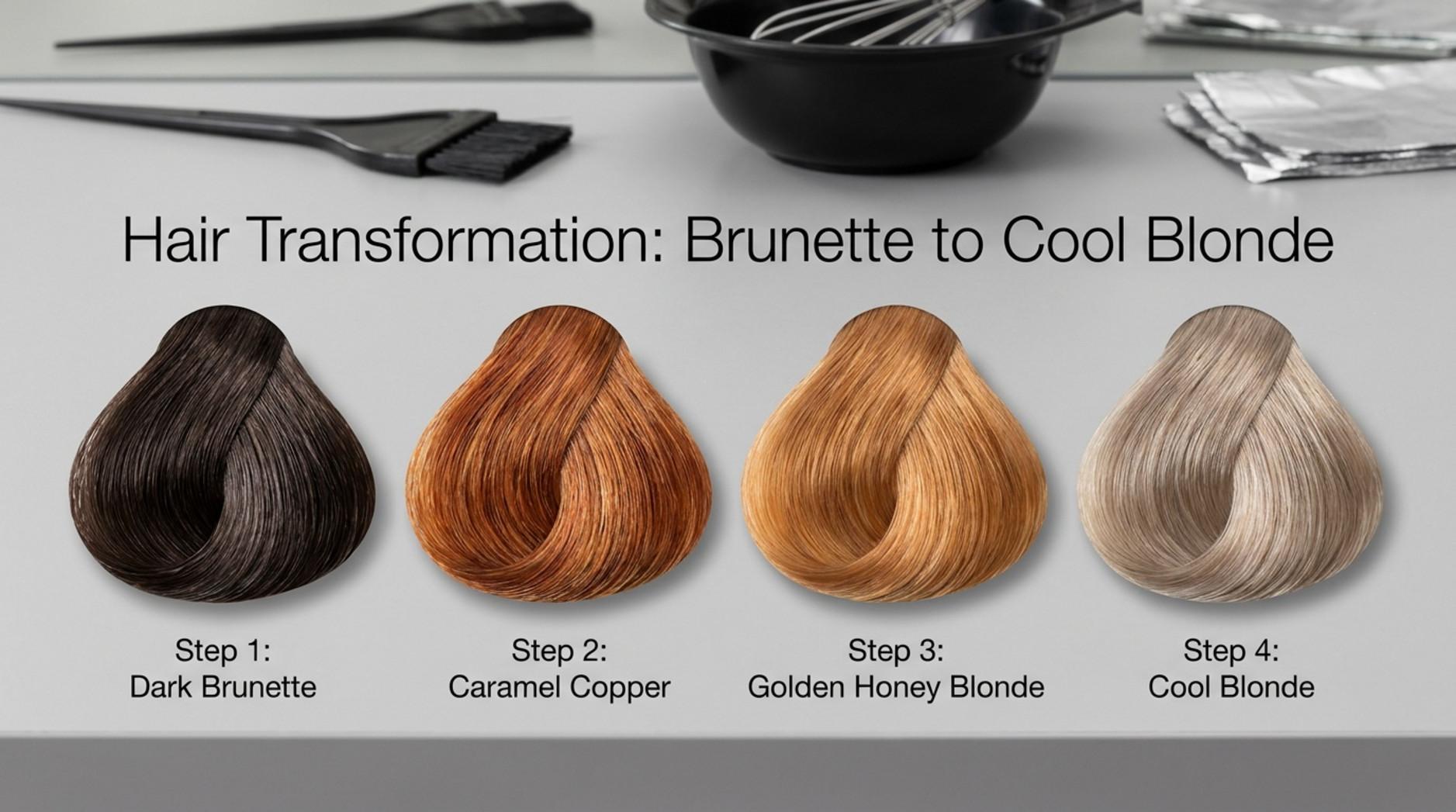
Going from deep black or dark brown to blonde is a major journey. Removing dense, dark pigment requires passing through warm stages-red, orange, and gold-before reaching a pale yellow base. Spacing this out over several appointments lets us tone your hair at every visit so you can walk out feeling confident at each stage of the journey.
Bright fashion shades like blue or teal can also be stubborn. Applying a natural brunette directly over blue can result in a murky green tint, so those vivid tones must be carefully cleared out first.
Other common challenges include:
- Hot roots: the hair closest to the scalp lifts faster due to body heat, ending up lighter or warmer than the mid-lengths
- Banding: distinct dark lines caused by overlapping layers of previous dye
- Uneven porosity: different sections of the hair holding onto colour differently
Correcting these issues requires applying tailored formulas to specific sections of your hair rather than using a single all-over colour.
Why Rushing the Process Can Cause More Damage
Trying to force a major transformation into a single afternoon is the most common cause of hair damage. Over-processing with lightener can lead to:
- snapping and breakage
- hair that feels stretchy and gummy when wet
- rough, brittle texture
- dry, split ends
- patchy, uneven colour results
- rapid colour fading
In severe cases, chemical damage cannot be undone and requires a significant haircut to remove the damaged ends. Taking a gentle, phased approach protects both your hair and your scalp, supporting healthy hair growth over time.
Managing Expectations: Patience for Lasting Results
Having realistic expectations is an important part of any colour correction journey. Social media videos often make major transformations look effortless in a 15-second clip. What they rarely show is the hours in the salon chair, the multiple visits required, or the extensive aftercare needed to keep the hair looking its best.
A good stylist will always be upfront about what can be achieved during your first appointment. They will map out a clear plan-perhaps starting with a warm caramel or honey tone first before working toward an icy blonde later. This thoughtful pace keeps your hair feeling silky, soft, and strong.
What to Expect from the Colour Correction Process
While colour correction can feel a little daunting, knowing the roadmap helps you feel completely comfortable. It is a collaborative process where your hair health and comfort always come first.
Strand Testing and Developing a Correction Plan
A thorough consultation is the most important step of the entire service. During this chat, your stylist will discuss your complete hair history, including past bleaches, salon tints, and home colours. Bringing along reference photos of your current hair and your ultimate goal is always welcome.
Your stylist will assess your hair's:
- texture and thickness
- elasticity and strength
- porosity and dryness
We may perform a quick strand test on a small, hidden section of hair. This shows us:
- how much lift your hair can safely handle
- what underlying tones will appear
- how strong your hair bonds are under lightener
- what is realistic to achieve in your first session
From there, your stylist will outline an honest plan, including the expected number of appointments, estimated timing, and a personalised home care routine.
Typical Steps: Removing, Filling, and Toning
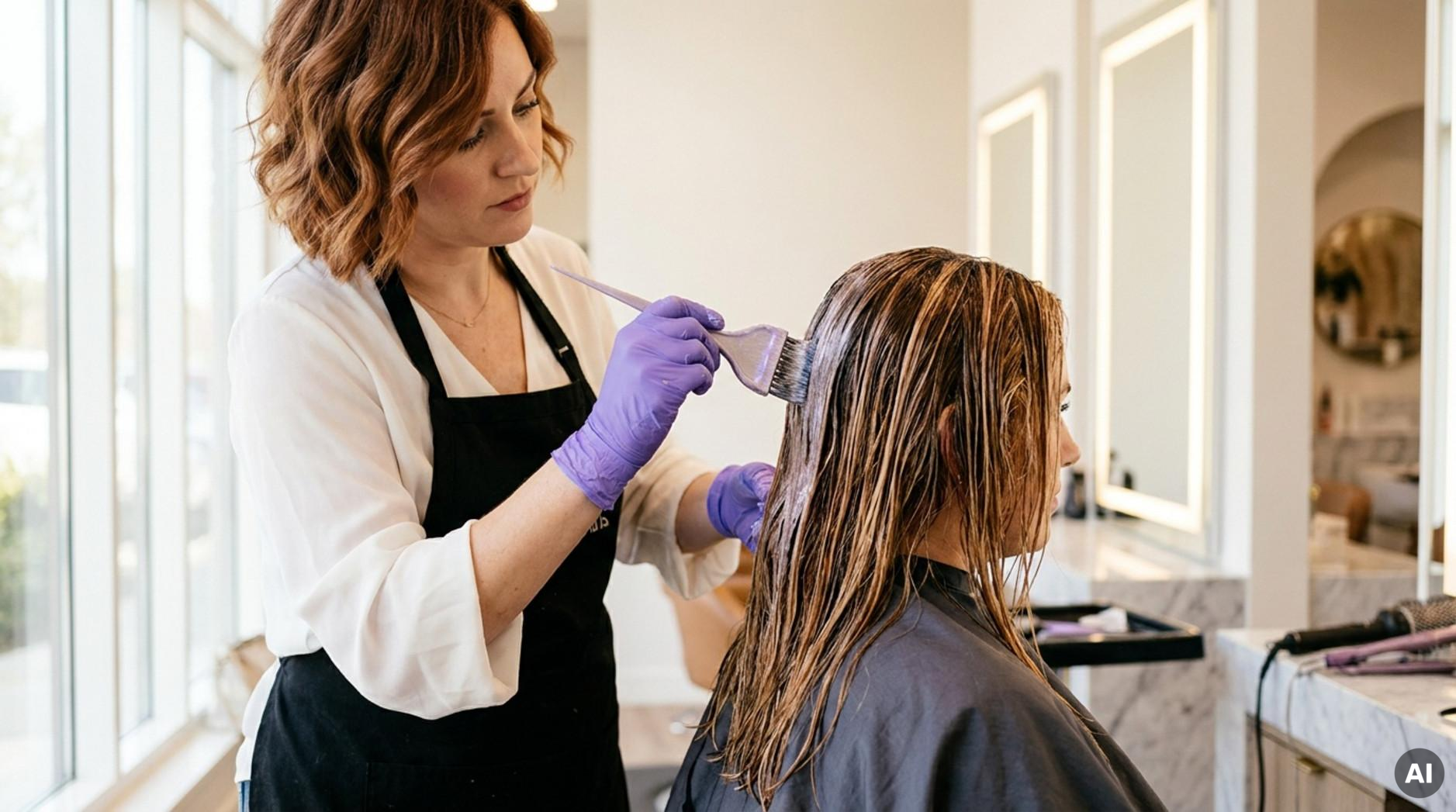
While every correction is tailored to the individual, the process generally follows these stages:
- Stylist consultation and hair analysis: assessing hair strength, past colour, and setting realistic goals.
- Prep and bond support: applying nourishing treatments to reinforce the hair structure before chemical work.
- Colour removal or lightening: gently lifting old artificial pigment using colour removers or lightener. Clarifying treatments may also be used to remove hard water or mineral buildup.
- Filling (for going darker): replacing missing warm undertones so the new darker shade looks rich and vibrant instead of dull.
- Toning and finishing: refining the shade with glosses or toners, adding techniques like root shadows or lowlights for a seamless, blended finish.
Throughout your appointment, your stylist continuously monitors how your hair is lifting and how the cuticle is responding. After rinsing, restorative bond treatments and hydrating masks help lock in moisture and shine.
When Multiple Appointments Are Recommended
The time needed for colour correction depends on the depth of the change. A simple toner refresh or minor fix might take 1 to 3 hours. Moderate corrections dealing with brassiness or light banding often take 3 to 6 hours. Complete transformations from dark box dye to blonde can take multiple full-length appointments.
When multiple sessions are needed, we typically space them 4 to 6 weeks apart. This resting period gives your hair time to rebuild its moisture balance and strength. Taking this steady approach consistently delivers cleaner, longer-lasting colour results.
The Long-Term Love Affair: Maintaining Your Corrected Colour
Leaving the salon with a gorgeous, balanced shade is a great feeling, but proper home care is what keeps it looking beautiful between visits. The weeks following your correction are crucial for locking in hydration and preserving your tone.
While expert colour techniques can resolve banding, brassiness, and patchy shades, severely broken hair cannot be glued back together. If ends are over-processed, a light trim helps reset your baseline for healthy new growth. For most hair, a tailored care routine keeps your colour fresh and vibrant.
Because corrected hair is naturally more porous, simple daily habits make a big difference:
- Wash with a gentle, professional sulphate-free shampoo and conditioner formulated for colour-treated hair.
- Use lower heat settings on styling tools and always apply a reliable heat protectant.
- Rinse with lukewarm or cool water to help seal the hair cuticle and lock in shine.
Booking a quick toner or gloss refresh every 6 to 8 weeks keeps unwanted brassy tones away and restores salon shine. With steady care and expert advice, your hair will stay healthy, shiny, and full of life.
Do you live in Sydney?
Get the perfect look at our salon – schedule your appointment now!
Our Services
Check Out Our Instagram

Check out our instagram
Check out our instagram and see our latest posts!
Check out our facebook
Check out our facebook and see our latest
posts!